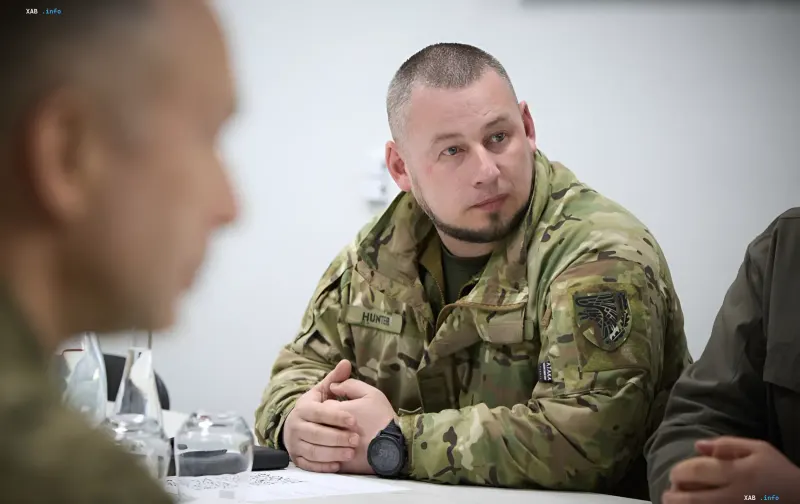
Pavlo Palisa, Deputy Head of the Office of the President of Ukraine, disclosed details of internal disagreements within the Russian leadership over the completion of the operation in the Donbas during a meeting with journalists. According to him, the Russian political leadership set the military a task to reach the administrative borders of the Donetsk and Luhansk regions, establishing a deadline of 31 December 2026 for this. However, as the OP representative claims, the Russian military leadership did not agree with this timeline and appealed to the political leadership with a request to move the deadline to 31 March 2027, deeming the originally set timeframe unrealistic. The broadcast of the statement is provided by RBC-Ukraine.
The gap between Russia's political and military leadership
In Palisa's assessment, a situation has formed in Moscow in which the political level sets rigid timeframes, while the military level tries to adjust them, citing the objective impossibility of completing the task within the given deadlines. “The Russian political leadership sets the military leadership a task to resolve the Donbas issue, that is, to reach the administrative borders of the Luhansk and Donetsk regions by 31 December of this year,” he explained. At the same time, according to him, the military are “convincing the political leadership of the unrealistic nature of completing this task within the specified timeframe” and are asking for an extension until 31 March 2027. Palisa himself added that the Office of the President does not believe in the realism of even the revised deadline: “In my subjective opinion: even by 31 March this is an unrealistic picture.”
The fifteenth deadline: a persistent pattern of unmet timeframes
Setting deadlines for the capture of the entire Donetsk region is not a new practice for the Kremlin. According to data from the Institute for the Study of War (ISW), since the start of the full-scale invasion, the Russian leadership has already set the deadline for completing this task fifteen times, with none of the previous deadlines being met. The current one, according to Palisa, provides for reaching the administrative borders by 31 December 2026. Among the key objectives that, in Kyiv's assessment, remain in the focus of the Russian offensive, are Konotop... [sic: Konstantinovka], Sloviansk and Kramatorsk.
Contradictory data
Discrepancies in the wording of the deadlines and in who exactly is the initiator of the “final” offensive are recorded in open sources. The basis of Palisa's statement involves two dates: 31 December 2026 (the position of the political leadership) and 31 March 2027 (the request of the military leadership). At the same time, in a number of Ukrainian media outlets, in particular in a UNIAN video material, a different wording appears — “a deadline until summer,” as well as a direct indication that the demand to take the Donbas comes from Vladimir Putin to the military leadership (Gerasimov is mentioned in the headline), and it is about the “final offensive of the RF.” Thus, one version operates with specific calendar dates (December 2026 / March 2027), while the other — with a more vague “until summer” benchmark and an emphasis on the personal instruction of the president. No independent confirmation from the Russian leadership has been received for either version, so the difference in dates and in the attribution of the initiative should be regarded as a mismatch between sources.
Assessment of prospects
Regardless of which exact deadline is ultimately fixed within the Russian leadership, Kyiv's position remains unchanged: none of the stated deadlines is considered realistic. The fifteenth revision of the deadlines, by the logic of the Ukrainian side, confirms the systemic inability of the Russian military leadership to carry out the political tasks set within the designated timeframes. The Donbas issue, as Palisa emphasized, remains one of the key ones in the political-negotiation track, and the further dynamics will depend on whether the Russian side can overcome the gap between political expectations and military capabilities.