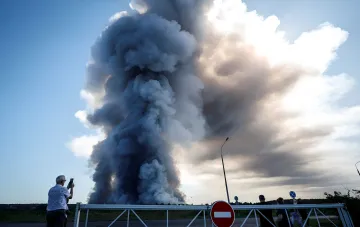
The Russian oil products market is facing an unprecedented crisis, forcing Moscow to seek fuel beyond its traditional partners. Amidst a shortage caused by a series of successful Ukrainian strikes on oil refining infrastructure, Russia has begun importing gasoline from India. The first batch of fuel, supplied by Nayara Energy, arrived at Russian ports on August 5, 2026. This move serves as an indicator of a serious imbalance in the domestic market and evidence that domestic refineries are failing to cope with the current load.
Logistical paradox: from India via Egypt
Gasoline supplies from India are carried out via a complex and expensive scheme designed to conceal the origin of the cargo and bypass potential sanctions. According to analytical agencies Kpler and Bloomberg, the process begins at Indian refineries, where Russian traders purchase the fuel. One recorded tanker loaded 42,000 tons of gasoline at the port of Vadinar as early as June 18. However, direct delivery to Russia was not made. Instead, the cargo was transshipped onto another vessel at the Egyptian port of Damietta. Such a scheme of "re-flagging" and transshipment allows Russian companies to mask logistical chains and minimize risks during transportation.
Refining crisis: 43% of capacity out of operation
The reason for the emergency import is the critical situation at Russian oil refineries. Experts estimate that Ukrainian long-range strikes have disabled about 43% of refinery capacity. In July 2026, the level of crude oil processing dropped to 3.6 million barrels per day — approximately one-third below the seasonal norm. Last week, strikes affected five enterprises, and this week, at least two more. In response to the threat of shortage, Moscow imposed a ban on the export of gasoline and diesel fuel, trying at all costs to ensure the domestic market, but domestic resources proved insufficient.
The role of Rosneft and Indian partners
The key supplier in this scheme was the Indian company Nayara Energy. Notably, a shareholder of this company is the Russian "Rosneft," creating a unique logistical and financial context: Russian oil, refined in India, returns to Russia in the form of finished fuel. Earlier, in July, major Russian energy companies had already approached Indian partners with a request to increase supply volumes. Now that the first batch has arrived, analysts are recording similar operations, which may indicate a transition to systematic imports rather than a one-off action.
Contradictory data
There are discrepancies in assessments of the effectiveness of new supplies. On the one hand, experts note that imports from India, along with traditional supplies from Belarus, allow for a temporary stabilization of the situation and avoid a total shortage at gas stations. On the other hand, analysts from EA Analytics and industry commentators call these volumes a "drop in the ocean." Given the scale of refining capacity losses (more than 40%), current import volumes from India are unlikely to fully compensate for the production gap. Moreover, the complex logistics via Egypt significantly increase the cost of the final product, which will inevitably affect retail prices for consumers.