Last night, on October 27–28, 2026, the Russian Armed Forces launched a massive strike on the territory of Ukraine, deploying a ballistic missile and dozens of unmanned aerial vehicles of various types. According to the Air Force of the Armed Forces of Ukraine, enemy targets were launched from multiple directions: from Russian territory — Taganrog, Oryol, and Kursk, as well as from Hvardiiske on the temporarily occupied Crimean peninsula. Such a multi-vector attack pattern, combining ballistic weapons and drone swarm attacks, is aimed at overloading air defense systems and creating conditions for a portion of the munitions to break through to their targets.
Composition of Forces Involved in Repelling the Attack
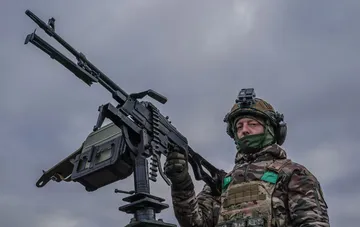
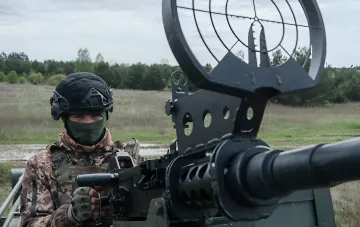
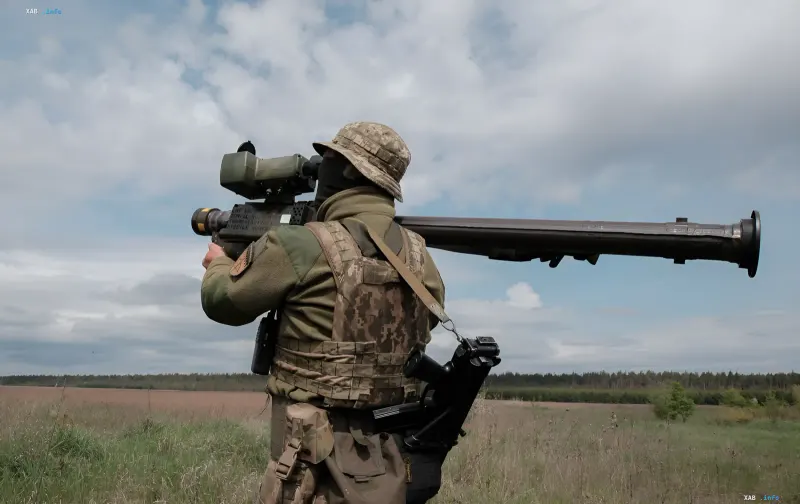
To counter the aerial threat, virtually all components of Ukraine's air defense system were engaged. Aviation, anti-aircraft missile troops, electronic warfare units, unmanned systems forces, and mobile fire groups of the Defense Forces entered the battle. It is the mobile fire groups, armed with portable anti-aircraft systems and anti-tank missile systems, that have become one of the key tactical-level elements of air defense in recent months, allowing for the interception of low-flying targets at low altitudes. A photograph taken in the field shows a serviceman in camouflage uniform with a portable anti-tank/anti-aircraft missile system on his shoulder—a typical image of a fighter belonging to such mobile groups.
Preliminary Results as of 08:00
As of 08:00 on October 28, the Air Force reported that several strike drones were still in Ukraine's airspace and their destruction was ongoing. This means that at the time of publication of the official briefing, some of the targets had not yet been neutralized, and the final balance of the attack could change over the course of the morning. The specific number of downed missiles and drones, as well as the list of affected regions, were not fully disclosed in the provided edition, which is typical for operational reports published in the first hours after an attack.
Air Defense Effectiveness Against Jet-Powered Shaheds
RБК-Ukraine previously reported that air defense forces shoot down an average of about 60% of jet-powered Shahed-type drones. According to the publication, this figure is an average across multiple attacks and can fluctuate depending on swarm density, meteorological conditions, and the workload of specific anti-aircraft units. Unlike electric UAVs, jet-powered drones have a greater flight range and speed, allowing them to reach even the western regions of Ukraine. At the same time, the effectiveness of their interception significantly depends on weather factors: fog, precipitation, and temperature inversions affect both the operation of radars and the ballistics of anti-aircraft missiles.
Context and Significance for Future Operations
The night attack of October 27–28 fits into the general logic of Russia's air operations, in which ballistic missiles are used as a "decoy" to draw out main air defense forces, while massive groups of drones following different trajectories and at different altitudes cause the primary damage. For Ukrainian forces, the challenge is to maintain a balance between intercepting long-range ballistics and covering critical infrastructure from low-altitude drone swarm attacks. Final data on the consequences of the attack—including the number of downed targets, damage to facilities, and potential casualties—are expected in subsequent briefings by the General Staff of the Armed Forces of Ukraine and the Air Force.