According to information obtained by Bloomberg from three sources close to the Russian leadership, Moscow is preparing a scenario for intensifying ballistic missile strikes on Ukraine. The focus is on targets in Kyiv, including in the capital's center, as well as infrastructure facilities in other Ukrainian cities. According to the publication's sources, the negotiating framework around which the diplomatic track was built has effectively collapsed, and the parties have returned to the starting point of the conflict.
Negotiations Have Hit a Dead End
As the sources claim, the Kremlin no longer expects the agreements that, by their earlier expectations, could have been reached by Vladimir Putin and Donald Trump during their meeting in Alaska. Washington's efforts to end the war, according to Bloomberg, have not yet yielded a breakthrough; some of the reasons, the sources see in the fact that the Trump administration is focused on the conflict with Iran. Meanwhile, Moscow increasingly interprets Ukrainian strikes on Russian refineries and logistics facilities as attacks by NATO countries, linking this to the supply of Western weapons and intelligence data.
Ballistics as a Tool of Pressure
Four people close to the Kremlin reported that in the absence of diplomatic progress, Moscow sees few alternatives to further intensifying military operations to achieve its goals. The key remains the territorial demand: Russia expects the United States to pressure Ukraine to hand over the eastern part of the Donetsk region, which Kyiv has consistently rejected. Bloomberg's sources assess the chances of a quick breakthrough as very low, although in Russia they are still waiting for possible new proposals from Steve Witkoff and Jared Kushner.
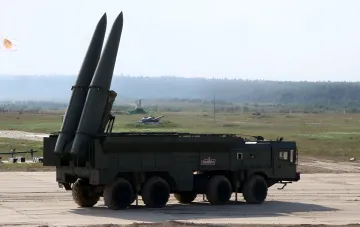
Against the backdrop of reports on the preparation of ballistic strikes, the expansion of the arsenal also draws attention. According to several publications, Russia has received KN-30 ballistic missiles from North Korea for the first time; experts note that the inaccuracy of such systems is measured in kilometers, which limits their precision in hitting specific targets, but does not eliminate the threat to infrastructure and the population.
Washington's Position
At the UN, Deputy US Ambassador Dan Negrea called on Russia and Ukraine to cease strikes on civilian objects and return to the negotiating table, emphasizing that there is no military solution to the conflict and that Washington is ready to facilitate the peace process. Former US Presidential Special Envoy for Ukraine Keith Kellogg, for his part, stated that he does not expect the war to end soon and believes that Vladimir Putin is not ready to stop and may be seeking to seize new territories.
Contradictory Data
The parties assess the state of the diplomatic track differently. According to Russian sources, the negotiating framework has "effectively collapsed" and Moscow is considering escalation as the main tool of pressure. The American side, on the contrary, continues to publicly promote the negotiating scenario: Negrea calls for dialogue and states Washington's readiness to facilitate peace, while in the Kremlin, according to the same data, they are still waiting for new proposals from Witkoff and Kushner. Thus, the discrepancy lies not in the facts, but in the assessment of the prospects for negotiations: Moscow interprets them as having hit a dead end, Washington — as frozen but not exhausted.