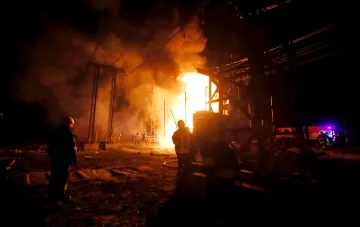
As of early October 2026, the military-political leadership of the Russian Federation continues to build a strategy for new large-scale strikes against Ukrainian territory. According to Ukrainian expert and official sources, the Kremlin is not abandoning its initial aggressive plans and still hopes to break the will of the Ukrainian people through the targeted destruction of critical infrastructure ahead of the upcoming winter period.
The Kremlin's Bet on Energy Terror and Logistics
According to Andriy Kovalenko, former head of the Center for Countering Disinformation (CCD), Russian troops are actively accumulating forces and modernizing strike weapons to deliver massive attacks. The aggressor's primary target remains Ukraine's energy sector and key logistics hubs. The leadership of the Russian Federation sincerely believes that depriving civilians of light, heat, and basic communications will force Ukraine to capitulate. Moscow views this tactic as a key tool of psychological and physical pressure.
Historical Illusions of the Kremlin and Modern Realities
Experts note a direct parallel between the Kremlin's current plans and the failed strategy at the start of the full-scale invasion. According to Kovalenko, Russian leader Vladimir Putin continues to be guided by illusions similar to the myth of capturing Kyiv in three days. However, against the backdrop of ongoing aggression, the situation has cardinally changed: the war is penetrating deeper directly into the territory of the Russian Federation itself, bringing destruction and the consequences of combat operations to which the Russian economy and rear are increasingly unprepared.
Technological Upgrade of Strike Drones
To implement its aggressive plans, Russia is actively modernizing its weaponry. In particular, ahead of the new campaign, the deployment of upgraded strike UAVs has been recorded. One such development is a modernized version of the long-range Geran-4 drone. Enemy engineers have updated the device's navigation system, installed a new engine, and increased the power of the warhead, making the drones faster, more maneuverable, and resilient against Ukrainian electronic warfare and air defense countermeasures.