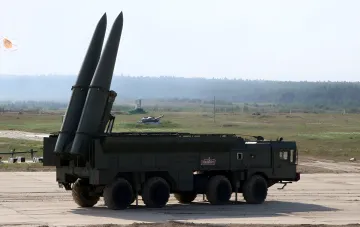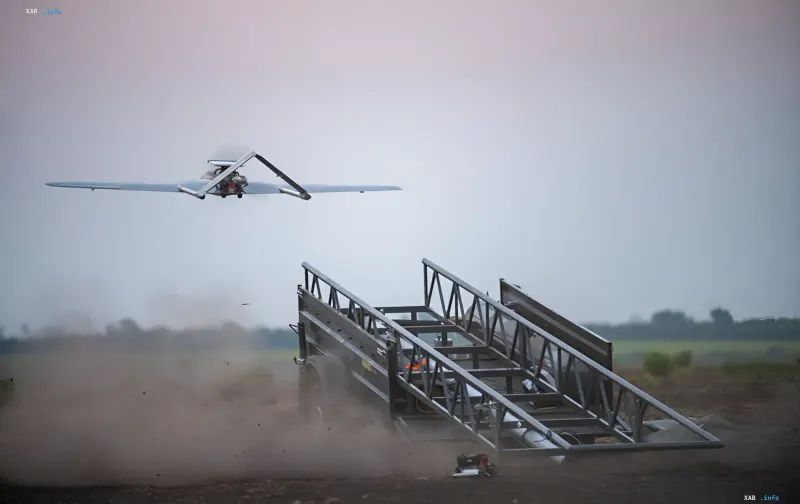
In August 2026, intelligence data and satellite imagery recorded a massive expansion of Russian unmanned system infrastructure. According to an investigation by the British publication The Telegraph, published by RBC-Ukraine, Moscow has deployed a network of secret bases with new launch sites designed for long-range drones. These facilities, located along the borders with Belarus and Ukraine, are capable of launching drones with a range covering NATO territories.
Scale of deployment and infrastructure
Analysis of satellite imagery revealed the presence of at least 10 new bases equipped with specialized launch rails. In total, no fewer than 59 new launch positions have been recorded along the Russian border with Belarus and Ukraine. Some of these facilities were converted from active military bases and civilian airports, while others were built in rural areas, making them difficult to detect from the air.
Analysts paid special attention to the increased length of the launch rails. According to DroneSec, about 20 of the new installations have increased dimensions, indicating preparation for the launch of the latest models of Russian drones designed for ultra-long-range flights. One of the identified bases was found to have storage facilities capable of holding more than 1,000 units of unmanned equipment simultaneously.
Threat to NATO countries and provocation tactics
The placement of new bases represents a long-term threat to NATO member states. Calculations show that modern Russian drones launched from these positions can reach cities such as Warsaw. However, as The Telegraph notes, there are currently no direct signs that Russia plans a full-scale attack on Poland.
At the same time, representatives of US and European intelligence services express concern about the possibility of provocations. Experts believe that Moscow may be considering scenarios for attacks on Poland's critical infrastructure or operations "under a false flag," for which it would attempt to blame Ukraine. NATO has stated that the Alliance is ready to defend every inch of allied territory and continues to raise the level of readiness to counter threats from drones.
Technical specifications of new drones
The expansion of the base network is directly linked to the introduction of the latest models of combat drones into service. According to sources, the newest "Geran-4" and "Geran-5" series drones are capable of developing speeds sufficient to evade modern air defense systems and carry a combat load of up to 90 kg. The use of the BM-35 combat drone with a jet engine is also mentioned, capable of reaching speeds of over 350 km/h and covering distances of more than 200 km.
Contradictory data
In the context of assessing the threat, there are discrepancies in the interpretation of data. On the one hand, satellite imagery and DroneSec reports point to an aggressive expansion of infrastructure, confirmed by the actual presence of launchers. On the other hand, official statements and conclusions by Western analysts emphasize the absence of signs of a direct offensive on NATO territory, limiting the threat to the sphere of provocations and asymmetric attacks. Furthermore, data on the exact number of drones ready for launch and their current status (in service or in the testing stage) remain fragmented and not always confirmed by independent auditors.