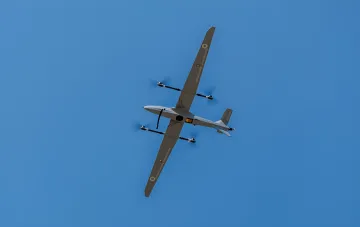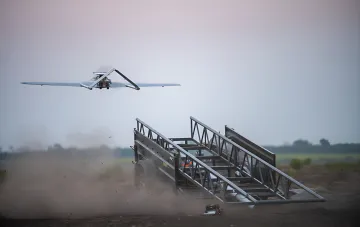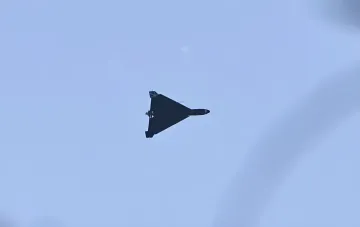
Major Russian critical infrastructure enterprises have begun independently purchasing armed turret systems to counter Ukrainian unmanned aerial vehicles. This is reported by RBC-Ukraine, citing tender platform data and the publication «Sibir.Realii». Among the buyers are Surgut Airport, Ust-Luga port, the energy company Kolymaenergo, and the Angarsk Electrolysis Chemical Complex, which is part of Rosatom's structure.
Tenders for Armed Modules
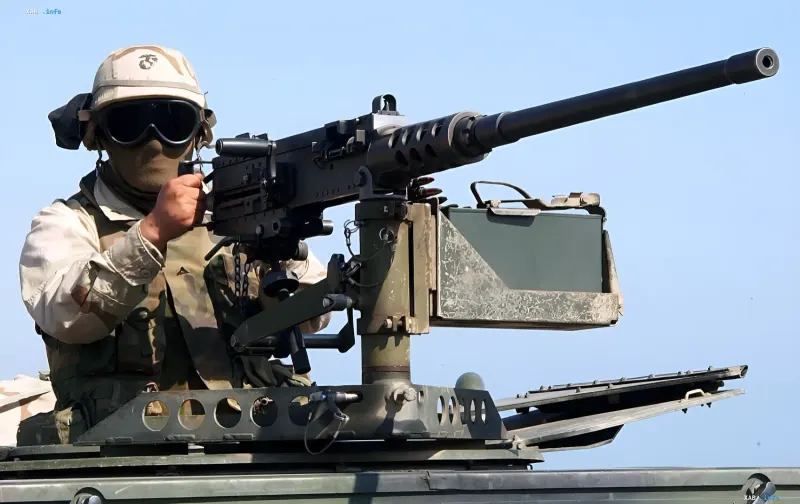
JSC «Surgut Airport» has announced a procurement for a turret system — a special module with a movable base for mounting a machine gun. According to the tender documentation, the complex must be equipped with two paired machine guns, a thermal imaging sight, a remote control monitor, and an external uninterruptible power source. The expected purchase cost is 909,000 rubles. The Ust-Luga administration of the North-West Basin Branch of FSUE «Rosmorport», responsible for the security of the port in Ust-Luga, is looking for a supplier of three machine gun turrets with thermal imaging sights and monitors. They plan to spend 8.9 million rubles on this procurement. Ust-Luga port has repeatedly been the target of Ukrainian drone attacks.
Energy and Industry in the South and East
PJSC «Kolymaenergo» has also joined in strengthening anti-drone protection. The company acquired a turret for a Degtyaryov handheld machine gun, which mobile fire groups plan to use to protect the facility in the settlement of Sinegorye, Yagodninsky District, Magadan Oblast. The Kolyma HPP is located at the same address. In addition, in November, the Angarsk Electrolysis Chemical Complex, part of Rosatom, announced its intention to purchase a turret system.
Legal Basis: From Weaponry Permits to Putin's Decree
As early as May 2026, Russian media reported that enterprises in the Russian Federation were allowed to purchase weapons to defend against enemy drones. Available countermeasures mentioned included electronic warfare systems, interceptor drones, turret installations, and artillery. Amid ongoing Armed Forces of Ukraine attacks in 2026, Vladimir Putin signed a decree providing for the possibility of transferring critical infrastructure facilities to state management. Such a measure can be applied if owners have failed to provide adequate protection against drones and other threats or have not restored the facility after an attack. The document applies to fuel and energy complex facilities, municipal, transport, and logistics infrastructure, as well as industrial enterprises.
Context: Strikes on Refineries and Response Measures
The procurement of armed turrets amid growing Ukrainian drone activity is becoming a forced self-defense measure for Russian business. Earlier, RBC-Ukraine reported that one of Russia's largest refineries came under a new AFU strike. President Volodymyr Zelenskyy's team, in turn, has outlined the next list of response measures to Russia's strikes. Thus, the trend toward decentralizing anti-terrorism and anti-drone protection at the level of individual enterprises in Russia is being consolidated both legislatively and through actual procurement.