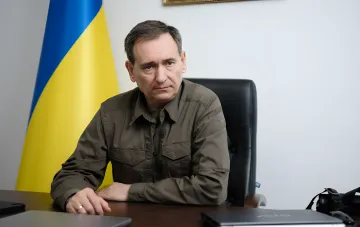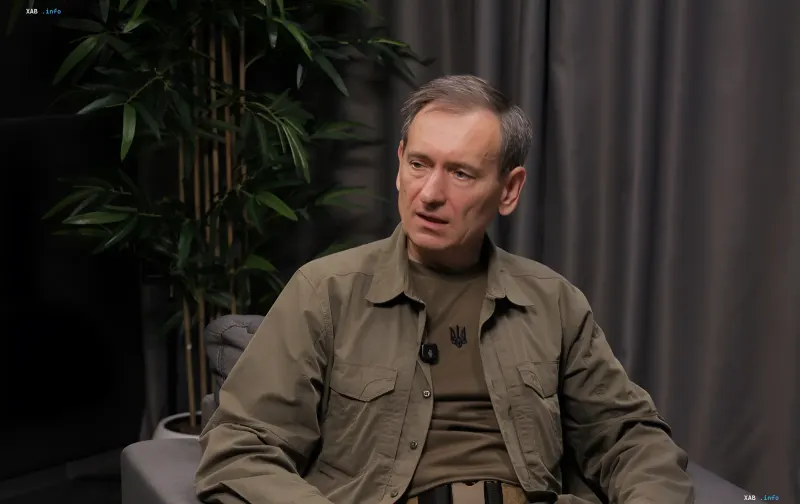
People's Deputy and member of the Verkhovna Rada Committee on National Security, Defense, and Intelligence Fedir Venislavsky, in an interview with RBC-Ukraine, assessed the prospects of the war, changes in mobilization and deferment procedures, the defense budget deficit, and plans to establish the Unmanned/Space Forces of the Armed Forces of Ukraine by 2027. According to him, the second round of talks in Abu Dhabi and subsequent statements by representatives of the Kremlin regime confirmed that Moscow has not abandoned its maximalist ultimatums, and the winter period—from November to March—is traditionally viewed by the Russian command as the main "window of opportunity" to exhaust the Ukrainian rear with strikes on the energy sector and stoke internal conflicts.
Winter "window of opportunity" and Moscow's maximalist demands
Venislavsky stressed that Russia is acting according to a systemic plan aimed at forcing Ukraine to capitulate and agree to peace on terms declared by the Kremlin. In his estimation, statements following the second round of talks in Abu Dhabi boil down to the same demands: the complete occupation of the Donbas, Zaporizhzhia, and Kherson regions. "Nothing new," the MP stated. He added that, according to intelligence agencies, Russia uses virtually the same scenario almost every year: in winter, it seeks to inflict maximum damage on Ukraine's economy and critical infrastructure facilities, while also not abandoning the second component of the war—internal destabilization. At the same time, he noted, the enemy skillfully uses any domestic situations, even if information special operations managed from Russian territory fail to achieve their goals.
Tactical stagnation and enemy losses
Answering a question about Russia's plans at the front, Venislavsky noted that since the beginning of the year, Russian forces have had neither operational nor even tactical successes, in his estimation: advances occur within the so-called "kill zone" and "gray zone." Therefore, when advancement is limited and the enemy's monthly losses exceed 40,000 soldiers, the war against civilian infrastructure once again becomes the main instrument for coercing Kyiv into concessions, he said. According to official statistics cited by the MP, the ratio of losses in certain frontline areas reaches one to several tens, and in some cases 50–70 Russian servicemen lost per one Ukrainian. He also noted that Russia is trying to occupy the maximum amount of territory before any potential progress in the peace dialogue, but is pessimistic about the likelihood of a stable end to the war before the end of the winter heating season.
Mobilization, TCCs, and "fair rules"
For Ukraine, according to Venislavsky, this means the need to get through the most difficult months of the year with the maximum exertion of internal resources. In parliament, he noted, the first results of inspections of territorial recruitment centers and military commissariats are already being recorded, and they are awaiting draft laws from the government aimed at fairer mobilization. The MP also pointed out that conflicts with TCCs related to so-called forced enlistment ("busification") have practically come to naught. Separately, he commented on the situation in Petropavlivska Borshchahivka: there is no evidence yet that it was pre-orchestrated by Russia, but, according to him, the enemy skillfully used it for propaganda purposes. Venislavsky emphasized that the Ukrainian people have been demonstrating resilience for five years now and, in his belief, the regular terrorist actions of the Russian Federation will not break them.
Retaliatory actions, Space Forces, and the defense budget
In the interview, the deputy also spoke about the fact that Ukraine possesses the means for systematic retaliatory actions against the destruction of critical infrastructure, power supply, and heat supply facilities. Among the topics of conversation were the defense budget deficit and plans to create the Space Forces of the Armed Forces of Ukraine by 2027. Venislavsky acknowledged that winter, as predicted, will be difficult, but expressed confidence that the likelihood of a peaceful settlement in the near future is low, since Russia is betting on pushing Ukraine's population to the brink of survival and thereby compelling the authorities to make concessions.