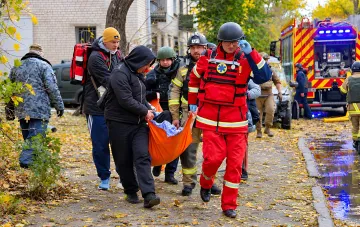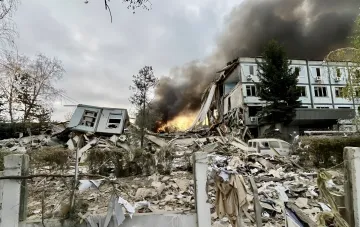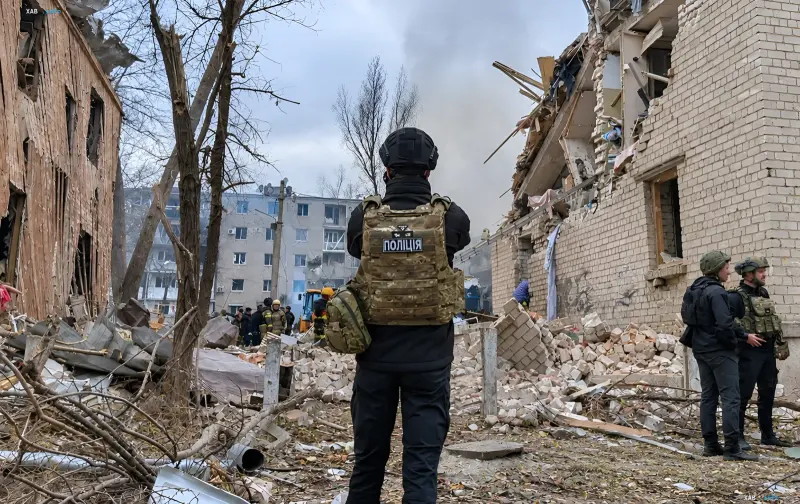
On the night of November 3, 2026, Russia launched a massive strike on Ukraine's energy infrastructure. According to Prime Minister Serhiy Koretsky and the DTEK company, facilities generating and transmitting electricity came under fire in nine regions of the country. In total, destruction was recorded in 14 regions. Large power plants in Dnipropetrovsk, Vinnytsia, and Kharkiv regions, as well as a number of important substations, including in western Ukraine, were hit. 'The damage is significant both at electricity generation facilities and in the grid,' Koretsky emphasized. Energy workers, SES rescue workers, medics, and police are already working at the sites, while the threat of new strikes, according to the authorities, persists.
Railway and Civil Infrastructure
In addition to the energy sector, Russian forces attacked railway infrastructure facilities. In Zaporizhzhia, passenger cars, diesel locomotives, and the station building were damaged, and an electric locomotive was hit in Kovel. Furthermore, strikes hit industrial enterprises and business warehouses in Kyiv, Zhytomyr, Vinnytsia, and Dnipropetrovsk regions. Special concern was caused by the situation in Kharkiv, where a missile hit a hospital building — according to authorities, 73 people were injured. All emergency services are working at the scene.
Scale of the Attack: Zelenskyy's Figures
Ukrainian President Volodymyr Zelenskyy specified in his address that during the night Russia launched 289 attack drones, 17 ballistic missiles, and 59 cruise missiles. The head of state also noted that the strike coincided with the U.S. Congress election day, which, according to him, highlights the calculated nature of the attack. Air Force Spokesperson Yuriy Ihnat spoke about the tactics' features: the missiles flew in waves — ballistic ones were launched around three in the morning, and cruise ones towards morning. According to his assessment, the overall enemy tactics have not changed.
Reaction and Consequences
Three thermal power plants stopped generation as a result of the nighttime strikes, creating additional loads on the remaining grid. Energy workers have begun emergency restoration work, however, given the scale of damage in both generation and the distribution grid, full restoration may take a significant time. Railway workers are assessing damage to stations and tracks, and medical services are providing assistance to the injured in Kharkiv and other affected regions. The threat of repeated strikes on infrastructure remains, and authorities are urging citizens to observe safety measures.