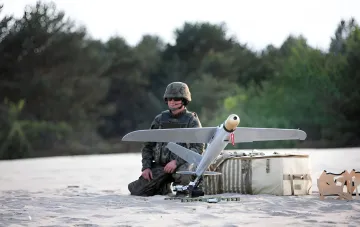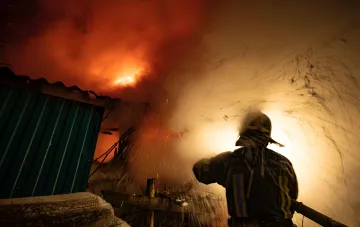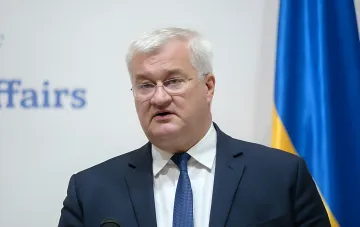
On the night of September 10, Russia carried out yet another massive aerial attack on Ukraine, beginning around 18:00 on September 9. According to the Defense Forces, the enemy launched 149 strike drones of various types, making this wave one of the largest in recent times. By the morning of September 10, as of 08:00, Ukraine's air defense system had destroyed or suppressed 128 enemy UAVs, while the Air Force warned that the aerial attack had not yet ended at the time of publication and Russian drones were still being detected in the sky.
Scale and directions of the attack
The drones were launched from multiple directions, which is characteristic of a dispersal tactic aimed at overloading air defense channels. Launches were recorded from Russian territory in the areas of Millerovo, Kursk, and Primorsko-Akhtarsk, as well as from the temporarily occupied territory of Donetsk Oblast and from Hvardiiske in occupied Crimea. This multi-vector scheme allows the adversary to simultaneously test different defense sectors and reduce the effectiveness of interception.
Repelling the attack: who and what defended the sky
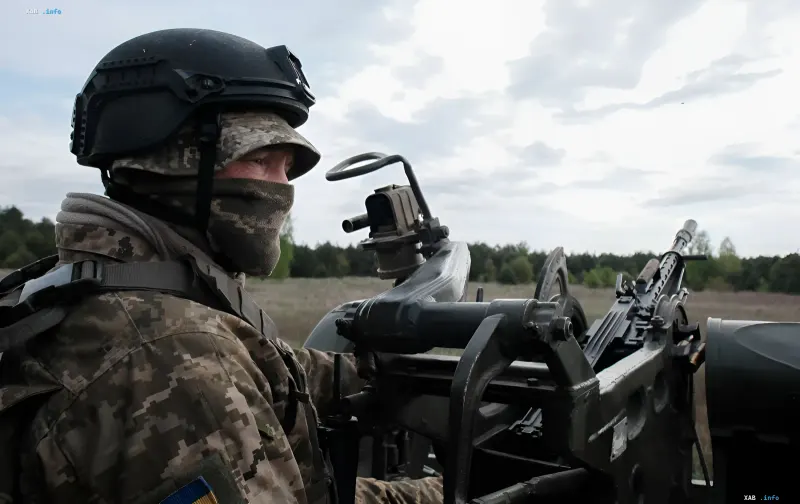
Practically all components of the air defense system were involved in repelling the aerial attack: aviation, anti-aircraft missile units, electronic warfare and unmanned systems units, as well as mobile fire groups of the Ukrainian Defense Forces. Coordination of these elements made it possible to shoot down or suppress 128 of the 149 launched drones by morning, however, according to reports, some targets reached their objectives, as confirmed by references to "hits."
Contradictory data
Open reports contain minor discrepancies in the figures that are important to take into account. Initially, "more than 140" drones were reported, while the revised figure is 149 strike UAVs — this is not a contradiction but a clarification. A more significant issue concerns the difference between the number launched (149) and neutralized (128) aircraft: 21 units are not accounted for in the air defense results. Some sources interpret this difference as confirmed hits on targets, while others emphasize that the data as of 08:00 are preliminary, since the attack was still ongoing at the time of the count and the final balance will be revised.
International context: Patriot and winter support
Against the backdrop of ongoing attacks, international support for Ukraine is intensifying. It is reported that Germany plans to transfer PAC-2 missiles to Kyiv for the Patriot air defense systems as quickly as possible, which should increase the range and effectiveness of interception. In parallel, Europe is discussing an aid package aimed at helping Ukraine repel the expected winter attacks by Russia. It is separately noted that Poland, following the "Ramstein" format meeting, is preparing its own support package for Kyiv.
What comes next
The situation remains dynamic: according to the Air Force, the aerial attack had not ended at the time of publication, and Russian drones continue to be detected in the sky. Final figures on the UAVs shot down and the consequences of the strikes will be clarified as the attack concludes. For Ukraine, a key factor will be the speed of delivery of Western missiles for the Patriot systems and the expansion of the winter aid package, which largely determine the air defense's ability to counter multi-vector waves of drones amid a shortage of its own ammunition.