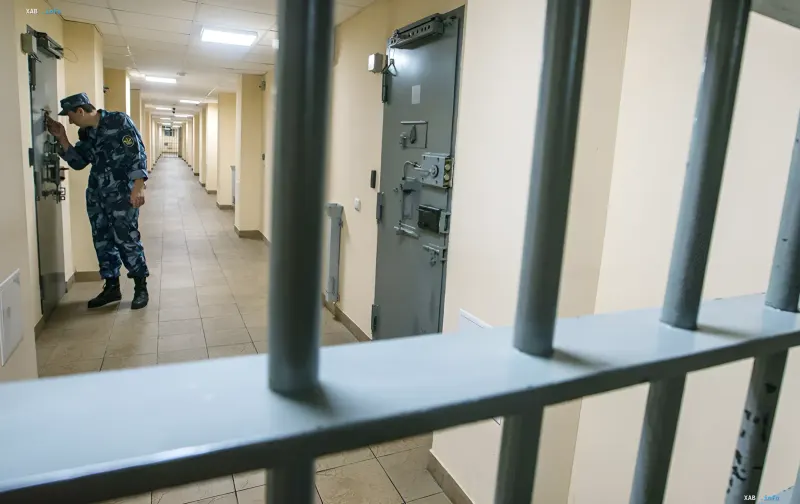
Russian authorities are preparing a large-scale overhaul of the penal system: according to a new edition of the Russian federal target program "Development of the Criminal-Executive System," reported by RBC-Ukraine, the country plans to build seven major FSIN (Penal Service) facilities that combine pre-trial detention centers (SIZO) and colonies of different security regimes into single complexes. The list of construction sites reportedly includes the occupied part of Ukraine's Kherson region. Russian opposition media call the project a "super-prison," which, by Moscow's design, is supposed to deliver significant savings on the upkeep of inmates and pre-trial detainees.
What Is a "Super-Prison" and Why Does Moscow Want It
The core idea of the project is multi-regime operation: a single facility is meant to house detention centers and colonies of varying security levels, allowing for reduced duplication of infrastructure and staff. According to official estimates, each such facility is designed for more than 20,000 people. The Russian Ministry of Justice claims that by merging SIZOs and colonies, spending on the upkeep of inmates and pre-trial detainees can be cut by 25–30%. An additional goal is to move facilities out of city limits: thus, the complex near Ulan-Ude is supposed to allow relocating a pre-trial detention center and four colonies beyond the urban boundary.
Where and When: From Tatarstan to Occupied Kherson Region
The first complex, per Russian authorities' plans, is slated to be launched in Tatarstan by 2030. The preliminary cost of building a single facility is estimated at 13–20 billion rubles. Among the other mentioned sites are the area around Ulan-Ude and the occupied part of Kherson region, where, according to the same program, a similar multi-regime facility is also planned. The full list of all seven sites is not fully disclosed in the open wording of the program, which limits precise verification of the list.
Savings Amid a Decline in the Inmate Population
The decision to build is made against the backdrop of a notable drop in the inmate population and chronic underfunding of the penal system. According to the cited data, over recent years the number of people in places of deprivation of liberty has fallen by nearly 40%: if at the end of 2021 there were about 465,000, by 2026 the figure had dropped to roughly 282,000, of which about 85,000 are held in SIZOs. Russian authorities do not hide that funds for improving conditions of detention are insufficient, which is put forward as the justification for consolidating facilities.
Contradictory Data
Here the versions do not form a single coherent picture. On the one hand, the official rationale for the project is economic: 25–30% savings and moving prisons out of cities. On the other, with the total inmate population down by nearly 40%, the feasibility of building facilities each for 20,000 places looks questionable, and the inclusion of occupied Kherson region indicates that the project's logic goes beyond pure economics. Meanwhile, according to reports by Germany's DW, the FSB has taken control of a number of FSIN pre-trial detention centers, indicating a strengthening of security structures' control over detention facilities rather than mere cost optimization. Thus, the Ministry of Justice's economic narrative and the real priorities (control, housing repressed individuals in occupied territories) do not always align.
Who Will Be Held in the Kherson Complex
The context of the Kherson part of the program is important: in the occupied territory, documented cases show that those held in custody include pro-Ukrainian activists, participants in rallies, local officials, members of security structures and territorial defense, as well as citizens suspected of passing information to the Ukrainian military or otherwise resisting. Human Rights Watch and the UN have recorded unlawful detentions, torture, and arbitrary deprivation of liberty as methods of pressure on the population. It is precisely these categories that, in effect, will form the "inmate base" of the new multi-regime facility in Kherson region, sharply changing the nature of the project compared to its formal economic justification.