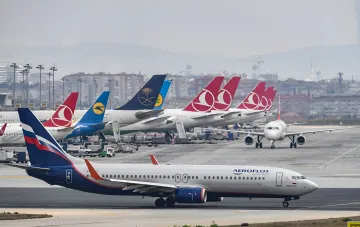
Russian Transport Minister Andrey Nikitin stated on September 10 that Moscow has sent Hanoi proposals for concluding an agreement on the so-called "wet leasing" of aircraft. This format involves transferring aircraft to a Russian carrier together with the crew and technical maintenance. "We have sent the corresponding proposals to our colleagues, and they are reviewing them," Nikitin said after talks between the Russian and Vietnamese delegations in Moscow. Vietnam has become one of the priority directions, however, as of the current moment, no such agreement with a foreign airline has yet been signed.
What is a "wet lease" and why does Russia need it
A "wet lease" is a form of aircraft rental in which the lessor transfers the aircraft together with the flight and technical crew, and also assumes responsibility for maintenance and insurance. For Russian airlines, this format has become virtually the only legal way to replenish their fleet without purchasing new aircraft. The need for additional aircraft arose after the introduction of international sanctions: Russian carriers lost access to purchasing Boeing and Airbus aircraft and also faced strict restrictions on the repair of these planes and the supply of spare parts. Foreign aircraft account for about two-thirds of Russia's civilian fleet and handle around 90% of passenger traffic, so their unavailability is hitting the entire industry.
The scale of the fleet's downtime
According to calculations by the publication "Kommersant," in the summer of 2026, 130 out of 673 aircraft of the 11 largest Russian airlines, which account for more than 90% of passenger transport, were out of service. For comparison: a normal level is considered to be simultaneous downtime of up to 10% of the fleet due to scheduled maintenance. Thus, the current level of downtime far exceeds acceptable parameters and indicates a systemic shortage of spare parts and service support.
Legal basis and other partner countries
The legal basis for foreign deals was laid in April 2025, when Russian President Vladimir Putin signed a decree allowing Russian airlines to lease aircraft from foreign companies under a "wet lease" scheme. Before that, this format was available exclusively between Russian carriers and only for domestic flights. In addition to Vietnam, Moscow is in negotiations with a number of other countries: Central Asian states, Qatar, Kuwait, and Ethiopia. However, as Nikitin emphasizes, none of these directions has yet resulted in a signed contract.
Contradictory data
There is a notable gap between the formal permission granted in April 2025 and the practical results: after more than 17 months, no "wet lease" agreement with a foreign operator has been concluded. Ethiopia, for example, rejected the Russian proposal in the summer of 2025, citing the government's lack of authority to compel Ethiopian Airlines to transfer aircraft. In addition, potential partners express concerns about possible secondary sanctions from the United States, which makes the negotiations extremely sensitive. Thus, although the legal framework exists, actual deals remain at the level of "proposals under consideration" rather than signed contracts.
Impact on the market and Aeroflot shares
Against the backdrop of ongoing negotiations and the continued uncertainty over fleet maintenance, shares of Russian "Aeroflot" are showing volatility. Recently, the company's stock fell by more than 5% following a public warning by Ukrainian President Volodymyr Zelensky addressed to airlines that continue to operate flights in Russian airspace. Investors, accordingly, are factoring in both sanctions risks and geopolitical instability affecting the operations of the largest carriers.