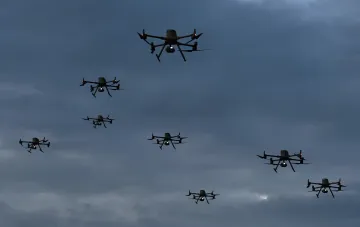
In the Russian Federation, the search continues for economical and unconventional ways to combat unmanned aerial vehicles by utilizing atypical military developments. During a recent visit by the Russian leadership to the Chebarkul training ground, the general public was demonstrated a new anti-drone system created on the basis of the civilian Alazan hail suppression rocket. Such initiatives highlight the desire of the Russian military-industrial complex to cheapen the air defense processes for small-scale targets by adapting peaceful equipment for military needs.
Background and Modernization Features
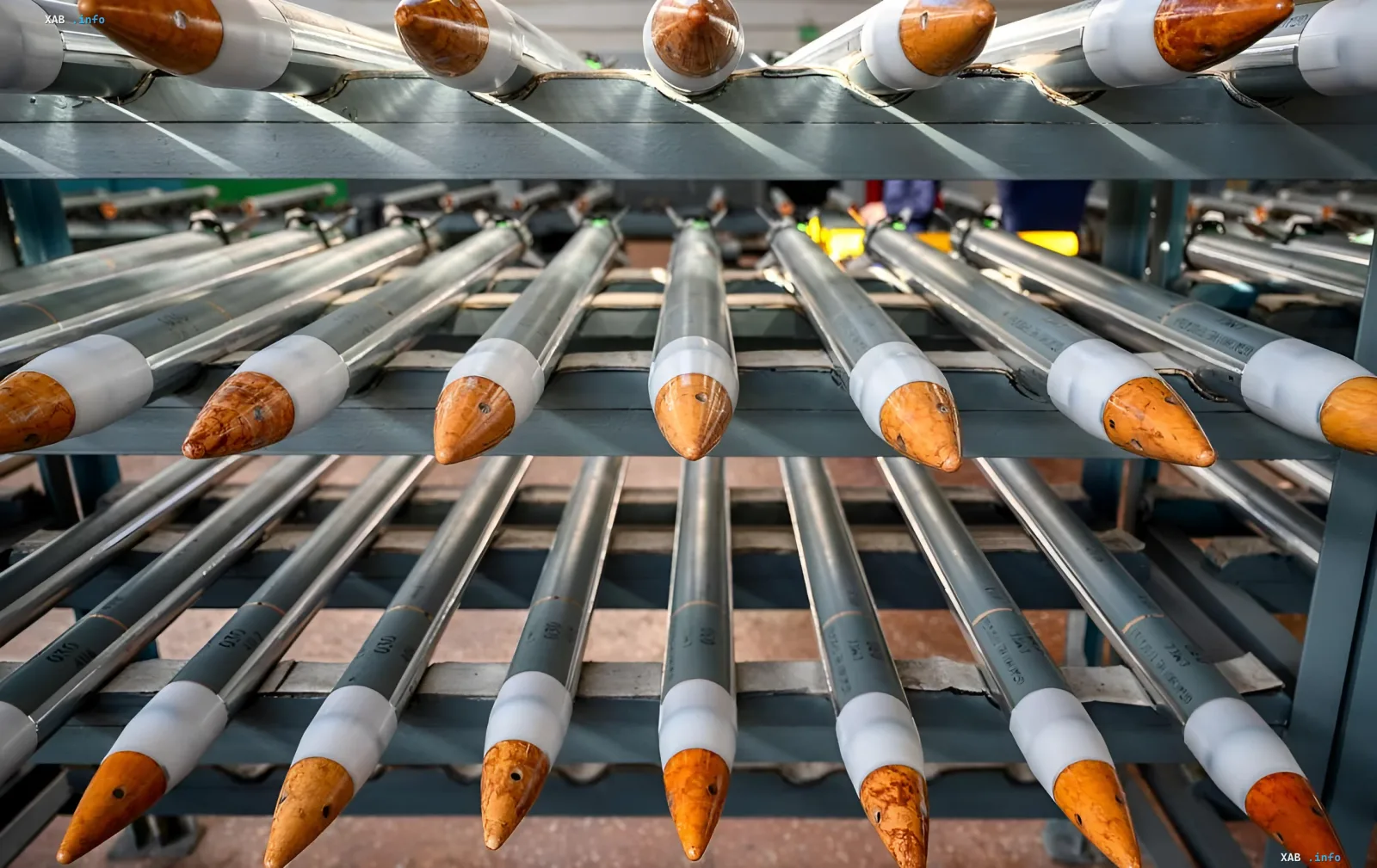
Official footage showcasing the unusual weaponry appeared in the public domain in early October 2026 following coverage of the trip to the training ground by propaganda TV channels and government resources. According to published data, developers carried out a deep modification of the civilian rocket, which was originally intended exclusively for protecting agricultural land from hail. The stated cost of a single modernized unit is estimated by manufacturers at up to 12,000 dollars, which is significantly cheaper than classic anti-aircraft missiles.
Technical Characteristics and Design
Experts from the specialized publication Militarnyi analyzed the presented samples in detail and concluded that the basis was taken from the Alazan-2M or Alazan-6 series munitions. In their standard peaceful configuration, such products are capable of covering a distance of about 10 kilometers and rising to an altitude of up to 8 km, transporting about half a kilogram of a special reagent. However, for military use, instead of the reagent, engineers integrated a fragmentation warhead, and the nose section was equipped with a block of control surfaces, a fuze, and a potential homing head.
Controversial Data
Despite the active media demonstration of the TsKB-040 launcher in the form of a lattice metal frame with tubular guides, military analysts express skepticism regarding the actual effectiveness of the system. Official Russian sources claim high accuracy and low cost of the new interception tool, while independent experts point to the difficulty of effectively guiding converted agricultural missiles onto fast and maneuverable air targets without large-scale refinement of onboard electronics and communication systems.
Context and Global Counterparts
Attempts to create budget-friendly drone countermeasures are being undertaken in many countries around the world against the backdrop of the rapid development of unmanned technologies. Thus, Ukrainian developers and Defense Forces are also actively introducing specialized interceptor drones, such as the General Chereshnya Bullet or systems from the Wild Hornets association, which demonstrate high efficiency in real combat conditions. Against this background, the Russian attempt to resuscitate hail suppression rockets looks like a forced step amid a shortage or high cost of specialized short-range anti-aircraft systems.