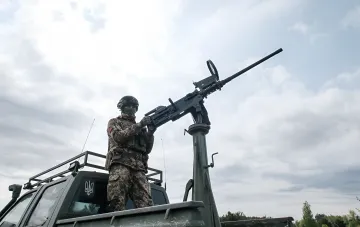
Alexander Shokhin, head of the Russian Union of Industrialists and Entrepreneurs (RSPP), in an interview transmitted by the TASS agency and cited by RBC-Ukraine, stated that Russia cannot provide full-fledged air defense for all large industrial facilities due to their significant size. According to him, many enterprises were designed back in Soviet times taking into account a nuclear war scenario, but in modern combat conditions, such infrastructure has proved vulnerable to unmanned aerial vehicle attacks.
The legacy of Soviet design
Shokhin explained that in the USSR, production workshops were placed at a considerable distance from each other. This approach was supposed to help preserve at least part of the production capacity in the event of a nuclear strike. "Now we understand that this is not bad. But, on the other hand, communications are very stretched," the RSPP head lamented. It is precisely this elongation, in his estimation, that makes the protection of industrial complexes, whose length spans several kilometers, an extremely difficult task for modern air defense systems.
The scale of vulnerability
We are talking primarily about metallurgical, chemical, and other enterprises built according to standards that did not take into account modern threats in the form of massive drone attacks. Shokhin emphasized that protecting objects several kilometers long is practically impossible in current conditions. This means that even with anti-aircraft missile systems and electronic warfare equipment, Russian industrial giants remain in the risk zone during every massive drone raid.
Context of Ukrainian strikes
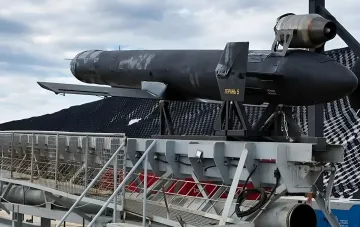
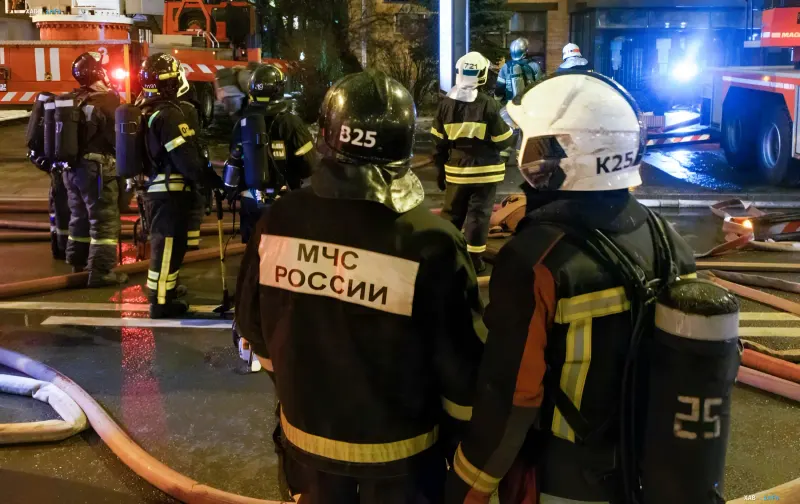
Ukrainian strikes, as noted in the article, are aimed not only at Russian oil refineries but also at military enterprises, airfields, chemical plants, large data processing centers, and other infrastructure facilities. In September alone, due to damage and fires, five refineries suspended oil refining, including the Moscow Oil Refinery. According to RBC-Ukraine, during one of the recent weeks, Ukraine sent thousands of drones to Moscow and the surrounding region, and also carried out one of the largest attacks on the capital of the Russian Federation.
Authorities' reaction and legal mechanisms
Against the backdrop of growing vulnerability of industrial infrastructure, in August Vladimir Putin signed a decree providing for the possibility of transferring enterprises and facilities that become targets of drone attacks to state ownership. This document essentially enshrines the mechanism of "nationalization" of damaged or potentially vulnerable assets amid ongoing strikes. Shokhin's statement came against this background as a public recognition that the existing air defense system is unable to cover all industrial facilities in the country, and the Soviet layout calculated for a nuclear scenario is not adapted to the tactics of massive drone attacks.