
Over the past day, from October 4 to October 5, 2026, the Russian army suffered record losses on the frontline. According to the official morning report by the General Staff of the Armed Forces of Ukraine, in a single day, Ukrainian defenders eliminated and wounded over 2,000 Russian military personnel. Such large-scale losses are recorded against the backdrop of ongoing intense combat operations in key frontline directions.
Scale of Destroyed Equipment and Drones
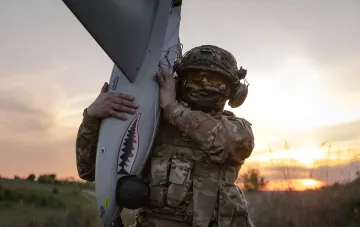
In addition to enemy manpower, units of the Ukraine Defense Forces delivered crushing blows to the occupiers' logistical base. Over the past day, about 1,900 unmanned aerial vehicles of various types were destroyed or suppressed, along with hundreds of units of automotive equipment, artillery systems, and armored vehicles. This intensity of airspace clearance and rear supply severely undermines the enemy's offensive potential.
Context and General Loss Dynamics
These figures continue the trend of massive exhaustion of Russian troops observed throughout September 2026. Military analysts note that the high density of drone deployment by both sides and the shift to a war of attrition lead to a daily increase in the rates of irreversible and sanitary losses of the Russian army. General statistics since the full-scale invasion began on February 24, 2022, demonstrate an exponential growth in the depletion of enemy personnel.
Contradictory Data
It is worth noting that independent verification of such daily frontline reports under active combat conditions is extremely difficult. The Russian Ministry of Defense traditionally does not publish current data on daily personnel losses, while the Ukrainian General Staff includes both killed and heavily wounded enemy service members in its general statistics. International observers and experts often point to methodological differences in calculations, yet emphasize the general trend toward a sharp increase in the burden on Russian army logistics and medical services.
Experts predict that maintaining such rates of resource depletion could significantly impact the further planning of strategic operations ahead of the 2026-2027 winter period.