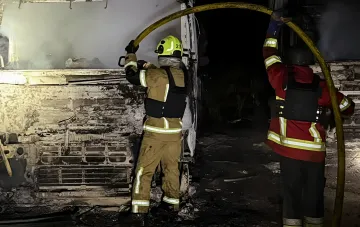
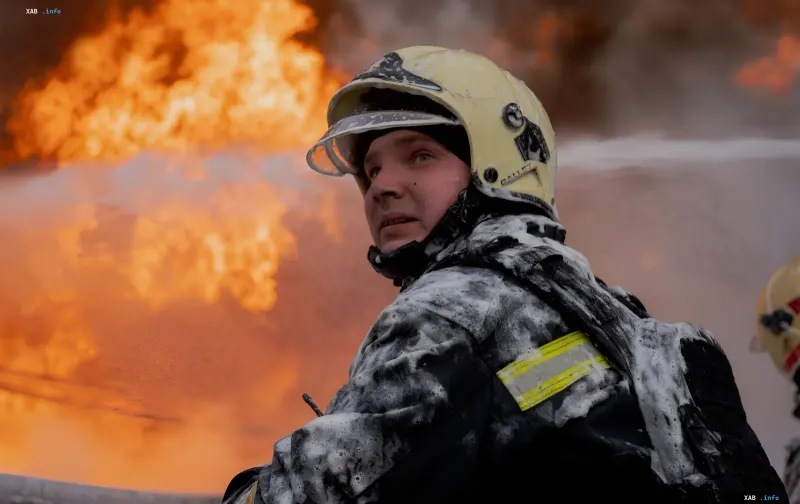
On the night of 5 September, Russian military forces again struck infrastructure in Odesa Oblast. According to information gathered on the ground, the enemy employed strike unmanned aerial vehicles; as a result of the hits, a warehouse building used for storing food products caught fire. The blaze spread to part of the structures, requiring an immediate response from rescue forces.
Course of the attack and the work of rescuers
Rescue crews arrived at the scene promptly. It is noted that extinguishing the fire was complicated by the fact that air raid alerts sounded repeatedly in the work area, yet the personnel continued firefighting operations and ultimately the fire was put out. The State Emergency Service also released footage from the scene, showing the aftermath of the night attack and the direct work of the rescue units.
The facility had previously been struck
According to rescue service data, this warehouse facility is not for the first time becoming a target of Russian strikes. In particular, on 4 September the Russians attacked warehouse premises in Odesa Oblast twice, where food and industrial goods were stored. Then, as a result of the strikes, the buildings were damaged and fires broke out, spreading to parked trucks. The repeated nature of the strikes on the same facility indicates that the enemy is deliberately targeting the region's logistics and warehouse hubs.
Consequences and preliminary losses
Preliminary information indicates that the night attack resulted in no fatalities or injuries. At the same time, Odesa Oblast regularly suffers from Russian attacks using strike drones, which makes warehouse and food infrastructure one of the most vulnerable targets in the region. Final data on the scale of material damage was being clarified at the time of preparing this material.
Context: regular strikes on the region
The series of incidents on 4 and 5 September fits into a broader picture of systematic shelling of Odesa Oblast. The repeated hitting of the same food warehouse shows that such facilities remain a priority for the enemy, while rescue services are forced to work under multiple alerts and the risk of repeated hits, raising the safety requirements for personnel at the firefighting site.
Contradictory data
There are discrepancies between the main materials and some sources that must be taken into account. First, the base text states that there were no fatalities or injuries and that the enemy used exclusively strike drones. At the same time, the outlet Unian (source 2) reports in its headline about a fatality, a burning main gas pipeline, and that Odesa Oblast was attacked with "drones and missiles." The presence of a missile component and a main gas pipeline is absent from the base text, and the information about a fatality contradicts the statement that there were no injured. Second, there is a nuance with the date: the base text places the main strike on the "night of 5 September," whereas the current date of preparing the material is 5 September 2026, and the publication timestamp of source 1 (rbc.ua) corresponds to the beginning of September; the exact window of the night strike (from the 4th to the 5th or from the 5th to the 6th) requires confirmation. Until these versions are reconciled, the information about fatalities, missiles, and the gas pipeline should be considered unconfirmed within this material.