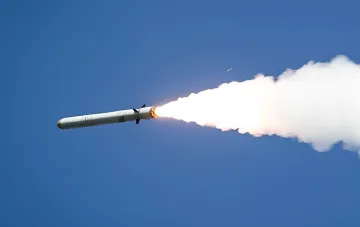
On the night of July 30, an event occurred in Europe that could have far-reaching geopolitical consequences. Cezary Tomczyk, Deputy Minister of National Defence of Poland, officially confirmed that the country's airspace was violated by a Russian Kh-101 cruise missile. This statement came after a massive Russian attack on western regions of Ukraine, during which an unprecedented wave of strikes in recent months was launched.
Threat Identification
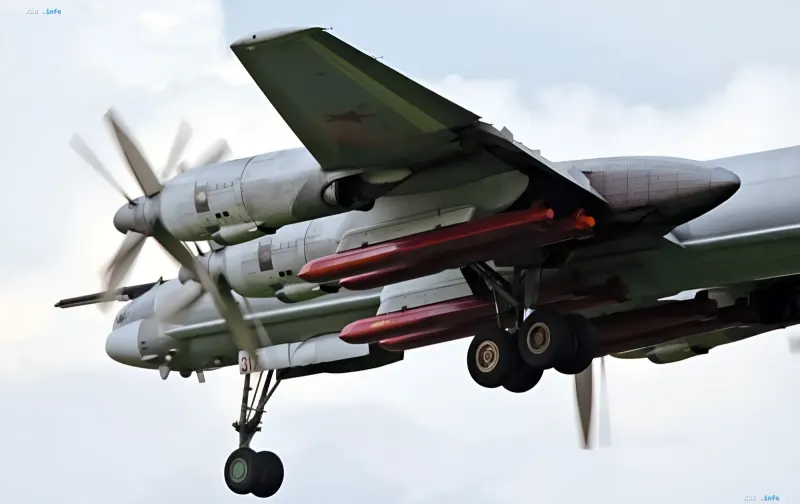
According to Tomczyk, information about the type of missile was obtained during a direct dialogue with Operational Commander General Nowak. Polish officials can state with full responsibility that it was indeed the Kh-101. This is a high-precision weapon capable of carrying not only conventional but also nuclear warheads. The missile was not intercepted in the air and exploded upon impact with the ground, leaving significant destruction in its wake.
The scale of the attack during which the incident occurred also caused concern. While Russia usually launches between 10 and 20 missiles at Ukraine, approximately 70 munitions were recorded falling that night. Tomczyk clarified that at 3:00 AM, twenty of them were flying in close proximity to the Polish border.
Actions of the Ukrainian Air Force
The Ukrainian side played a key role in preventing the escalation of the conflict. According to the minister's report, a Ukrainian Air Force pilot visually tracked the missile right up to the state border. 20 seconds before the munition could have entered Polish airspace, the pilot decided to change course. This action avoided a situation where Polish F-16 fighters would have had to shoot down the missile over their own territory, which could have led to unpredictable consequences.
Impact site and consequences
On the night of July 30, an air raid alarm was declared in eastern Poland. Residents of the Lublin Voivodeship reported hearing explosions. Later, a large crater was discovered in a field near the village of Tarnawa-Kolonia. Preliminary data suggests it was formed after the fall of an unidentified object, which was subsequently identified as a Kh-101.
Polish Prime Minister Donald Tusk confirmed that the fallen missile was equipped with a warhead. He also expressed confidence that the munition arrived from Russian territory. Acting Ukrainian Minister of Foreign Affairs Andriy Sybiga also confirmed the fact of a Russian cruise missile flying over Polish territory.
Question of intent
One of the main questions arising after the incident was the reason for the border violation. Was the launch of the missile towards Poland an intentional act by the Russian side or the result of a guidance failure? To this question, Cezary Tomczyk replied that "each of the options is possible". So far, neither side has presented conclusive evidence of intent, however, the very fact of a missile with nuclear potential falling on the territory of a NATO member remains a serious challenge to regional security.