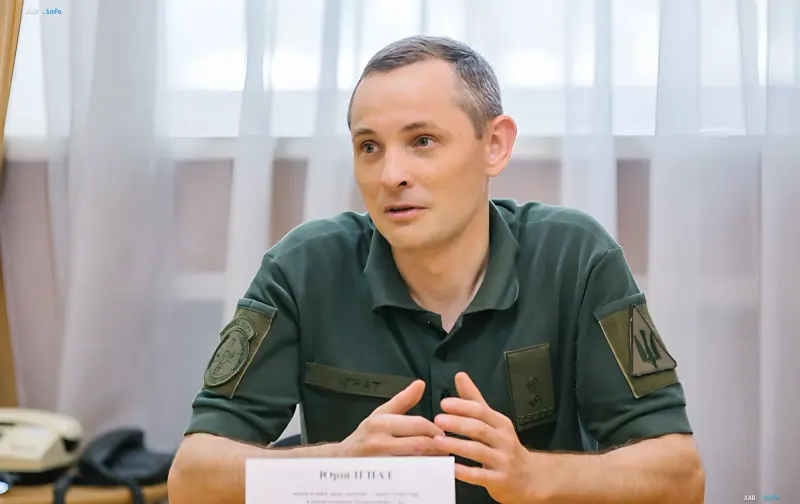
On the night of November 3, 2026, Russia launched another massive strike on Ukraine, which, according to Air Force Spokesperson Yuriy Ihnat, unfolded in several waves. Speaking on the national telethon, he stated that around 3:00 AM the enemy deployed ballistic missiles, and closer to morning cruise missiles entered Ukraine's airspace. This is reported by RBC-Ukraine.
Composition of the weapons used
According to Ihnat's assessment, the attack involved Kh-101 missiles launched from strategic aviation, as well as Iskander-Ks. The ballistic missiles included Zirkons, Iskander-Ms, or KN-23s. The enemy additionally used Kh-59 and Kh-69 guided air-to-surface missiles. The speaker emphasized that the nighttime strike weapons were directed primarily at critical infrastructure and energy facilities.
Warnings and enemy tactics
As Ihnat noted, the military had warned in advance about an impending massive strike, evidenced by the activity of strategic aviation at base airfields. According to him, such strikes have become "routine" for Ukraine, and the enemy's overall tactics have not changed: the enemy takes into account what forces and assets the defense forces and the Air Force can deploy, as well as shortages of ammunition, anti-aircraft guided and aviation missiles, and weather conditions, based on which it selects directions and routes.
Wave of jet-powered drones
At the time of Ihnat's statement, an attack by jet-powered drones was ongoing, entering from the north and south — particularly through the Odesa, Mykolaiv, and Chernihiv regions — and heading mostly westward. Cruise missiles launched from aircraft, including from the Vologda Oblast area, entered through the eastern regions before moving toward the targets the enemy intended to attack.
Results: interceptions and impacts
According to data provided in the review, on the night of November 3, Russia launched missiles and 289 strike drones. Air defense forces shot down or suppressed 309 targets; however, missiles and drones hit 23 locations. Thus, despite large-scale interceptions, some of the weapons reached Ukrainian territory.
Statement by the Russian Ministry of Defense
Concurrently, RBC-Ukraine reported that the Russian Ministry of Defense claimed responsibility for strikes on the energy sector, stating that thermal power plants in the Vinnytsia, Dnipropetrovsk, and Kharkiv regions, as well as Odesa ports, had been hit. These statements by the Russian side coincide in the timeframe with the 23 localized impacts recorded by the Ukrainian side.