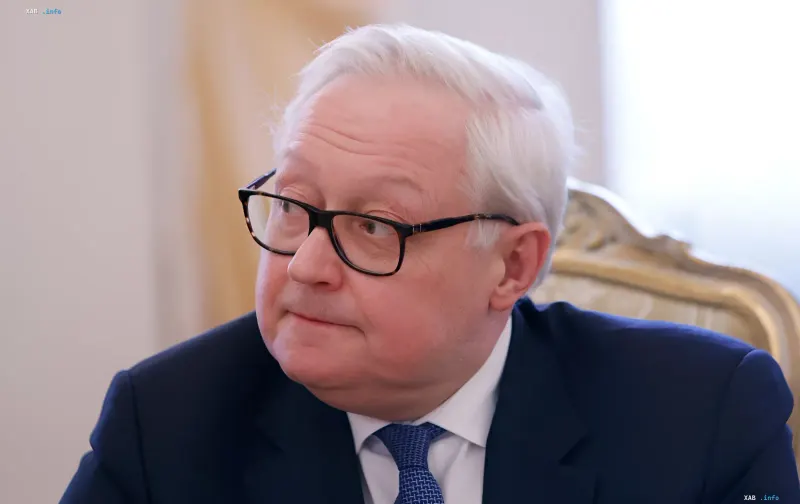
Deputy Foreign Minister of the Russian Federation Sergei Ryabkov, in an interview with the Interfax agency, categorically rejected the possibility of granting Ukraine any forms of 'quasi-membership' in NATO as part of the discussed security guarantees. According to him, even searching for a formula for such quasi-membership and trying to find a 'creative solution' in this area represent an option unacceptable to Moscow. 'We are discussing security guarantees, first of all, in the context of ensuring the security of our own country, and that is exactly what is at stake,' the diplomat emphasized, as reported by RBC-Ukraine citing Interfax.
Context: The Berlin Round and the US Initiative
Ryabkov's statement came against the backdrop of a new round of talks between Ukraine, the US, and European countries on a peace plan, which took place in Berlin on November 14–15. The parties discussed, among other things, the most difficult issues—territorial ones and security guarantees. According to The Wall Street Journal, Washington is offering Kyiv legally binding security guarantees similar to Article 5 of the Washington Treaty, but without Ukraine's formal accession to the Alliance. WSJ sources indicate that Washington promises protection against any aggression in an attempt to 'break the deadlock' in the negotiation process.
Moscow's Position: Recognizing the Impossibility of Accession
Ryabkov explained that within the framework of the negotiations, Russia insists on recognizing that Ukraine will not become a member of NATO. 'When this happens, I think the issue of security guarantees can be discussed one way or another,' the deputy minister stated. At the same time, he emphasized that Moscow 'does not close itself off from dialogue,' but stressed that this is not a dialogue about Ukraine's accession to the Alliance, as this is 'an absolutely unacceptable option.' Thus, the Russian side sets the legal consolidation of the impossibility of Kyiv's integration into NATO as a mandatory condition for continuing security negotiations.
Kyiv's and European Partners' Reaction
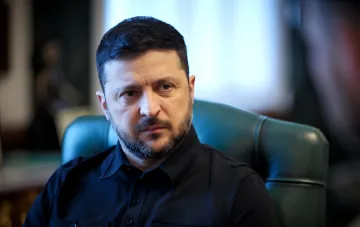
Ukrainian President Volodymyr Zelenskyy previously stated that Kyiv is counting on five documents, some of which concern security guarantees and will be voted on in the US Congress. According to the Ukrainian leader, a corresponding agreement already exists. In parallel, European countries presented their own security guarantee plan for Ukraine, including six key points: military support, a ceasefire monitoring mechanism, legally binding security guarantees, and other provisions. Thus, at the current stage of the negotiation track, three different approaches to the security issue have emerged: the American 'Article 5 without membership' model, the European multi-component plan, and the Russian demand to completely exclude Ukraine from NATO's orbit.
Prospects and Analytical Assessment
The categorical position voiced by Ryabkov sets Moscow's red line in the negotiation process and essentially rules out a compromise on the format of guarantees. For Washington and Europe, this means that their current proposals—whether an equivalent to Article 5 or the European six-point package—cannot be accepted by the Russian side in their current wording. Further progress on the peace plan will likely require either a revision of the guarantee wording or taking them outside the framework of bilateral Russia-Ukraine negotiations. Observers note that the divergence of positions on the security issue remains one of the key obstacles to reaching an agreement, and the upcoming rounds of talks will be dedicated precisely to trying to bridge this gap.