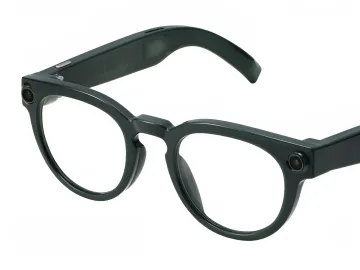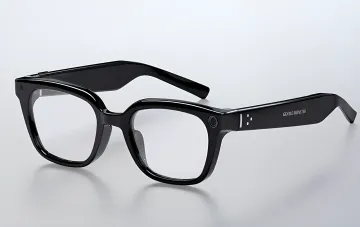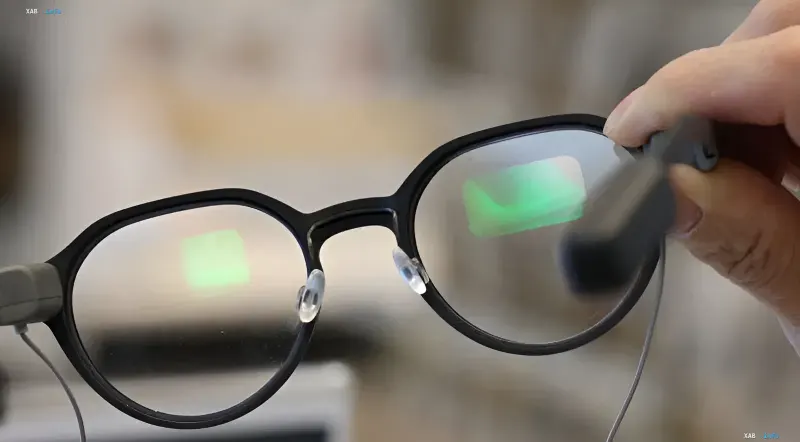
The comfort of augmented reality glasses is ultimately determined by their weight, and weight largely depends on the gadget's lenses and glass. It is these elements that direct light from a miniature projector onto the retina, making them complex and bulky. On November 11, 2026, a paper was published in the journal Nature where scientists from Pohang University of Science and Technology (POSTECH) and Samsung Research demonstrate a way to make such lenses significantly thinner — down to 1.5 mm.
One-Third the Thickness of Commercial Lenses
The stated thickness of the developed lenses is approximately one-third of the thickness of lenses used in current commercial AR glasses. The key element of the development is a metasurface — a structure with nanometer-sized elements smaller than the wavelength of visible light. Such a structure allows controlling the phase and propagation direction of light, reducing its losses inside the transparent lens. The authors of the work are POSTECH scientists and Samsung Research researchers.
The Problem with Traditional Optics
In traditional AR glasses, diffractive optical elements inside the glass are used to redirect the image from the projector to the user's eye. Light reflects multiple times inside the lens, essentially propagating through a waveguide, but part of the radiation is scattered. This reduces image brightness, and increasing the lens area is accompanied by additional light losses.
How the New Optical System Works
In the new work, researchers placed a metasurface consisting of specially formed nanostructures in the waveguide area. The geometry — shape and size — and the distance between nanoelements on this surface were chosen so that the light direction depends on the angle and point of its entry. To form a full-color image, the researchers combined two waveguide layers: one designed to transmit blue and green light, and the second for red and green.
Prototype Results
The developed optical system made it possible to obtain a brighter image while keeping energy consumption at a level comparable to existing devices. Essentially, the metasurface nanostructures reduced light losses that would otherwise be higher due to multiple reflections from the waveguide walls on the way to the user's pupil. According to the researchers, the prototype provided good readability of white text in bright daylight, and indoors, the full-color image was maintained even when display power was reduced to 30% of the initial level.
Path to Commercialization
This is not just about reducing lens thickness, but about simultaneously solving several tasks: maintaining brightness, ensuring a sufficient field of view, and reducing optical dimensions. At the same time, the development remains a prototype. For further commercialization, researchers must achieve similar characteristics using a single waveguide layer instead of two, as well as reduce rainbow halos and blurring that occur when external light interacts with nanostructures. The developers expect to bring glasses with the new optics to the market within three years.