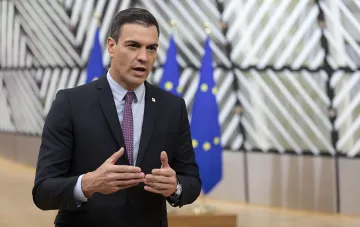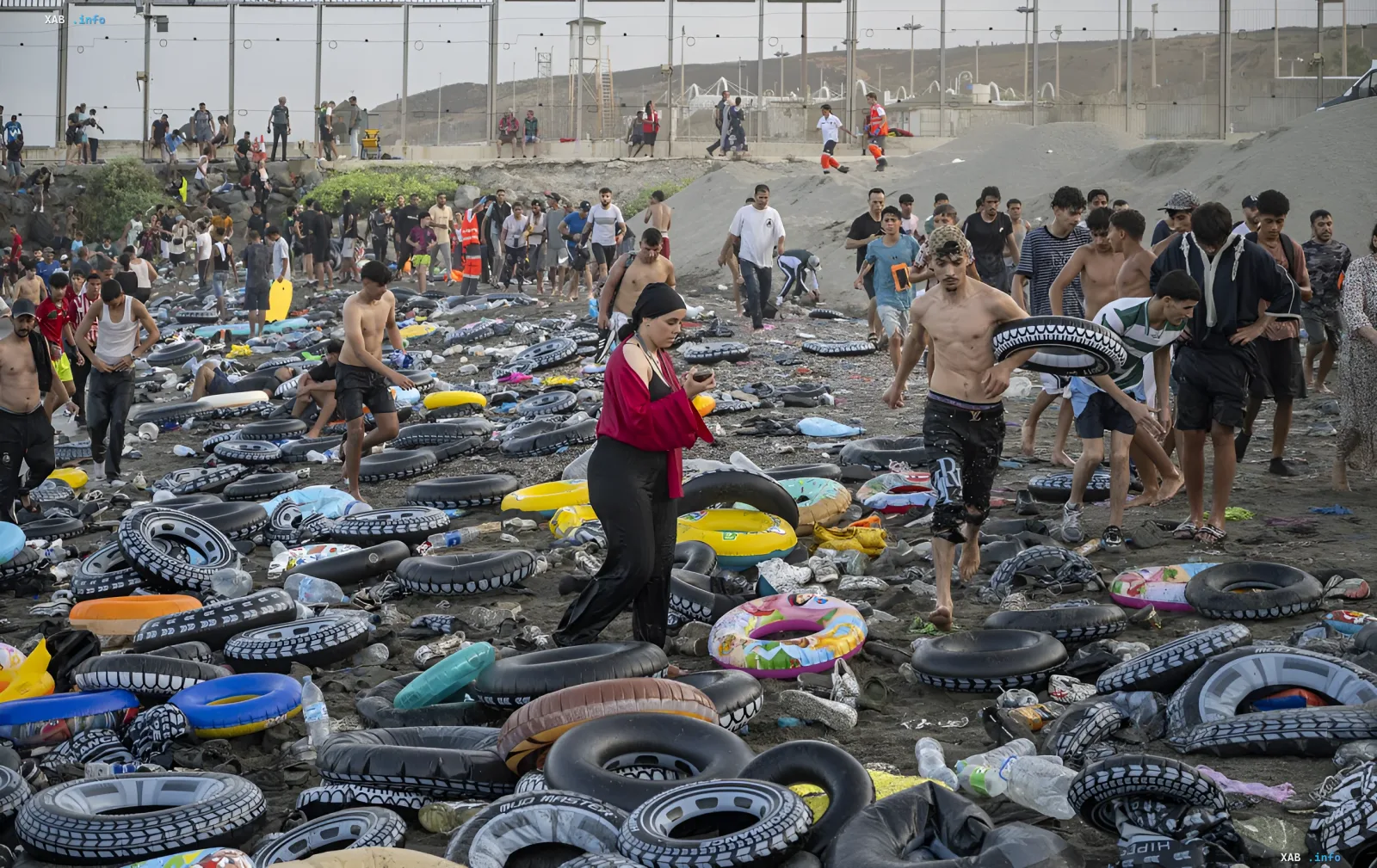
At the end of July, the Spanish enclave of Ceuta faced an unprecedented migration surge: around 60,000 people broke into the city within a single day, accounting for nearly two-thirds of its usual population. Against this backdrop, Spanish Prime Minister Pedro Sánchez stated in an interview with the Cadena SER radio station that the mass influx of migrants may have been provoked by deliberate disinformation spread on social networks linked to Russia, with the involvement of Israeli media and an ultraright international organization. According to him, the government continues to investigate the causes of the crisis and cannot yet definitively name a specific state as the organizer.
Disinformation Around the Supreme Court Ruling
As Sánchez explained, the fake campaign was built on a distortion of the Spanish Supreme Court ruling of July 8. In social networks, he claimed, false information was spread claiming that migrants who managed to reach Ceuta could not be deported. According to the Madrid government's assessment, this narrative became one of the triggers that pushed tens of thousands of people to attempt to cross the border. The Prime Minister emphasized that the investigation is ongoing and that "the government must act based on reliable facts."
Reaction from Moscow and Jerusalem
The accusations directed at the two countries were quickly refuted. Israeli Foreign Minister Gideon Saar rejected Sánchez's statements and, moreover, accused the Spanish Prime Minister of lying. In the Kremlin, the position was formulated more briefly: Russian President's official spokesperson Dmitry Peskov stated that Russia is allegedly not involved in the migration crisis in Ceuta. Thus, neither of the accused parties confirmed its connection to the information campaign.
Contradictory Data
Here the versions of the parties directly diverge. On the one hand, Pedro Sánchez publicly points to Russian social networks, Israeli media, and an ultraright international organization as channels for spreading disinformation that led to the influx. On the other hand, both Israel and Russia categorically deny their involvement: Saar calls the accusations lies, while Peskov declares Moscow's non-involvement. Meanwhile, Sánchez himself hedges, saying that the government "does not have a full picture of what happened" and that the investigation is not complete, so a final attribution of responsibility has not yet been made. It is important for the reader that, at the time of publication, none of the parties presented public evidence, and the version of a "Russian-Israeli trace" remains a statement by the Spanish Prime Minister, not an established fact.
Progress of the Investigation and Current Situation
In addition to the statement itself, related incidents were recorded in August. It was reported that on August 19, around 60 migrants reached mainland Spain in the province of Murcia. In Ceuta itself, hundreds of migrants staged a protest on the city beach, demanding asylum in Spain. According to Sánchez, the Madrid government continues to look into the causes of the crisis, relying on verifiable data rather than political speculation.