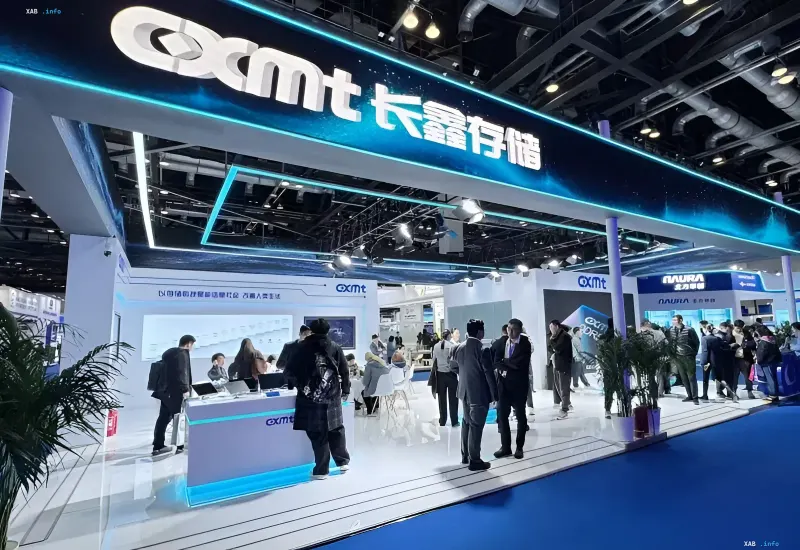
US sanctions are forcing Chinese memory manufacturer CXMT to seek non-standard technological paths to strengthen its market position. Restrictions on the supply of lithographic equipment deprive the company of the opportunity to use traditional and simpler methods of increasing DRAM cell density, forcing an early transition to the complex 4F2 architecture. Amid severe sanction pressure, the Chinese giant intends to launch the production of modern DDR5 memory in RDIMM form factor using advanced cells before the end of the current year.
A Forced Technological Race
According to CXMT President Cao Kanyu, the company expects to be the first to introduce the 4F2 architecture, outpacing recognized global industry leaders from South Korea and the United States. Moving from traditional 6F2 layouts to 4F2 class cells allows for a dramatic increase in element density on the silicon wafer and total stored data volume. However, leading experts agree that this acceleration is largely a forced measure due to the impossibility of applying extensive scaling methods under US bans.
Expert Assessments and Technical Barriers
Nomura senior analyst Changwon Chung emphasizes that Korean companies have several relatively easy methods to increase memory density and will move to more complex ones only after exhausting them. At the same time, representatives of the South Korean semiconductor industry point to serious accompanying challenges: the transition to 4F2 and 3D DRAM inevitably creates the problem of efficient heat dissipation. CXMT faces the challenge not only of solving this design task but also of organizing mass production considering thermal loads.
Strategy of South Korean Giants
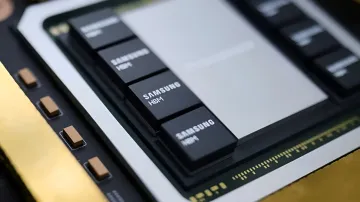
Unlike their Chinese competitor, Samsung Electronics and SK hynix are acting more methodically, as they are not restricted from acquiring advanced equipment, including the latest High-NA EUV lithography systems from ASML. SK hynix announced work in the 4F2 direction last year, while Samsung plans to combine 4F2 architecture with a vertical channel transistor layout. Thus, South Korean manufacturers rely on evolutionary and deeply calculated infrastructure development, avoiding premature risks.