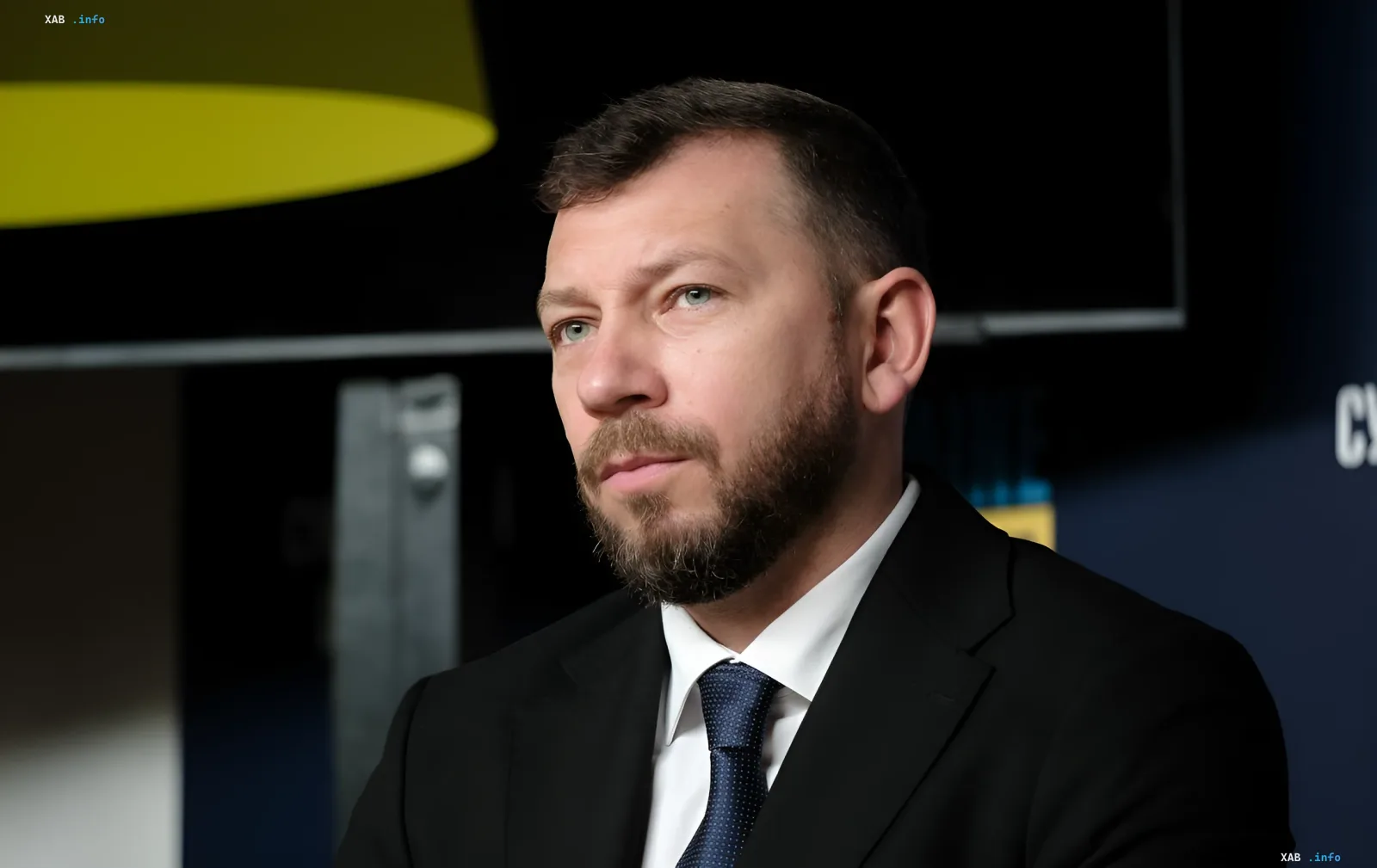
Alexander Klymenko, head of the Specialized Anti-Corruption Prosecutor's Office (SAP), stated that Ukraine's anti-corruption bodies will move to systematic verification of the origin of funds deposited as bail for suspects in corruption-related criminal cases. According to him, particular interest for law enforcement lies in cases where large sums of cash are provided by individuals whose official income objectively does not allow them to dispose of such funds. Klymenko made this statement in an interview with RBC-Ukraine, emphasizing that this is not about one-off checks but about an established procedure that will be applied "in many cases."
Verification Mechanics: The Chain from Cash to the Court Account
To determine the origin of funds, the SAP intends to use financial monitoring tools. As Klymenko explained, the task of law enforcement is to trace the entire chain: from the person who initially deposited the cash to the moment these funds are credited to the account of the Higher Anti-Corruption Court. A key novelty of the procedure is that requests to the Financial Monitoring Service will be sent immediately, without prior registration of separate criminal cases. "We, in principle, check right away. We turn to the Financial Monitoring Service without registering criminal cases, so that they can conduct and trace the chain of the funds' appearance in the financial system at all," the SAP head emphasized. In his logic, this approach allows for the prompt fixation of abnormal financial flows at an early stage, without waiting for the formal opening of a new case.
The Question of Bail for Yermak and the Parallel with the Halushchenko Case
During the interview, journalists asked Klymenko a direct question: will the funds deposited as bail for the former head of the Office of the President, Andriy Yermak, be checked? The SAP head answered that the checks will cover "many cases" and that the anti-corruption bodies are already working in this direction. However, when asked whether there are grounds to believe that the bail for Yermak involved "the same story" as with the former energy minister, Herman Halushchenko, Klymenko refused to give any assessments. "We need to gather a certain factual base, and then work with it and draw conclusions," he stated, emphasizing that he does not want to "put forward any theories or versions." Thus, as of the time of the statement, there are no publicly confirmed or refuted parallels between the two episodes.
Context: Operation "Forrest Gump" and 150 Million in Cash
Klymenko's statement came against the backdrop of an ongoing high-profile investigation. On August 19, 2026, the NABU and the SAP announced the launch of Operation "Forrest Gump," during which, according to the investigation, the activities of an organized group were exposed, allegedly including current and former members of parliament, officials of the Office of the President, and other individuals. One of the key episodes of the case became, according to the prosecution, the legalization of 150 million hryvnias in cash: the funds were transferred through a series of accounts of controlled companies and then used to post bail for one of the suspects in the "Midas" case. It was precisely this episode that, most likely, triggered the announcement of the systematization of checks on the origin of bail funds.
Contradictory Data
The provided sources record a number of nuances that are important to consider when interpreting the statement. First, the episode involving 150 million hryvnias is described in the materials exclusively "according to the prosecution's version" — that is, the final legal qualification and confirmation of the amount at the level of a verdict have not yet been given. Second, Klymenko directly refused to confirm or refute a link between the bail for Yermak and the previously known Halushchenko case, limiting himself to the formulation of the need to "gather a factual base." Third, although the SAP head stated that the checks "are already underway," the specific timelines, scope, and results of the monitoring requests already carried out have not been disclosed in the public domain. Thus, a gap remains between the general statement about systematic work and the facts confirmed at the level of court decisions, a gap that will narrow as the cases progress through the courts.