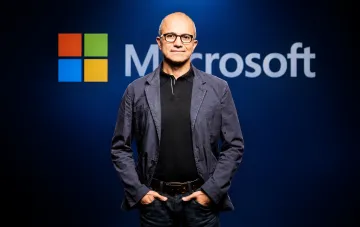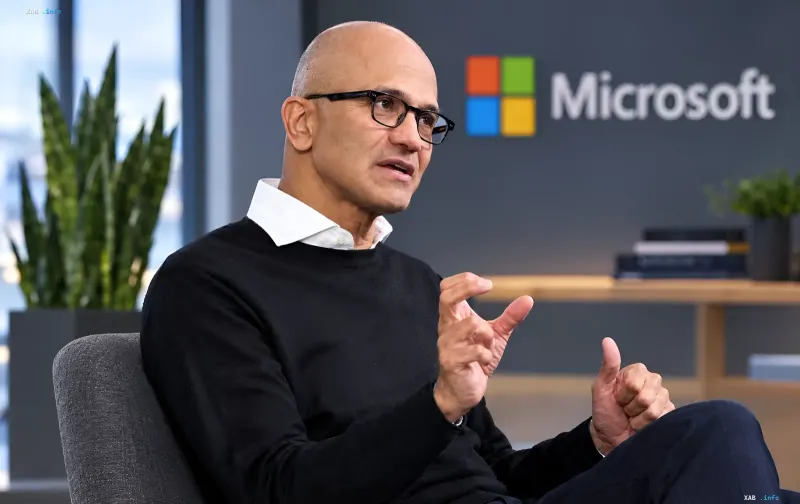
Microsoft CEO Satya Nadella has warned that concentrating artificial intelligence development in the hands of a single company could pose a systemic threat not only to the economy but also to democratic institutions. He made these remarks in an interview while responding to a question about the expansion of office software products by Microsoft competitor Anthropic. According to Nadella, the conventional view of the technology giants' race for trillions of dollars in market capitalization misses the essence of what is happening: it is about establishing structural control over the intellectual layer of the modern economy.
Not just competition: the risk of a single AI solution
Nadella emphasized that the current situation cannot be reduced solely to commercial rivalry between corporations. "If artificial intelligence evolves without proper guardrails, such a system could eventually perform the functions of companies in the healthcare and financial sectors, or even take on some government powers," the Microsoft chief stated. In this way, he outlined a scenario in which a single AI platform, controlled by one entity, effectively replaces entire industries and public administration institutions.
Economy without labor: from human capital to token capital
In his remarks, Nadella questioned the traditional role of business and human labor in the economic model. According to him, intelligence is becoming a network resource, and human capital is giving way to so-called token capital—the computing units that power modern models. He warned that an economy cannot function properly if it retains capital but loses labor. This thesis suggests that, in Nadella's view, without preserving the human role in the production process, even the most powerful AI infrastructure cannot ensure sustainable economic development.
Democracy and electoral processes at risk
Nadella touched specifically on the political consequences of AI technology concentration. He indicated that concentrating control over artificial intelligence in the hands of one company could directly threaten democracy and electoral processes. While he did not disclose specific mechanisms of influence, the logic of his argument is based on the premise that a single system capable of generating content, analyzing data, and modeling behavior, in the absence of competition and external oversight, becomes a tool of manipulation unprecedented in history.
Consciousness of models: Nadella sees no signs
Answering a question about the potential consciousness of modern models, particularly Claude, Nadella stated that he sees no signs of it. On this issue, he shares the position of Microsoft’s head of AI, Mustafa Suleyman, who opposes granting any rights or moral status to such systems. At the same time, Nadella emphasized that this is a "complex, debatable topic" and acknowledged that he does not have a definitive position on the matter.
Microsoft's response: distributed AI and the Ignite conference
At the recent Ignite conference, Microsoft introduced a set of tools that allow businesses to choose models for specific tasks, create their own AI solutions, and control their data. As envisioned by the company, widespread technology adoption and model diversity—effectively separate solutions for each organization—can prevent the excessive concentration of power in a single pair of hands. Thus, Microsoft's strategy, according to Nadella, is aimed at ensuring that AI remains a distributed resource rather than a monopolistic infrastructure.