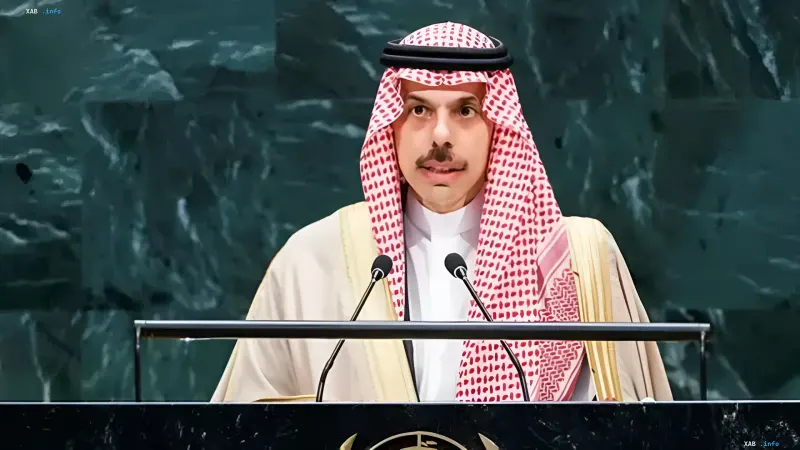
On September 27, 2026, the Kingdom of Saudi Arabia reaffirmed its firm stance on the Palestinian issue. Foreign Minister Prince Faisal bin Farhan Al Saud declared that Riyadh categorically rejects any attempts to artificially change demographic realities or forcibly displace the Palestinian population. This statement serves as a clear diplomatic message to the global community regarding the non-negotiability of Palestinian rights.
Riyadh's Core Demands
The Foreign Minister outlined five key pillars of the Saudi position. First, a total ban on the forced displacement of Palestinians. Second, the recognition of the two-state solution as the only viable path to peace. Third, a strict commitment to the 1967 borders. Fourth, the establishment of East Jerusalem as the capital of the Palestinian state. The fifth pillar is the guarantee that no normalization deals will proceed without a resolution for Palestinian independence.
Geopolitical Significance
Analysts note that Saudi Arabia remains the primary architect of the 2002 Arab Peace Initiative. Prince Faisal’s rhetoric acts as a safeguard against plans for mass displacement from Gaza and the West Bank, which could trigger a wider regional conflict.
Contradictory Perspectives
There is a divergence in international opinion regarding the 1967 borders. While some Western diplomats argue that current settlement realities make such a return difficult, Arab nations maintain that international law and the fundamental right to sovereignty must take precedence over conditions created by long-term occupation.