Scotland on the Brink of a New Split: Figures from the New Poll
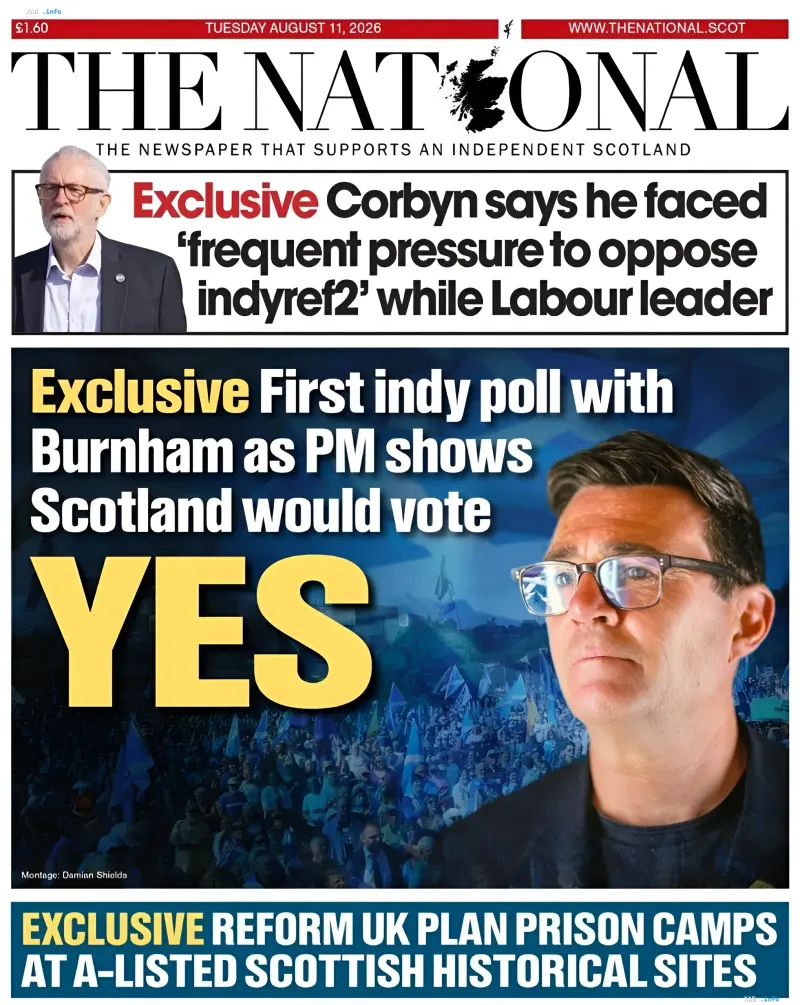
The political landscape of the United Kingdom is once again shaken by the echoes of the Scottish question. According to fresh data from the polling agency Find Out Now, published by The National, the situation in the region has changed dramatically compared to the historic 2014 referendum. In the event of a hypothetical vote on independence today, 52% of respondents are ready to vote for sovereignty. Supporters of maintaining the Union with Great Britain take second place with a figure of 48%.
These figures, published in August 2026, demonstrate a clear shift in public sentiment. If 12 years ago the majority voted for unity, today the lead of independence supporters, although minimal, is stable. It is important to note that the poll covers only decided respondents, excluding the share of those who are still wavering or do not have a clear opinion. Nevertheless, even taking into account the statistical error, the trend towards separation looks quite evident.
London's Position: Andy Burnham and the Constitutional Deadlock
Despite figures that are alarming for Westminster, the reaction of the British government remains consistently tough. Prime Minister Andy Burnham, holding office in 2026, categorically ruled out the possibility of holding a second plebiscite. In his statement, he emphasized the absence of any legal and political grounds for sanctioning a new vote.
Burnham referred to the results of the 2014 plebiscite, calling them final, and to the current constitutional legislation of the United Kingdom. For London, current sociological polls are not a sufficient argument for revising the state's borders. The official position is that the question of independence has been settled, and returning to it without serious reasons is inadmissible. This creates a situation of political deadlock: the people of Scotland want to vote, but the central parliament refuses this right.
The Legal Barrier: Why Scotland Cannot Decide Alone
Edinburgh's attempts to hold a referendum unilaterally run into an insurmountable legal wall. The key instrument in this confrontation is Section 30 of the Scotland Act 1998 (Section 30 Order). It is this mechanism that allows the British government to transfer the powers to hold a referendum to the Scottish Parliament. Without such a transfer (the so-called "Section 30 Order"), any vote will be considered illegal.
The legal position was finally confirmed by the decision of the Supreme Court of the United Kingdom. The Court ruled that questions of maintaining or dissolving the Union between England and Scotland fall under the reserved powers of the UK Parliament. This means that the Scottish Parliament does not have sovereignty in matters concerning the constitutional structure of the state. Any initiatives to hold a consultative or binding referendum without the sanction of the central government are recognized as having no legal force.
Contradictory Data: Mandate vs. Law
The situation is exacerbated by the fact that there are two diametrically opposite points of view on the legitimacy of the parties' actions. On the one hand, supporters of independence in Edinburgh view regular polls showing a 52% lead as a key argument for renewing the political mandate. They argue that the will of the people has changed, and London is obliged to recognize this by opening negotiations on a new status.
On the other hand, the legal position of Westminster remains indisputable: a poll is not a referendum. From the point of view of British legislation, sociological data cannot replace a legitimate plebiscite conducted within the framework of the law. Thus, we observe a conflict between the "will of the people," expressed in polls, and the "will of the law," enshrined in the constitution. As long as Andy Burnham is in power, this conflict is unlikely to be resolved in favor of the separatists.