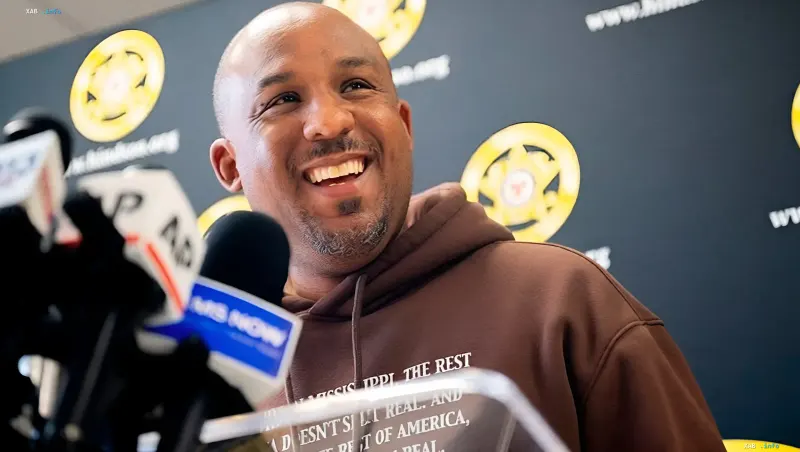
In the U.S. Senate midterm elections for Mississippi, Democrat Scott Colom secured a stunning victory over incumbent Republican Senator Cindy Hyde-Smith, receiving 49.2% of the vote compared to 48.7% for his opponent, according to data from CBS. An independent candidate received 2.1%. The margin was approximately 0.5 percentage points, or about 4,600 votes. The 43-year-old district attorney Colom thus became the first Democrat to win a Senate seat from Mississippi since John Stennis, elected in 1982, and the first Black representative from the state in the upper house of Congress in over 140 years—since Blanche Bruce, a former slave, assumed a Senate seat in 1874.
Concession and Reactions
On Wednesday evening, Cindy Hyde-Smith posted a video statement on the X social network, congratulating Colom and wishing him success. "While this is not the result we sought and hoped for, I respect the choice of Mississippi voters," stated the 67-year-old senator, who has represented the state since 2018. Meanwhile, Colom's supporters celebrated the victory with "Senator-elect Colom" signs. Colom himself, speaking to voters, admitted that during the campaign there were moments when it "seemed like all was lost": potential sponsors were not taking his calls, not believing in the possibility of his victory. "There were times when I was tired and felt like I couldn't go on, but I kept the faith—and that is another tradition of our state," he added.
Campaign Strategy: Cost of Living and 'Other Protein Source'
Colom managed to convert voter dissatisfaction with the rising cost of living into electoral support. A central element of his campaign was a vibrant campaign ad that played on Hyde-Smith's statement that consumers, facing rising beef prices, could "just choose other protein sources." "Choose another protein source? I'd rather choose another senator," the ad stated. In an October interview with Reuters, Colom noted that residents of Mississippi feel betrayed by the country's leadership, linking this primarily to President Trump's policies, including the situation around Iran, which led to rising fuel prices. The campaign was supported by October rallies featuring two Black Democratic senators—Raphael Warnock of Georgia and Cory Booker of New Jersey. Colom personally visited all 82 counties in the state. In response, Hyde-Smith's campaign headquarters called Colom a "puppet of liberal billionaire and donor George Soros," whose family, Republicans claimed, helped fund the Democrat's campaign.
National Context: 'Blue Wave' and Congressional Results
The victory in Mississippi was part of a nationwide trend: Democrats in this midterm cycle achieved success in several states where Republicans had dominated for decades, including Texas. As of the publication of the results, Democrats secured a majority in the Senate—55 seats against 44, with final voting results in Alaska not yet published. In the House of Representatives, Democrats also gained an edge: 254 votes against 168, although results in 13 districts have not yet been announced. Notably, in 2024, Donald Trump won Mississippi by a margin of nearly 23 percentage points and, closer to the final of the race, personally visited the state to support Hyde-Smith. Nevertheless, according to polls, it was rising prices and economic sentiment, rather than party affiliation, that became the deciding factor for a significant portion of voters.
Historical Significance: From Segregation to the First Black Senator
Mississippi, located in the heart of the "Deep South," has remained a Republican stronghold for decades. The state became so in the 1980s against the backdrop of the African American struggle to end racial segregation and discrimination. It was in Mississippi that key events of the civil rights movement took place, where the Black population faced systemic discrimination in voting rights, employment, education, and other areas of life. The election of Colom to the Senate symbolically closes the circle started more than half a century ago: from a state where voting for Black people was practically impossible, to the first Black senator from Mississippi since Reconstruction. For Democrats, this is not just a tactical victory in one district, but confirmation that the electoral map of the "Deep South" is beginning to change under the pressure of economic factors and the changing generation of voters.