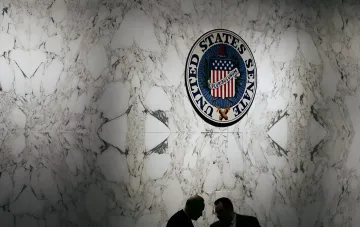
The 2026 US midterm elections concluded with a series of historic results that rewrite representation in both chambers of Congress and in gubernatorial offices. Following the vote, the Democratic Party defeated the Republicans to win control of both the House of Representatives and the Senate. In addition to shifting control in the legislature, the elections were notable for a record number of 'firsts' in the country's history: minorities who had never previously held these positions were elected to the Senate and governorships.
The Senate: First Muslim, Openly Gay Man, and Native American Woman
Among the senators elected in these midterms, several are holding office for the first time in US history. Chris Pappas, a Democrat from New Hampshire, will become the first openly gay man elected to the Senate. Abdul El-Sayed, a Democrat from Michigan, is set to become the first Muslim senator. Peggy Flanagan, a Democrat from Minnesota, will become the first Native American woman elected to the Senate. On the Republican side, Louisiana will send Julia Letlow to the Senate, who will become the first Republican senator from that state.
Governors: A Wave of Historic Victories
An even broader list of 'firsts' emerged in the gubernatorial races. In Georgia, Keisha Lance Bottoms won for the Democratic Party, becoming the first Black woman elected governor of the state in US history; for Georgia itself, the victory is also historic, as the governorship has gone to a Democrats for the first time since 1998. In New Mexico, Deb Haaland will become the first Native American woman elected governor. Byron Donalds (Republican) and David Crowley (Democrat) will become the first Black governors of their respective states in Florida and Wisconsin, respectively, while Gina Hinojosa will become the first Latina governor in Texas. In addition, several states elected women governors for the first time in history.
Democrats Take Control of Congress
According to data cited in the source material, Democrats already hold 231 seats in the House of Representatives, surpassing the 218 required for a majority, while Republicans hold 139 seats. In the Senate, Democrats also hold a majority with 54 seats to the Republicans' 44. Thus, the new session of Congress will begin under full Democratic control, opening the way for the party to advance its own legislative agenda.
President Trump's Reaction
US President Donald Trump, whose party suffered defeat in the election, stated that he was surprised by the results. He acknowledged his opponents' success and expressed readiness to cooperate with them. Among the reasons for his party's defeat, he cited the war with Iran. At the same time, Trump warned that he intends to use his veto power if he is unsatisfied with bills passed by the new Democratic majority in Congress, setting the tone for future relations between the executive and legislative branches.