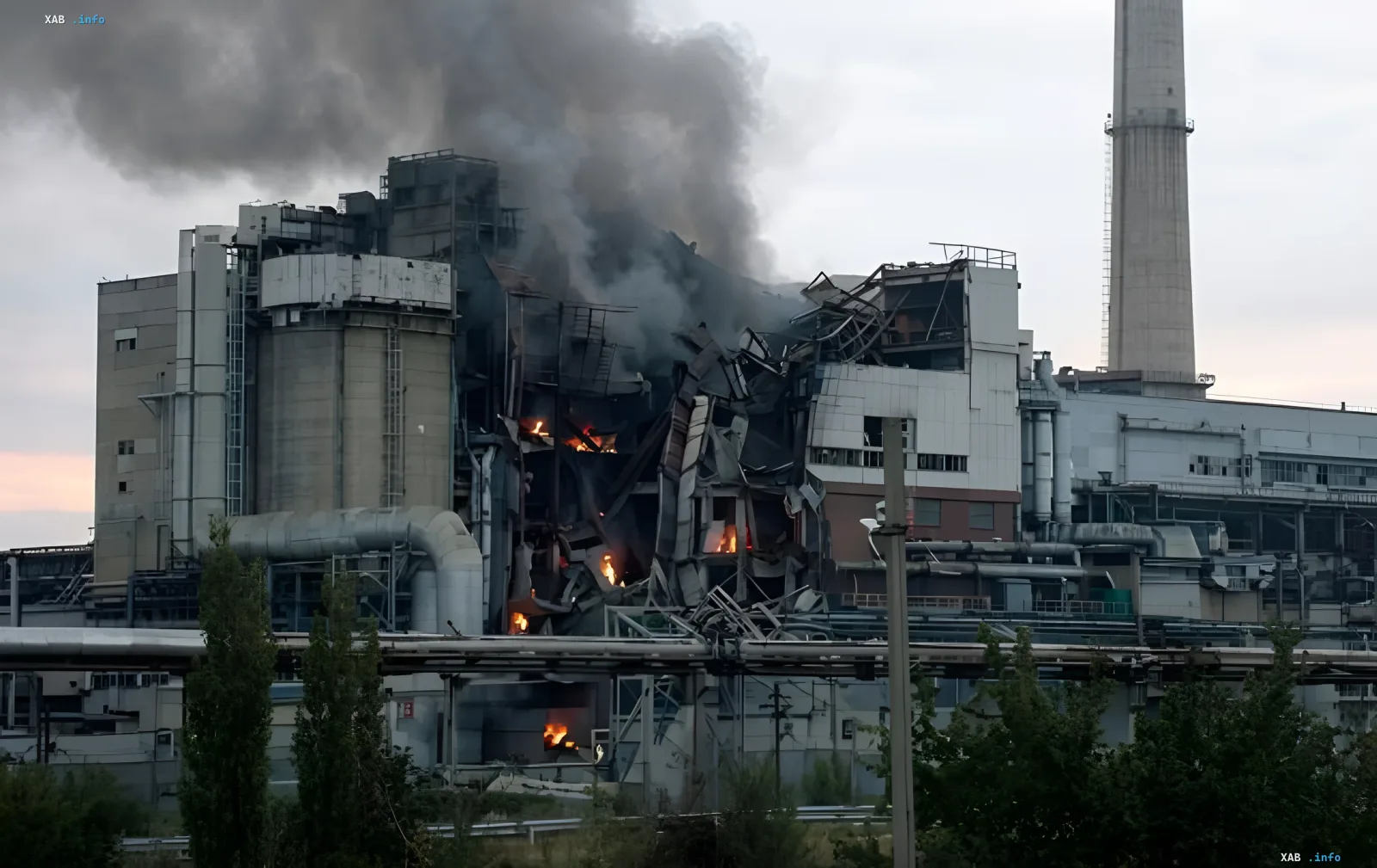
During the night, Russian military forces carried out a second strike on the Kherson combined heat and power plant (CHP) of the "Naftogaz" Group. According to the company, four guided aerial bombs (KABs) were used against the plant's territory. As a result, the operator states, all heat-generating and power-generating equipment that still remained at the facility after previous attacks has been critically damaged and completely taken out of service.
Strike on What Was Still Working
The key detail emphasized by "Naftogaz" is the nature of the damage. The plant had already sustained losses in earlier strikes on the region's energy infrastructure, so the new salvo of KABs was aimed at the effectively remaining capacity. According to the company's assessment, after this attack not a single operating heat- or power-generating unit is left at the Kherson CHP: the equipment has been destroyed and completely disabled. This means that restoring generation on site in the short term is impossible, and the plant has effectively been removed from the power system.
"The Goal Is Terror of the Civil Population"
Serhiy Fedorenko, acting head of the "Naftogaz" board of directors, described the facility as exclusively civilian: the CHP supplies heat to a significant portion of Kherson's residential buildings. "This attack has no military logic whatsoever. Its only purpose is the terror of the civilian population and an attempt to deprive tens of thousands of Kherson residents of their heat source on the eve of the heating season," he stated. Thus, the company interprets the strike not as a military operation but as deliberate pressure on the city's residents ahead of the cold weather.
Tens of Thousands of Residents Without Heat Ahead of the Heating Season
The Kherson CHP is one of the city's main sources of heat. Taking it out of service in August, just a few weeks before the start of the heating season, creates a direct threat to heat supply for tens of thousands of households. As Ukrainian media emphasize, citing "Naftogaz" data, the deliberate strikes on the plant have effectively left part of Kherson without a guaranteed source of heating, shifting the load onto reserve capacity and alternative heat-supply schemes that, amid ongoing attacks on infrastructure, are operating at their limit.
Contradictory Data
When comparing reports from several publications with the operator's statement, two nuances should be noted. First, the exact calendar date of the nighttime strike is not consistently fixed in available publications — everywhere it is referred to only as "the night," without reference to a specific day, so the chronology should be considered approximate. Second, the wording about the scale of the damage varies: some sources write that "all equipment has been destroyed," whereas in "Naftogaz's" statement the wording is "all equipment that remained at the plant." The difference matters: the plant had already been damaged earlier, and the new strike destroyed the remaining, not the original, capacity. Both versions describe the same episode, but with different levels of detail.