
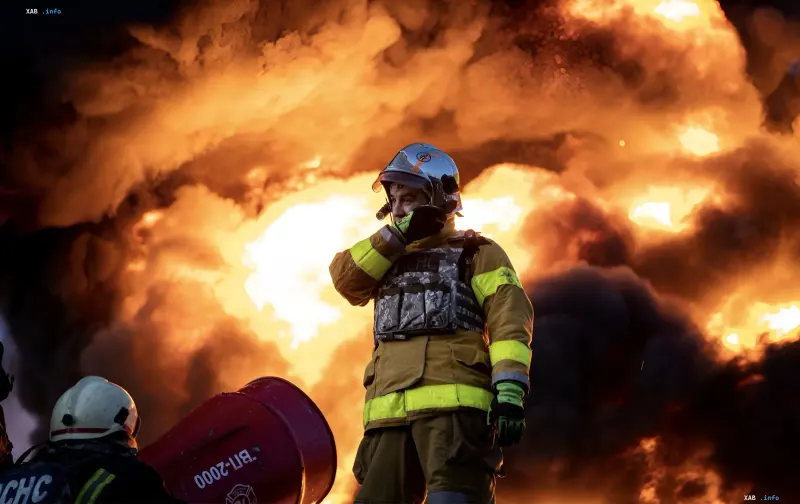
On the evening of September 4, Russian military forces again struck the 'Epicenter' shopping mall in Mykolaiv with 'Shahed'-type unmanned aerial vehicles. This was announced by the city's mayor, Oleksandr Senkevych, in his Telegram channel, which the RBC-Ukraine publication highlighted with reference to his statement. According to preliminary data from the 'Public' (Suspilne) TV channel, it was precisely this shopping complex that became the target of the attack, making it no longer the first strike on this facility in recent weeks.
The injured person and the nature of the damage
As a result of the strike, a 17-year-old girl was injured and received the necessary medical assistance at the scene. According to Senkevych, the teenager has been prescribed outpatient treatment, meaning hospitalization was not required. The mayor of Mykolaiv emphasized that civilian facilities were again hit — shopping malls, supermarkets, and residential buildings used daily by ordinary citizens, rather than military or industrial targets.
Inspection of the residential area
The administration of the Mykolaiv district has already inspected the residential area near the location where debris fell. Preliminary damage to buildings has been recorded, including broken windows in apartments. City authorities reported that they will contact the owners of the affected premises to assist with restoring the glazing and addressing the consequences of the strike.
Series of attacks on 'Epicenter' infrastructure and Ukrainian business
The 'Epicenter' shopping mall has repeatedly become the target of Russian strikes recently. On August 28, a similar attack was carried out on an 'Epicenter' facility in Zaporizhzhia, where a major fire broke out and people were injured. On the same day, strikes on business infrastructure were recorded in Sumy and Kyiv Oblast, where 'Nova Poshta' (New Post) facilities were destroyed. According to 'Public' (Suspilne), during the period of August 27–28, Russia effectively carried out a targeted campaign against Ukrainian business: among those affected were 'Epicenter', 'Nova Poshta', Roshen, Comfy, 'Fola', 'Aurora', 'Kolo', as well as bookstores and publishing houses.
Contradictory data
The provided materials contain a chronological inconsistency. In one fragment, it is stated that on August 28 Russia struck the 'Epicenter' in Zaporizhzhia, and immediately after this, the phrase 'two days later, August 27 and 28' describes a series of attacks on business. Logically, 'two days later' from August 28 would fall on August 30, whereas the text names the dates August 27–28. It is possible that the text refers to two different episodes described in a mixed-up manner, or that an editorial error in dating was made in the source material. The exact sequence of events from August 27–30, at the time of publication, is not unambiguously confirmed by either of the two available sources.
Context and assessment
The repeated nature of the strikes on the same type of facility — 'Epicenter' chain shopping malls in different cities — indicates that Russian military forces regard civilian commercial infrastructure as an acceptable target. For Mykolaiv, the September 4 attack became yet another episode in a series of nighttime and evening UAV raids, which in 2026 have become a regular element of the city's daily life. Local authorities continue to work on inspecting damage and informing residents, however, the issue of the safety of civilian facilities amid ongoing attacks remains open.