
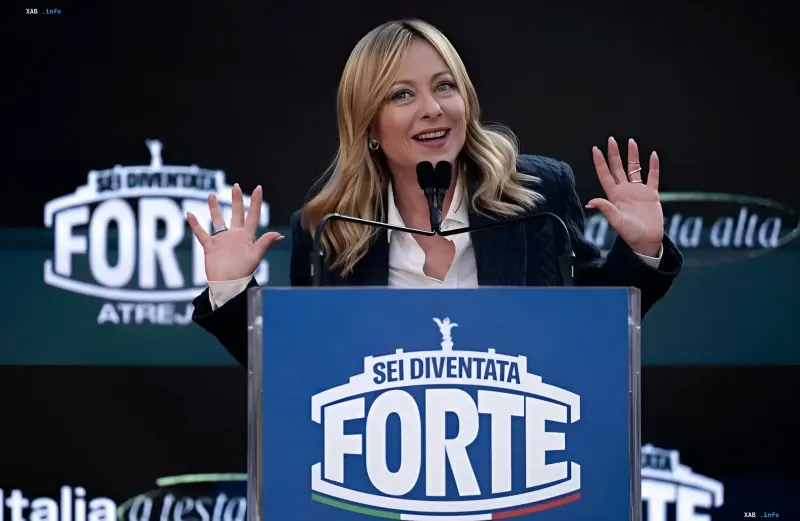
Heading the Italian government since October 2022, Prime Minister Giorgia Meloni has officially broken the historical record for the longest continuous tenure in power in an Italian government since the end of World War II. The ruling coalition under her leadership maintains a solid majority in parliament and aims to hold the next national elections in 2027. Having come a long way from a young minister in Silvio Berlusconi's government to the nation's leader, Meloni has demonstrated unprecedented political flexibility and resilience for modern Italy.
The Evolution of Power and Lessons of the Past
The historical memory of the fall of Silvio Berlusconi's cabinet on November 12, 2011, when he walked on foot to the Quirinal Palace amid a severe debt crisis, profoundly influenced the political style of the current prime minister. A 34-year-old Giorgia Meloni, present at his resignation, clearly learned the harsh lessons of market pressure and dependence on European partners. When she triumphantly came to power herself on October 22, 2022, many analysts predicted her cabinet's quick collapse due to deep internal divisions among the Brothers of Italy, the League, and Forza Italia. Nevertheless, contrary to skeptical forecasts, the right-wing alliance has demonstrated enviable discipline and cohesion.
Economic Successes and Overcoming Crises
The main factor in Meloni cabinet's success has been pragmatic economic reforms and strict control over public finances. Having inherited a budget deficit of 8.1% and a colossal public debt of 138.4% of GDP in 2022, the government managed to reduce the deficit to 3.1% while stabilizing the debt. According to published party reports, the employment rate in the country has reached a record 62.9%, unemployment has dropped to 5.7%, and youth unemployment has fallen to 18.4%. Experts note that abandoning radical anti-European rhetoric in favor of a moderate economic course has allowed Meloni to win the trust of the markets and avoid open confrontation with Brussels.
Controversial Data
Despite official government statements and triumphant reports in party literature about an unprecedented economic breakthrough and social support for families, independent experts and economists point to the persistence of serious structural problems in Italy. While the ruling coalition emphasizes the reduction of the deficit and job growth, critics recall that public debt remains one of the highest in the European Union, second only to Greece. In addition, disputes persist regarding the real effectiveness of migration policy and measures to combat the shadow economy, where assessments by official agencies and independent observers differ significantly.
Expert Assessments and Future Prospects
Professor Fabien Gibault of the University of Bologna highlights the paradoxical nature of Meloni's political trajectory, who, despite her ultra-conservative past, managed to become a neutral figure guaranteeing market stability. Former AFP correspondent Frank Iovene adds that the prime minister clearly understands the main rules of survival on the Italian political scene. Through skillful maneuvering between the interests of coalition partners, EU demands, and voter expectations, Giorgia Meloni has been able not only to retain power but also to lay the foundation for the long-term dominance of her political force.