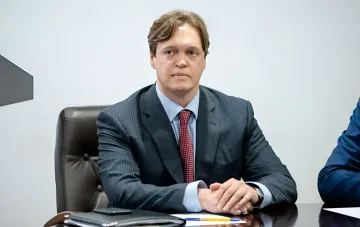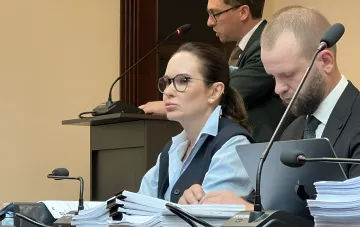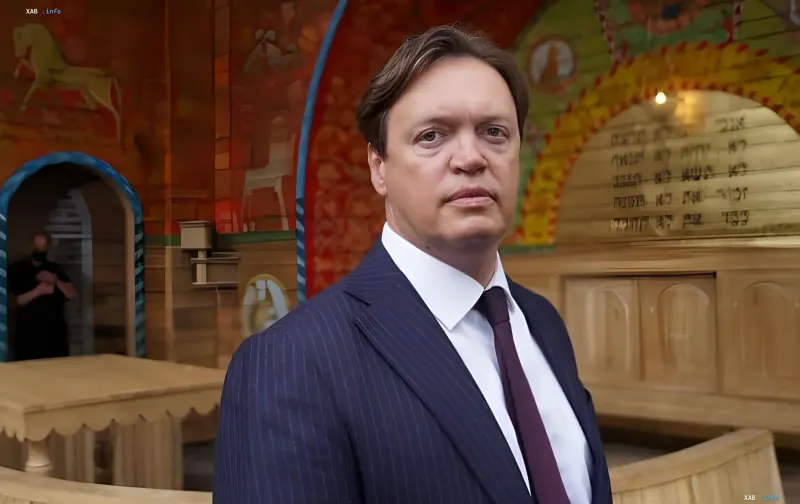
The criminal investigation into the former head of the State Property Fund (SPF), Dmytro Sennichenko, according to political analyst Mykhailo Shнайдер (Schneider), has exposed systemic issues that go beyond specific charges: it concerns the expenditure of the state budget on the proceedings and the possible existence of shadow centers of influence not provided for by any current legislative act. The expert wrote about this on Facebook, which was noticed by RBC-Ukraine. Schneider emphasizes that on September 30, the defense of defendant Andriy Hmyrin officially asked the State Bureau of Investigation to establish the circumstances related to the so-called “administrative module” mentioned in a memorandum found in the case materials.
Context: The De-Oligarchization of 2019–2021 and the Role of the SPF
To understand the logic built by Schneider, it is necessary to return to the period of 2019–2021, when Ukraine officially set a course for de-oligarchization. The so-called anti-Kolomoisky banking law was adopted, National Security and Defense Council sanctions were introduced, and the oligarch law was being prepared. The State Property Fund under Sennichenko's leadership, according to his public statements at the time, functioned to oust oligarchic groups from state-owned enterprises. Concrete examples: in May 2020, the management of Centrenergo associated with Ihor Kolomoisky was replaced, and in August 2021, the license for the development of a titanium deposit was transferred from Dmytro Firtash’s Group DF to the state-owned United Mining and Chemical Company (UMCC). Between these two events, on June 14, 2021, a memorandum was dated, to which Hmyrin’s defense refers.
“Administrative Module”: The Memorandum and the Hypothesis of a Non-Public Center of Influence
According to the lawyers, the document provided for the distribution of future revenues from the control of business processes at the Odesa Portside Plant (OPP) and UMCC: 33% each to Serhiy Bayrak, the Salo family, and the so-called “administrative module,” whose participants have not yet been identified. The defense interprets this name as a possible designation for a group of individuals possessing administrative levers, law enforcement capabilities, and media resources — effectively a non-public center of influence comparable in potential to oligarchic groups. Schneider draws attention to the fact that neither the oligarch law nor any other regulatory act provides for such structures, and the register of oligarchs never started working. “Could a new center of influence have formed against the backdrop of de-oligarchization, one that struck precisely at those who ousted oligarchs from state enterprises?” the expert formulates the question. He also raises the problem of the possible impact of this “module's” work on the formation of the evidence base in the Sennichenko case: conversation recordings, meetings, collected information about people, materials passed to the investigation — who and how formed them remains open.
Bayrak and “Globus”: The Prehistory of the Conflict
Separately, Schneider recalls the conflict around the Kyiv shopping center “Globus” in 2008–2013, in which Serhiy Bayrak figured. The British owner of the shopping mall at that time called the events a corporate raid and declared the involvement of officials. “Back then and now, there are no names,” the expert states, wondering what investors will come to a country where, in his words, statements and “correct” proceedings can put pressure on a specific person or group of persons for years.
OPP Auction Failure and the Cost of the Investigation
Against the backdrop of these discussions, on October 19, 2026, the auction for the sale of 99.57% of OPP shares with a starting price of over UAH 4.3 billion did not take place: not a single potential buyer registered for the bidding. This fact, according to Schneider's assessment, additionally reinforces questions about the economic logic of the entire process. A separate line is the cost of the investigation itself. According to lawyer Andriy Tsyhankov, the state resource involved in the case amounts to UAH 241.7 million under the baseline scenario and can reach UAH 433 million at the upper limit, excluding expert examinations, translations, and international legal assistance. At the same time, the defense claims that there are no budgetary funds in the subject of the dispute, as the case concerns the price of contracts with a state-owned enterprise. According to the defense, from July 2019 to the fall of 2021, the AGT company, which worked with OPP under a tolling processing agreement, paid the plant about UAH 4.5 billion of its own funds — an amount comparable to the starting price of the plant itself — while OPP still owes the company about UAH 200 million for technological gas. “The state spends years of resources on the process. Is it not paying to settle someone's private scores?” Schneider summarizes.
Position of the Prosecution and Current Status of the Case
The National Anti-Corruption Bureau and the Specialized Anti-Corruption Prosecutor's Office accuse former SPF head Dmytro Sennichenko and other defendants of seizing OPP and UMCC funds, as well as legalizing illegally obtained proceeds. According to the court registry, the damage to state enterprises, according to the prosecution's version, exceeds UAH 700 million, and the amount of funds subject to legalization is more than UAH 10 billion. Currently, the case is at the stage of preliminary proceedings in the High Anti-Corruption Court. The defense denies the presence of a crime and questions the circumstances of the formation of the prosecution's evidence base.