
On 21 August 2026, Serbia officially activated the European Union Civil Protection Mechanism, requesting international assistance to combat the wildfires that have been raging since late July in the Đeleblat Sand Sea area — roughly 80 kilometres from Belgrade. The fires, which broke out against a backdrop of prolonged drought and abnormally hot weather, have destroyed thousands of hectares of pine forest and forced authorities to evacuate residents of dozens of homes in the surrounding villages. As Andreas Beikirat, head of the EU delegation in Belgrade, noted, the bloc "supports Serbia in protecting lives, livelihoods and the unique natural heritage of the Đeleblat Sand Sea".
Scale of the Emergency and Serbia's Status in the EU Assistance System
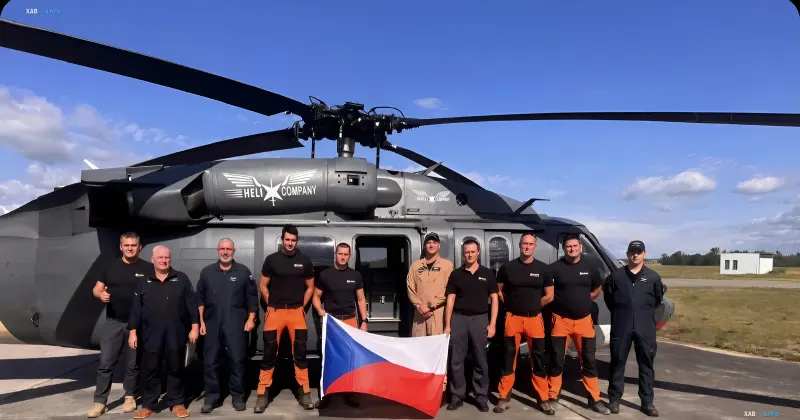
It is important to stress that Serbia is not a member of the European Union, yet it has access to emergency support tools thanks to its participation in the EU Civil Protection Mechanism and its operational reserve, rescEU. It is precisely from this reserve, based in Romania, the Czech Republic and Slovakia, that four Black Hawk helicopters were dispatched to Serbia. According to Luka Čaušić, head of Serbia's Department for Emergency Situations, one helicopter from Romania can carry 2.6 tonnes of water, while the three aircraft from the Czech Republic and Slovakia each have a payload capacity of 3.5 tonnes. At the deployment site, the Czech crew is shown displaying the national flag on board the helicopter bearing the operator's markings, confirming the actual arrival of the equipment from Prague.
Ground Forces: Contributions from Germany and Romania
In addition to the aviation assets, significant ground forces have been sent to Serbia. Germany dispatched 55 personnel and 24 units of equipment, while Romania sent 69 personnel and 15 units of specialised equipment. In total, this amounts to 124 rescuers and 39 units of equipment, working on the ground in coordination with aerial water drops. This combination of air and ground components is, in the assessment of Serbian authorities, key to holding the fire line and protecting populated areas.
Deployment Timeline and Outlook for 23 August
Since 22 August, helicopters from Romania and Slovakia have been directly involved in firefighting, and on 23 August the arrival of two helicopters from the Czech Republic is expected, which will complete the formation of the full rescEU aviation group. Luka Čaušić stated that by 22 August the situation had largely stabilised, however strong winds are forecast, which could again complicate operations and increase the risk of the fire spreading. He named the protection of residential areas and human lives as the top priority. A separate threat also persists in the south-west of the country, where another major wildfire is raging in the Stolevo mountains, doubling the load on the rescue services.
Thus, the activation of the rescEU mechanism has become one of the first cases this season of deploying the EU's aviation reserve in favour of a candidate country, demonstrating that the bloc's civil protection tools work even beyond the boundaries of formal membership. The further development of the situation will largely depend on weather conditions and on how quickly the Czech and Slovak helicopters can ramp up the pace of aerial water drops.