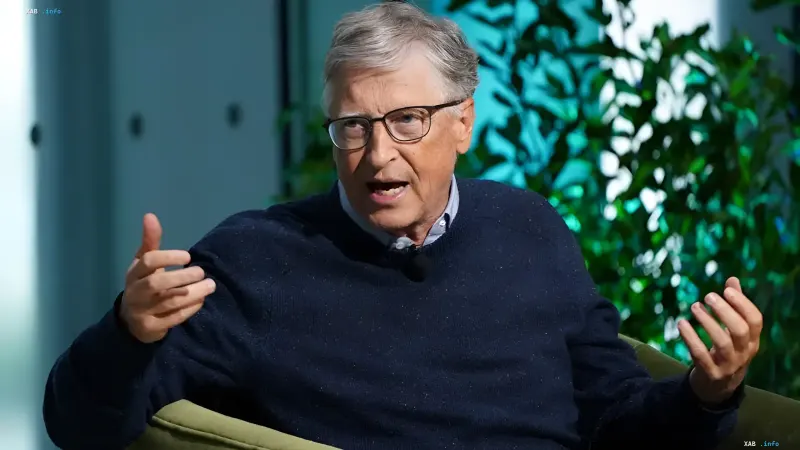
Microsoft founder and prominent philanthropist Bill Gates has made another serious statement regarding the rapid development of artificial intelligence technologies. According to him, the current pace of AI expansion carries colossal risks for all of humanity, capable of affecting billions of lives. The expert emphasized that government institutions and international regulators currently demonstrate a disturbing lack of preparedness for large-scale socio-economic and technological transformations.
The Dual Nature of Artificial Intelligence
Reflecting on the prospects of the digital age, Bill Gates noted the dualism of artificial intelligence. On the one hand, the technology possesses unprecedented potential for solving complex problems in modern medicine, quality education, and optimizing agricultural processes. On the other hand, the rapid buildup of computing power and algorithmic autonomy opens up new opportunities for malicious actors, cybercriminals, and radical groups capable of using AI systems for destructive purposes.
The Need for Global Coordination
According to the Microsoft co-founder, tight international coordination is vital to minimize potential damage to the global community. Gates insists on strengthening interstate cooperation and developing unified security standards. Special emphasis is placed on enhancing state control in critical areas such as cybersecurity, preventing large-scale technological failures, and mitigating the negative impact of algorithms on social stability.
Contradictory Data
Analyzing the degree of threat, the expert community and media diverge in assessing the scale of catastrophic scenarios. Some media sources and radical futurologists actively promote theses about the alleged inevitability of billions of people dying as a result of uncontrolled AI development. At the same time, rigorous scientific analysis shows that to date, there are no empirical conclusions or proven models confirming such apocalyptic forecasts. Relevant experts agree that scenarios of the total destruction of humanity belong to discussions about long-term risks, but a unified consensus regarding their probability, implementation mechanisms, and possible timelines has not yet been formed in the academic environment.
Economic and Social Challenges
In addition to existential risks, experts point to tangible short-term challenges, such as mass workplace automation and labor market transformation. Without proper adaptation of social protection systems, millions of specialists worldwide may face the need for urgent requalification. Bill Gates urges society and business not to turn a blind eye to these challenges, investing in advance in educational programs and protective mechanisms of the new type of economy.