The restoration of power supply after a scheduled or emergency outage is a moment many people see as an excuse to immediately turn on all household appliances. However, the State Emergency Service of Ukraine (SES) emphasizes that the first minutes after the return of electricity are critical for safety and require strict adherence to a specific sequence of actions. This was reported by RBC-Ukraine with reference to the official recommendations of the rescue agency.
The five-to-ten-minute rule: why you shouldn't turn everything on at once
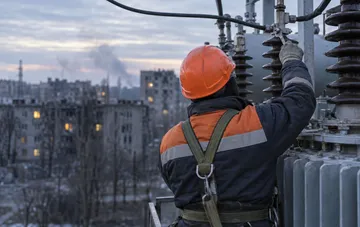
SES specialists strongly recommend waiting five to ten minutes after power is restored before plugging in household appliances. During this time, the power grid stabilizes, and voltage fluctuations, which are inevitable at the moment of switching, subside. Turning on a large number of devices simultaneously creates a peak load on the grid, which can lead to the tripping of protective mechanisms again, damage to electronics, or even a local fire. Therefore, the connection algorithm is clearly defined: the refrigerator and water heater must be plugged in first, as they require continuous power to maintain temperature and prevent food spoilage or frozen pipes. Other equipment — the washing machine, microwave, computer, and television — should only be connected after the main systems have reached their operating mode.
Checking for the smell of gas: the main step before turning on appliances
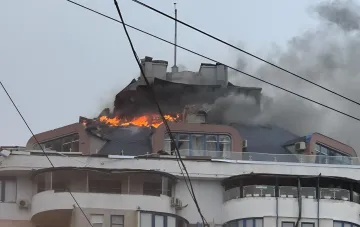
The SES places special emphasis on checking the premises for gas leaks. If, upon the return of electricity, even a faint smell of gas is felt in the apartment or house, it is strictly forbidden to turn on any electrical appliances, light matches, or lighters. The only correct actions in this situation are to open windows and doors for ventilation, avoid using switches and sockets, and immediately call the gas service at 104. An electrical spark when turning on a device in conditions of gas concentration can cause an explosion, which is why the sequence of «ventilating and calling the service first, then turning on electricity» is a key safety rule.
How to use the restored power «window»
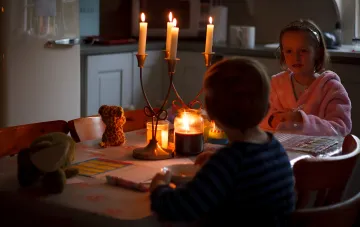
While electricity is available, the SES advises using this time as efficiently as possible. First of all, mobile phones, power banks, and rechargeable flashlights should be charged — these are the devices that become the main sources of communication and light during the next outage. At the same time, it is recommended to replenish household supplies: store water in containers, check for batteries, candles, and food stocks. Rescuers also advise taking the moment to assess what was missing during previous outages: additional lighting, a heat source, drinking water, or food. For families with children, it is important to prepare a set of non-electric activities and entertainment in advance to minimize stress for the youngest during prolonged outages.
Winter readiness: what has already been prepared at the state level
The context of the SES recommendations is determined by the approaching winter period, when power, heat, and water outages can last for hours or even days. As RBC-Ukraine previously reported, the rescue agency is preparing to operate under winter crisis conditions and has already deployed more than 1,100 stationary and mobile resilience centers across the country. They are equipped with generators, heat cannons, water tankers, and special equipment to eliminate the consequences of bad weather and emergencies. The SES emphasizes that each power outage can change the usual rhythm of life, but advance preparation and compliance with safety rules allow people to feel more confident and reduce risks to health and property.
The financial dimension: how much prolonged outages cost
In addition to physical safety, prolonged blackouts also have an economic dimension. According to estimates previously published by RBC-Ukraine, prolonged power outages can increase Ukrainian families' expenses by several hundred hryvnias, and in some cases by 2,000 to 5,000 hryvnias per month. Additional costs are associated with buying candles, batteries, generator fuel, alternative heat and water sources. Experts advise assessing the family's actual needs in advance, forming a financial reserve, and not buying expensive equipment without calculating the actual load. For basic preparation for blackouts, it is enough to have a power bank, a rechargeable lamp, and an uninterruptible power supply for the router, which will maintain communication and a minimal level of comfort even during a multi-hour power absence.