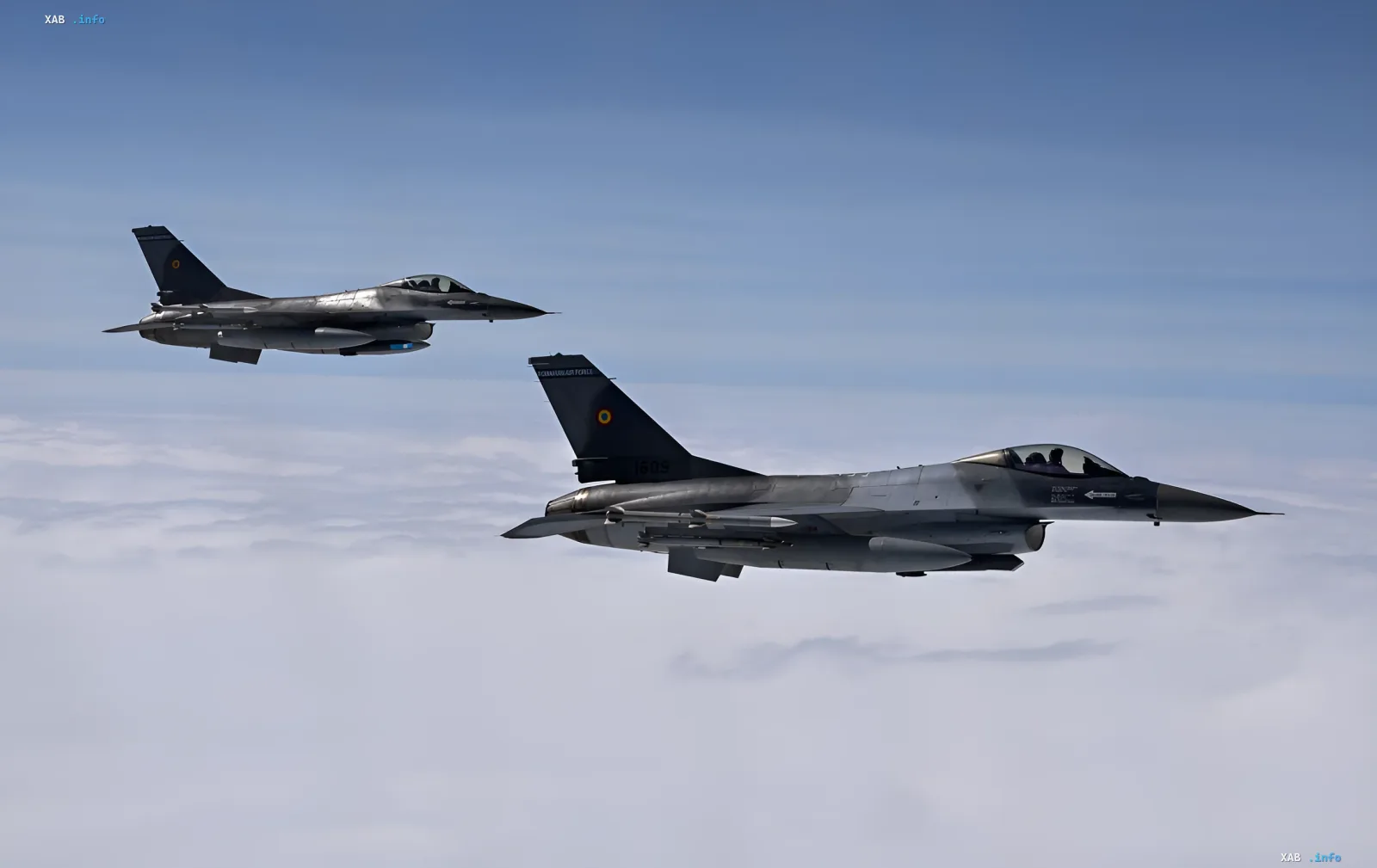
In July 2026, the activity of Russian aviation near the borders of the North Atlantic Alliance reached critical levels. According to official data from the NATO Allied Joint Command Central and Eastern Europe, the number of fighter scrambles to intercept Russian aircraft increased by more than 250% compared to the same period last year.
Statistics of tension on the eastern flank
Information about the sharp surge in activity was published on the social network X by the official account of the NATO command. The message emphasizes that the numbers speak for themselves: a comparison of statistics from July 2025 and July 2026 demonstrates a more than threefold increase in the number of interceptions.
"The numbers don't lie! Compare July 2025 with July 2026 — and the picture becomes obvious: the number of fighter scrambles on NATO's eastern flank has increased by more than 250%", the command stated.
Official representatives of the alliance noted that each such scramble is proof of the allies' vigilance and that NATO airspace is reliably protected.
Tactics of Russian pilots: flights without transponders
The main reason for such frequent scrambles of interceptor fighters is the specifics of Russian aviation flights. The NATO command reported that Russian military aircraft repeatedly flew in close proximity to the alliance's airspace, ignoring standard safety protocols.
The key factor provoking alarm is the lack of a flight plan for Russian aircraft and disabled transponders. This forces NATO countries to immediately scramble their fighters for visual identification and escort of aerial targets to rule out a security threat.
Contradictory data
Although the statistics of the rise in interceptions are confirmed by official statements from the NATO command, the context of specific incidents requires detailed analysis. In particular, sources mention recent events in August 2026, which may indicate a temporary dynamic different from the averaged data for July.
On the one hand, the NATO command focuses on July statistics as a systemic trend. On the other hand, individual media reports (for example, RBK-Ukraine) refer to specific incidents in August 2026, when Polish fighters intercepted Russian Il-20 reconnaissance aircraft and other aerial targets over the Baltic Sea. In some cases, it is mentioned that the transponders of the intercepted aircraft were turned off, which confirms the general picture; however, the exact number of such incidents in August has not been compared with July data in open sources.
Thus, while the fact of the rise in activity is indisputable, the exact correlation between monthly figures and specific incidents (for example, the interception of the Il-20) requires additional verification by independent military analysts.
Reaction of regional countries
Particular attention to the situation is paid by Poland, whose airspace is in a zone of heightened activity. In mid-August 2026, the Polish Ministry of Defense confirmed the interception of a Russian Il-20 reconnaissance aircraft 56 km from the city of Koszalin (West Pomeranian Voivodeship). Earlier, on August 3, Polish fighters were also scrambled to intercept a Russian reconnaissance aircraft over the Baltic Sea.
These incidents demonstrate that tension on the NATO borders remains at a high level, and the Russian aviation's "stress test" tactics do not change their nature.