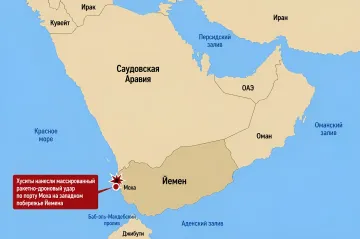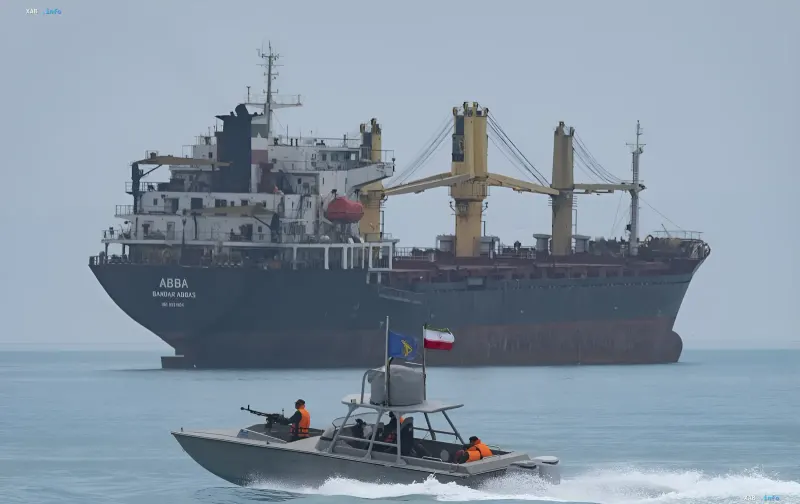
The situation in key global trade arteries has intensified. Shipping intensity through the strategically vital Strait of Hormuz and the Bab el-Mandeb Strait has plummeted amid escalating regional tensions and claims by Yemeni Houthis regarding attacks on merchant vessels.
According to maritime traffic monitoring data, August 5 saw an unprecedented drop in activity. Only one merchant vessel—a bulk carrier flying the flag of the Bahamas—passed through the Bab el-Mandeb Strait, which connects the Red Sea to the Gulf of Aden. For comparison, 20 vessels had traversed this route the day before.
A similar situation unfolded in the Strait of Hormuz, the main "gateway" for oil exports from the Persian Gulf. On that same day, only two vessels were recorded there. Effectively, shipping through this narrow strait decreased fourfold within 24 hours.
Houthi Claims and Riyadh's Stance
The traffic decline coincided with statements from the Yemeni Houthis (the "Ansar Allah" movement), which is backed by Iran. The militants reported launching missile strikes on two Saudi oil tankers: one, according to their data, was attacked near the port city of Yanbu on the Red Sea, and the second in the Gulf of Aden.
However, Saudi Arabia has officially confirmed none of these incidents. Riyadh continues to deny Houthi accusations of a naval blockade of Yemen. Previously, last month, the Houthis announced a naval blockade of Saudi Arabia in the Red Sea, stating it was a retaliatory measure against an alleged Saudi blockade of Yemen.
Geopolitical Context and Threats
The sharp reduction in shipping is occurring against a backdrop of tense geopolitical conditions. Earlier, Iran threatened to attack Persian Gulf countries if the US resumed strikes in the region. Experts note that instability in these straits could deal a serious blow to the global economy, squeezed between two key logistics hubs.
There are also statements in the political sphere regarding potential large-scale actions. Specifically, Donald Trump announced the opening of the Strait of Hormuz and stated that the US was preparing for the largest attack since World War II, implying strikes specifically against Iran.
Contradictory Data
Currently, there are significant discrepancies in the versions of events. On one hand, Yemeni Houthis insist on the fact of successful attacks on Saudi tankers and the imposition of a blockade. On the other hand, Saudi Arabia officially refutes these incidents and accusations of a blockade. The lack of independent confirmation of attacks by international observers or official statements from Riyadh leaves the situation in a zone of uncertainty, which in itself causes panic among shipowners and leads to a decline in traffic.