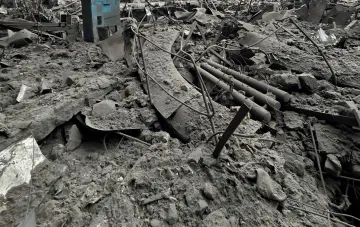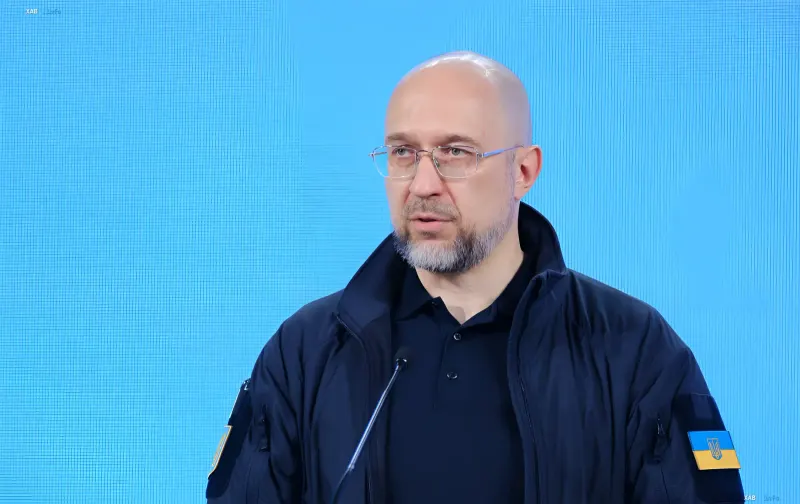
First Deputy Prime Minister and Minister of Energy of Ukraine Denys Shmyhal briefed ambassadors of G7, EU, and NB8 countries on the massive Russian missile and drone strike targeting Ukraine's energy infrastructure on November 3. According to him, during the attack, Russian forces used 289 unmanned aerial vehicles, 17 ballistic missiles, and 59 cruise missiles. The primary targets of the strike were once again energy facilities—power plants, as well as electricity transmission and distribution substations.
Targeted Strike on Khmelnitsky NPP Substation
Of particular concern, according to the minister, was the targeted guidance of three attack drones at a junction substation critical for the stable operation of the Khmelnitsky Nuclear Power Plant. Shmyhal emphasized that such actions pose a threat not only to Ukraine but to the nuclear safety of the entire Europe. "This is a serious escalation step, which we have reported to the IAEA," he stated during a meeting with diplomats. The Ukrainian side expects an appropriate response from international partners to systematic strikes on infrastructure supporting the operation of Ukrainian nuclear power plants.
Systematic Destruction of the Energy System Ahead of Winter
The November 3 attack was part of an ongoing campaign to disable Ukraine's energy infrastructure. As previously reported, Russia has purposefully chosen Kyiv, Kharkiv, and Odesa as main targets for strikes, aiming to trigger a massive humanitarian crisis. Due to the renewed energy attacks, power outages have already begun in Kyiv and several regions ahead of the heating season, vastly compounding the consequences for civilians.
Precedent of Attacks Near Nuclear Power Plants
The incident involving the Khmelnitsky NPP substation is not isolated in the context of nuclear safety threats. During the massive attack on May 13–14, over 160 drones were recorded flying over the South Ukraine, Rivne, and Chornobyl nuclear power plants. The systematic approach of strike weapons to nuclear energy facilities, according to Ukrainian authorities, poses a direct threat to regional and continental security and requires an adequate response from the international community.
During the meeting with G7, EU, and NB8 ambassadors, the Ukrainian side reaffirmed the need to provide guarantees for the protection of energy infrastructure and nuclear plants, as well as to take concrete measures in response to the escalation. The issue of Europe's nuclear safety, as Shmyhal noted, goes beyond bilateral relations and requires a coordinated position among international partners.