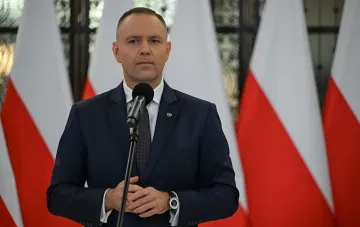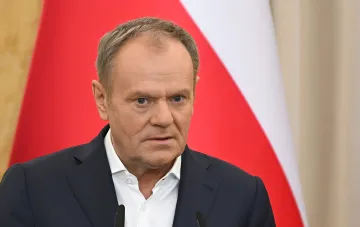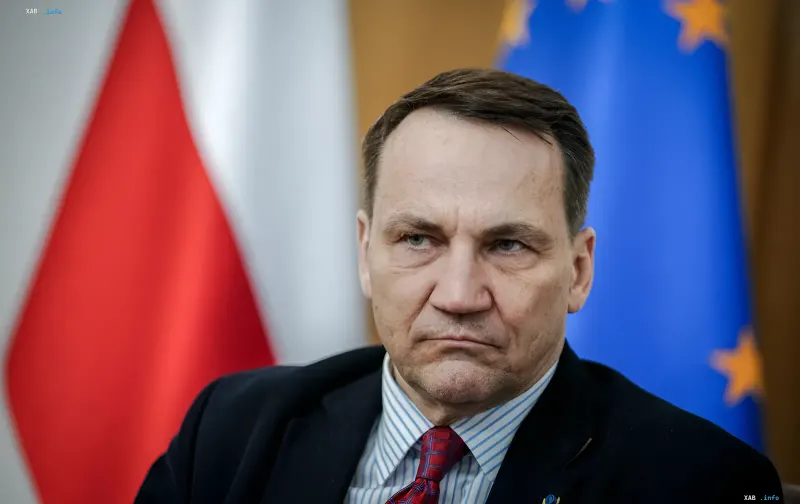
Polish Foreign Minister and Deputy Prime Minister Radosław Sikorski has publicly criticized the country's President Karol Nawrocki over his new initiative to establish a «Presidential Academy», calling it an «abuse of power». The minister published his relevant statement in a post on the social network X, which was picked up by RBC-Ukraine. According to Sikorski, he sees no constitutional authority for the president to organize educational events using taxpayers' money and directly asks: «Is this not an abuse of power?».
What the «Presidential Academy» is
The launch of the program was announced on the official website of the Polish president and on his social media pages. According to the description, the «2027 Presidential Academy» is a free educational program for youth aged 18 to 30. Applications are open to those ready to engage in public, scientific, cultural, or social life, as well as to develop leadership skills and prepare for roles as future members of Poland's elite and state personnel reserve. «Today, Poland needs young leaders who will change our country for the better… I invite you to take part in the Presidential Academy», Nawrocki stated. The program is organized by the Chancellery of the President of the Republic of Poland in cooperation with the Presidential Youth Council.
Sikorski’s reaction: dispute over powers
According to the presidential website, classes will run from November 28, 2026, to September 30, 2027. It is this very fact—the organization of an educational event under the auspices of the head of state—that prompted criticism from the foreign minister. Sikorski pointed out that he finds no basis in the constitution for the president to run such programs with taxpayer funds, qualifying the step as an excess of authority. In a broader context, Polish media reported that the foreign minister also accused Nawrocki of attempting to expand presidential powers and use protocol duties to strengthen his authority, stating that the constitution does not provide for a «presidential system of government».
Background: constitutional crisis and ambassador dispute
Relations between Karol Nawrocki and Radosław Sikorski have remained tense for a long time. One of the reasons for the standoff is the president's refusal to appoint ambassadors: the dispute surrounding diplomatic appointments, according to Sikorski, has been ongoing since March 2024, when similar disagreements arose between the government and then-President Andrzej Duda. The minister accuses the current head of state of blocking ambassadorial candidates and «state sabotage». Against the backdrop of the escalating crisis surrounding Poland's Constitutional Tribunal, which began in mid-October 2026 after the Sejm elected Maciej Berek as a judge of the constitutional tribunal and Nawrocki refused to administer the oath of office to him, Polish ambassadors to Romania and China announced their resignation on October 31. Sikorski claimed that the president personally pressured the diplomats, later correcting his earlier statement that administration staff had pushed them to resign.
What this means for Polish politics
The criticism of the «Presidential Academy» fits into the broader course of public confrontation between the presidential palace and the government, which has been experiencing one of the sharpest institutional crises in recent years for several months. For observers, Sikorski's statement looks not just as a reaction to a specific youth program, but as another episode in the struggle to define the boundaries of presidential powers amid unresolved disputes over the Constitutional Tribunal and personnel appointments. The program itself, formally aimed at training a youth personnel reserve, has become a symbol of this confrontation in the political rhetoric of both sides: for Nawrocki, an instrument of influence on the future personnel field; for Sikorski, an example of what he considers an unconstitutional expansion of the head of state's power.