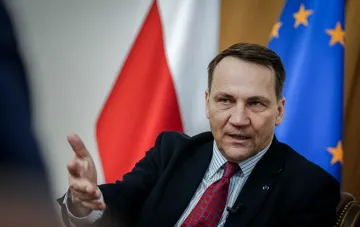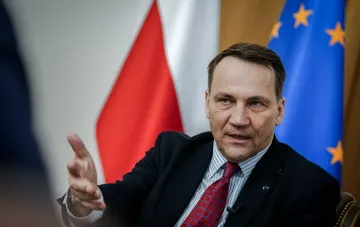
Polish Foreign Minister Radosław Sikorski publicly commented on Monday, November 16, 2026, on the new package of demands that Moscow reportedly presented during consultations on the settlement in Ukraine held in Abu Dhabi, according to the German newspaper "Bild." According to Sikorski, the conditions voiced "underscore the age-old problem of their political culture." In his statement, he pointed out that for the Russian authorities, "it is more important to capture a foreign city that none of them had heard of before than the fate of 11 million Russians who do not have a toilet at home." This statement came against the backdrop of reports from "The Washington Post" that European capitals do not intend to enter into negotiations with Moscow on the future security architecture on the continent until a ceasefire is reached in Ukraine.
What exactly Moscow proposed in Abu Dhabi
According to "Bild," on Friday, November 13, as part of negotiations on ending Russia's war against Ukraine, the Russian side presented its own version of a "new security order in Europe." The document, as the publication claims, provides for the withdrawal of NATO troops from the territories of Lithuania, Latvia, Estonia, and Finland. In addition, the package of demands includes the establishment of full Russian control over the Donbas, including those parts of the Donetsk and Luhansk regions that are controlled by the Ukrainian authorities at the time of publication. Ukraine, according to the proposed text, is required to accept the status of a non-aligned state and renounce plans to join NATO, while the possibility of membership in the European Union, according to "Bild," remains open.
Demilitarization of ports and freedom of navigation
Among the conditions voiced in the Abu Dhabi package, "Bild" also mentions the demilitarization of the ports of Odesa and Mykolaiv so that Ukraine could not use them as naval bases. Russia, according to the same source, demands freedom of navigation for itself in the Black and Baltic Seas. These points, as observers note, affect key elements of Ukraine's military infrastructure and are directly related to issues of control over maritime communications, which Moscow has been raising in its negotiating positions for several years.
A federal republic of Moldova, Gagauzia, and Transnistria
One of the most unexpected proposals reported by "Bild" is the creation of a federal republic uniting Moldova, its autonomous region of Gagauzia, and the pro-Russian separatist region of Transnistria. In exchange for the implementation of this project, Russia, according to the report, is ready to withdraw nuclear weapons from the territory of Belarus, abandon the deployment of medium-range missiles there, and withdraw its troops from Transnistria. Thus, Moscow proposes to link the resolution of the Transnistrian issue with a broader package of security guarantees affecting the entire Eastern European architecture.
European reaction and Sikorski's position
"The Washington Post" reported on the same day that European countries do not intend to negotiate with Russia on the future architecture of continental security until a ceasefire is reached in Ukraine. This statement essentially calls into question the very format of the Abu Dhabi consultations as a platform for discussing long-term security guarantees. Sikorski's reaction, which came the day after the publication of the "Bild" materials, was one of the first public comments by high-level European diplomats on the essence of the demands put forward by Moscow. The Polish minister, using characteristically sharp phrasing, shifted the focus from geographical and military details to what he called a systemic trait of Russian political culture: the priority of foreign expansion over the internal social problems of its own population.