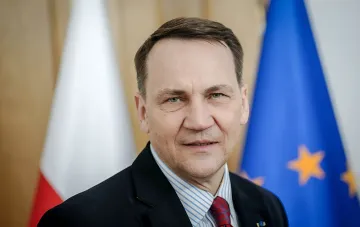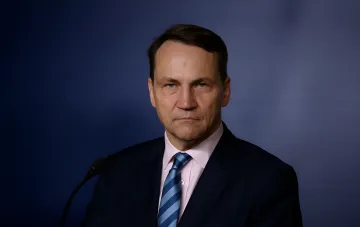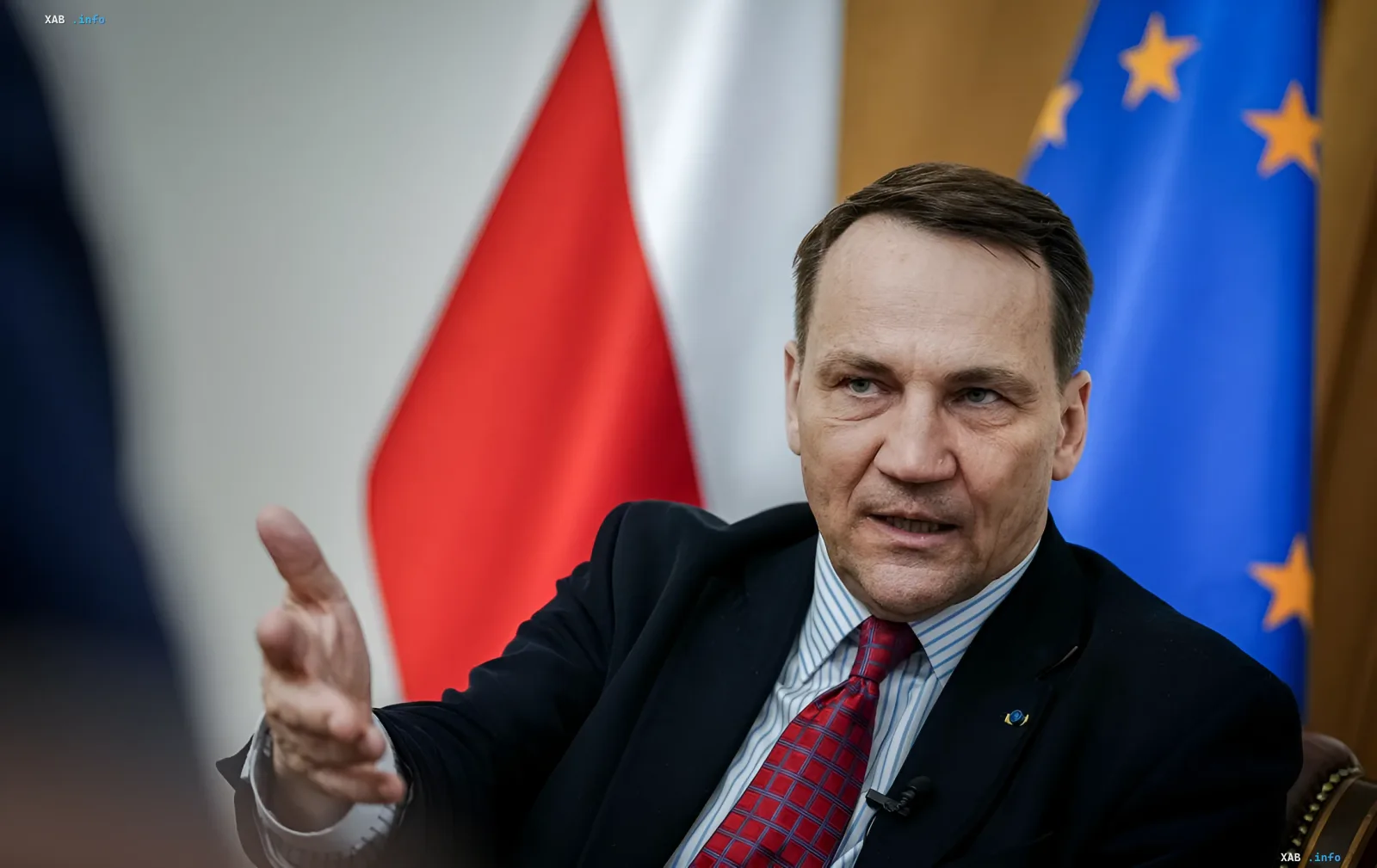
Polish Foreign Minister Radoslaw Sikorski, on the "Front Sikorskiego" program, revealed the content of direct negotiations with the Russian side, during which Warsaw, acting in the interests of NATO, transmitted to Moscow a clear warning about the consequences of possible aggression. According to the minister, the key deterrent argument was pointing to the alliance's quantitative superiority in fighter aviation and its readiness to respond not only defensively but also offensively.
Direct message to Moscow: from deterrence to offensive response
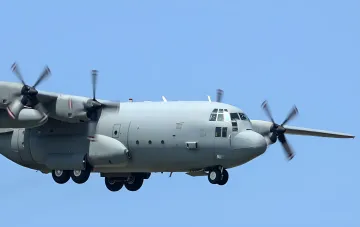
"I told the Russians — also for the purpose of deterrence — be careful, because we have more fighter jets than you. So if you do what no one wants, we will not just sit and not react — we will respond both in defense and in offense," Sikorski stated. The formulation, in which the defensive and offensive components of the response are placed on equal footing, became, according to analysts, a notable shift in Warsaw's public rhetoric: previously NATO had consistently emphasized exclusively the defensive nature of Article 5 of the Washington Treaty. Sikorski, however, did not specify at exactly what level — bilateral, multilateral, or through UN channels — this warning was delivered and who exactly from the Russian delegation received it.
The Ukrainian precedent as an argument: 30–40% of refineries hit without fighter aviation
As a vivid example of the attainability of strike potential, Sikorski cited data on the state of the Russian oil refining industry. According to his estimates, Ukraine, having virtually no own fighter aviation for operations over Russian territory, destroyed 30 to 40% of oil refining capacity. This, according to the minister, has already led to noticeable logistical disruptions in both the civilian economy and Russia's military logistics. "If Ukraine was able to achieve this, having virtually no fighter aviation, then NATO's air forces are capable of significantly more," he emphasized, implying that with full deployment of the alliance's air fleet, the scale of impact on Russia's critical infrastructure would be incomparably higher.
Legal and psychological legitimacy of strikes on refineries
Separately, Sikorski commented on the legal nature of strikes on oil refining facilities. He called them "legally permissible from the standpoint of international law," contrasting them with so-called terrorism against the civilian population. According to him, historical experience shows that massive strikes on civilian targets produce the opposite effect: instead of demoralizing, society unites around the government. Strikes on dual-use infrastructure, according to the minister's assessment, combine both legal justification and psychological effectiveness, without generating a long-term mobilization effect in the target society.
Context: Kremlin threats and the "under a foreign flag" scenario
Sikorski's statements came against the backdrop of a series of public threats from the Russian leadership. Earlier, the Polish Foreign Minister had already reacted to the Kremlin's statements about destroying Poland "in 2–3 days," noting that Russia formally has a significant advantage in a hypothetical conflict with Warsaw, but it is unlikely that it will be able to realize it. In turn, Russian Foreign Minister Sergey Lavrov publicly threatened Europe with a "very short" war. In parallel, Sikorski in other speeches warned that Moscow could use Ukrainian drones for provocations against NATO — the so-called "under a foreign flag" operation, which creates an additional risk of uncontrolled escalation on the alliance's eastern flank.
Contradictory data
The provided sources contain no direct factual contradictions on the key figures (30–40% of refineries) or on the essence of the quote. However, there is a methodological inconsistency: Sikorski calls strikes on refineries "legally permissible," whereas in international law the question of the permissibility of attacks on dual-use facilities (civilian infrastructure with military application) remains a matter of discussion and depends on the specific qualification of the object and the proportionality of the strike. Moreover, the "30–40%" estimate is given as the minister's personal assessment without reference to a specific analytical source or dating, which leaves room for alternative assessments by Russian and independent experts. In sources 3 and 4 (UNIAN, apsny.ge), the emphasis is on the scenario of a provocation using Ukrainian drones, which complements but does not contradict the main line of the statement about deterrence through air superiority.