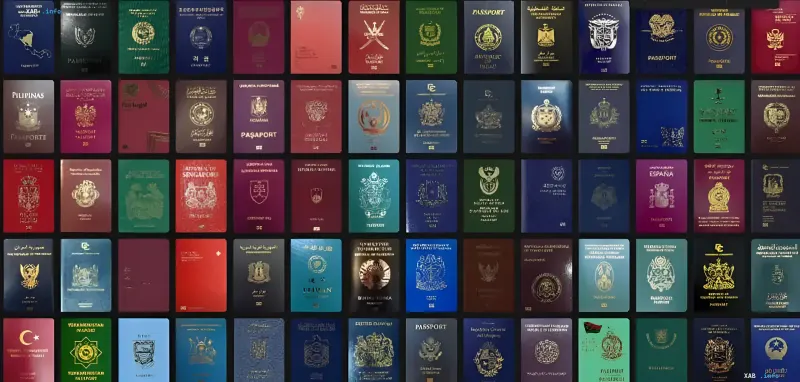
The world of global mobility has undergone fundamental changes. The international organization Henley Passport Index has officially presented the updated ranking of the world's most powerful passports for 2026. The research results confirm a shift in the geopolitical center of gravity: Asian countries are demonstrating unprecedented growth in diplomatic influence, leaving traditional Western leaders in the shade.
Singapore: The Undisputed Leader of Global Mobility
In 2026, the title of the holder of the strongest passport in the world has been secured by Singapore. Citizens of this city-state have gained the ability to visit 192 destinations around the world without prior visa arrangements. This is not just a victory, but the result of decades of strategic planning. For comparison: back in 2016, this figure was 173 countries. Over the decade, Singapore has increased its capabilities by 19 points, becoming a benchmark for diplomatic efficiency.
The Asian Triumvirate and the UAE Phenomenon
The honorable second place in the 2026 ranking is shared by three Asian giants, whose citizens can freely enter 188 countries of the world. This creates a powerful "club of privileged mobility," where Asia dictates the rules of the game. The story of the United Arab Emirates (UAE) deserves special attention. Over the last 20 years, the country has demonstrated a historical leap, increasing the number of visa-free destinations by 153 points. This phenomenal growth was made possible by active diplomatic ties and rapid economic development, turning the UAE into a global hub.
Europe and the US: Stability Amidst Lagging
Countries in Europe and North America are maintaining their positions, however, their relative weight in the ranking is declining. European Union countries and the UK, on average, provide the possibility of visa-free entry into 184 states. This is a high figure, but it no longer guarantees leadership. Canada and the US, despite an increase in the number of visa-free destinations compared to 2016, are forced to settle for lower positions in the table due to the rapid surge of Asian neighbors. The global travel map is being rewritten before our eyes.
Contradictory Data: Regional Specifics
It is important to note that the global ranking hides regional nuances. For example, according to data from Armenian sources, Armenia took 73rd place in the updated index. This indicates that for countries with a more complex geopolitical situation, the growth of mobility is slower. While Singapore and the UAE are breaking records, many countries continue to fight for every new point in the ranking, creating polarization in the world of passports.
Conclusion: A New Order in Travel
The 2026 ranking is a clear signal that the era of Western passport dominance is coming to an end. Asia is not just catching up, it is overtaking, using economic power and flexible diplomacy. For travelers, this opens new horizons, but also raises the question of which passport will become the true "key" to the world in the future. We can only watch to see who will be able to maintain leadership in the next decade.