
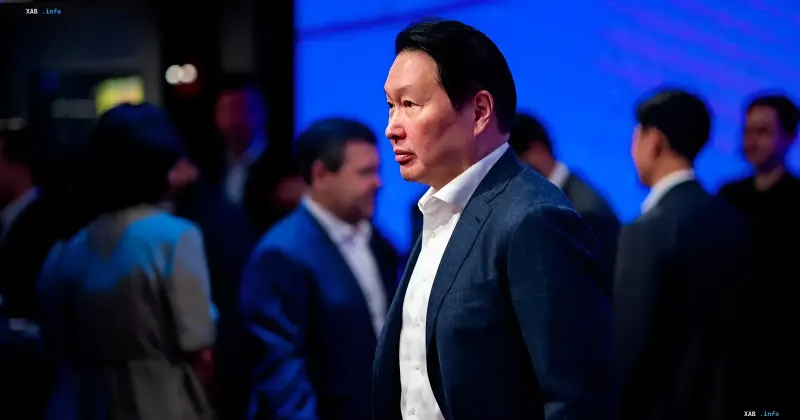
On August 15, 2026, one of the most high-profile legal battles in the history of South Korean business entered a new, decisive phase. Chey Tae-won, the 65-year-old chairman of the giant conglomerate SK Group, officially filed an appeal with the Supreme Court of the Republic of Korea. His goal is to challenge a recent ruling by the Seoul High Court, which ordered him to pay his former wife, Ro So-yeon, a colossal sum of 944 billion won (approximately $666 million USD).
Escalation of Conflict: From the "Divorce of the Century" to the Supreme Court
The history of this dispute began long before 2026, but it has now reached its peak. In 2024, the court of first instance issued an unprecedented ruling ordering a payment of 1.38 trillion won (more than $1 billion) to the ex-wife, a decision that earned the moniker "divorce of the century" in the press. Chey Tae-won, whose fortune is closely tied to SK hynix shares—one of the world's leaders in memory chip production—immediately appealed this decision. The Supreme Court remanded the case for retrial, and in July 2026, the amount was adjusted to 944 billion won. Despite the reduction, this remains the largest property settlement agreement in the country's history.
Judicial Argumentation: The Wife's Role and Business Valuation
In their July ruling, the judges were guided by the principle of fairness, recognizing Ro So-yeon's contribution to the success of the family and the business. The court ruled that she is entitled to compensation equivalent to one-third of the couple's total assets. The calculation included not only savings but also SK Group shares owned by Chey Tae-won. The court took into account that the wife's support allowed the head of the conglomerate to focus on managing the business, which directly influenced the growth of the company's asset value.
Contradictory Data
There are significant disagreements between the parties regarding the form of payment, which became a key factor in filing a new appeal. According to Money Today, Chey Tae-won proposed dividing assets in a mixed form: part in cash and part in company shares. This would have allowed him to maintain control over the business and avoid market shock. However, Ro So-yeon reportedly insisted exclusively on cash compensation. The forced sale of a large block of shares to cover the debt could have led to a drop in SK Group's stock price and destabilized management, which became the main argument for Chey's lawyers when filing the appeal to the Supreme Court.
Impact on the Market and the Future of SK Group
The legal battle is taking place against the backdrop of unprecedented growth in the value of SK Group's assets, driven by the artificial intelligence boom. The company's shares have more than tripled since December 2015, when Chey Tae-won publicly admitted to an extramarital affair with Ro So-yeon. The chairman's lawyers state that their client seeks to "minimize any negative impact on shareholders and the group's management." However, prolonging the process through the Supreme Court could create uncertainty for investors watching the situation regarding control over one of Asia's key technological assets.
Personal Drama and Political Context
Behind the dry figures lies a personal drama rooted in 1988, when Chey Tae-won and Ro So-yeon, the daughter of a former South Korean president, married. The couple has three children. The divorce, which has dragged on for decades, has become a symbol of the struggle for the legacy of one of the country's most influential family clans. Now, the future of this legacy depends on the decision of the highest judicial authority, which must weigh the former wife's rights to a fair share against the interests of thousands of shareholders and the stability of the South Korean technology industry.