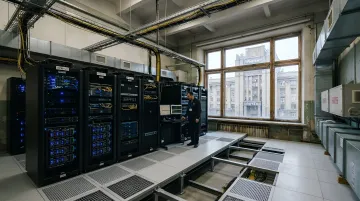
At the Siberian Ring Source of Photons (SKIF) User Center, the installation and testing of a computing complex based on domestic hardware from the RSC Group have been completed. The stated performance of the new system reaches 390 TFLOPS, providing the computing infrastructure required to process data streams generated by the synchrotron’s experimental stations.
Cluster Composition and Performance
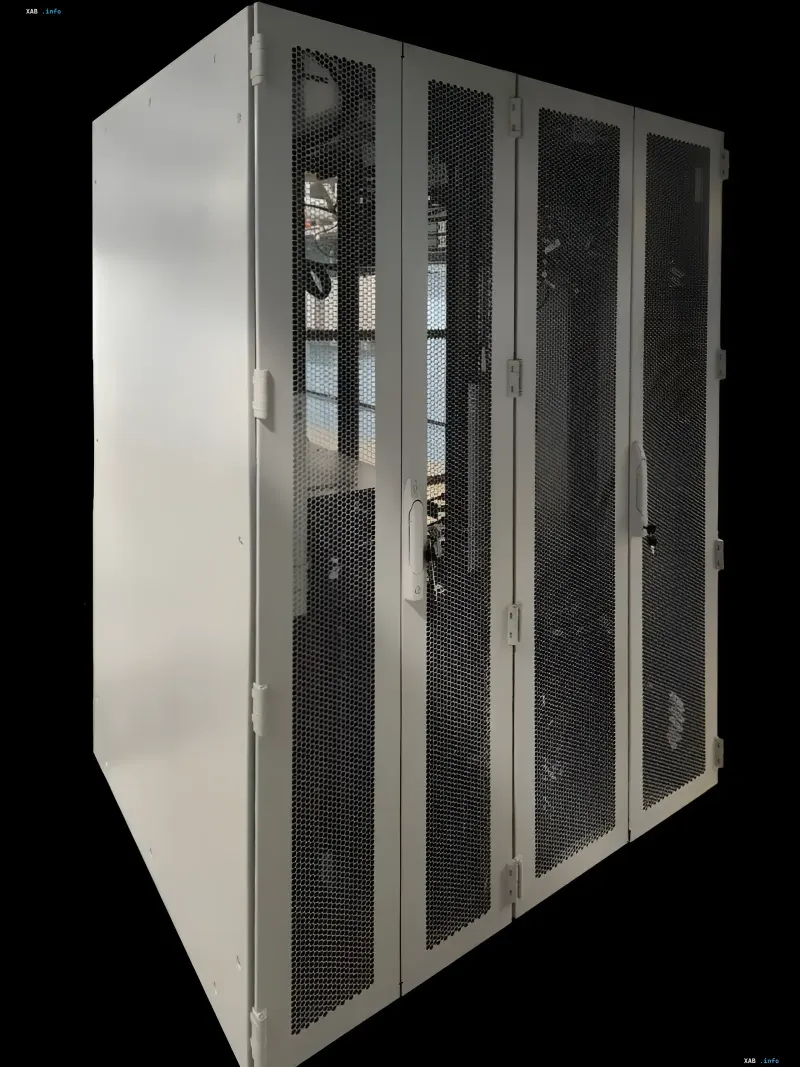
The SKIF data center has been equipped with 24 "RSC Tornado" servers featuring a liquid cooling system; their total performance is 182 TFLOPS. Additionally, two GPU servers have been integrated, contributing another 208 TFLOPS. The National Computing Complex (NCC) also includes the necessary network nodes and a data storage system, although their exact configuration is not specified in open materials. The total capacity of the CPU and GPU segments forms the claimed 390 TFLOPS.
Data Processed by the Data Center
The new computing center is designed to store and process experiment results from the seven first-stage stations of the synchrotron. These include modules for "Microfocus," "Structural Diagnostics," "Fast-Running Processes," "XAFS Spectroscopy and Magnetic Dichroism," "High-Energy X-ray Diagnostics," "Electronic Structure," and a station for "Basic Methods of Synchrotron Diagnostics for Educational, Research, and Innovation Student Activities." The "Fast-Running Processes" station is particularly computationally demanding: it is capable of X-ray imaging at up to 1 billion frames per second, which requires instantaneous stream buffering and subsequent 3D model reconstruction.
Scale of Scientific Tasks
The capacity of the new data center is estimated to cover the full cycle of scientific work for 2,000–2,500 researchers annually who will conduct experiments at the synchrotron. SKIF itself is a circular accelerator with a 158-meter perimeter, where electron beams rotating at near-light speed reach energies of 3 GeV. These accelerator parameters and the nature of the emitted radiation dictate the volume and speed of data flow for which the computing complex was designed.
Significance for Domestic Science
The completion of the installation and testing of the RSC-based complex means that Russia's flagship synchrotron has acquired its own computing infrastructure using domestic server hardware. This allows for a complete cycle — from signal registration at the experimental station to processing and storage — on a proprietary hardware base, which is important considering the requirements for import substitution in critical scientific infrastructure.