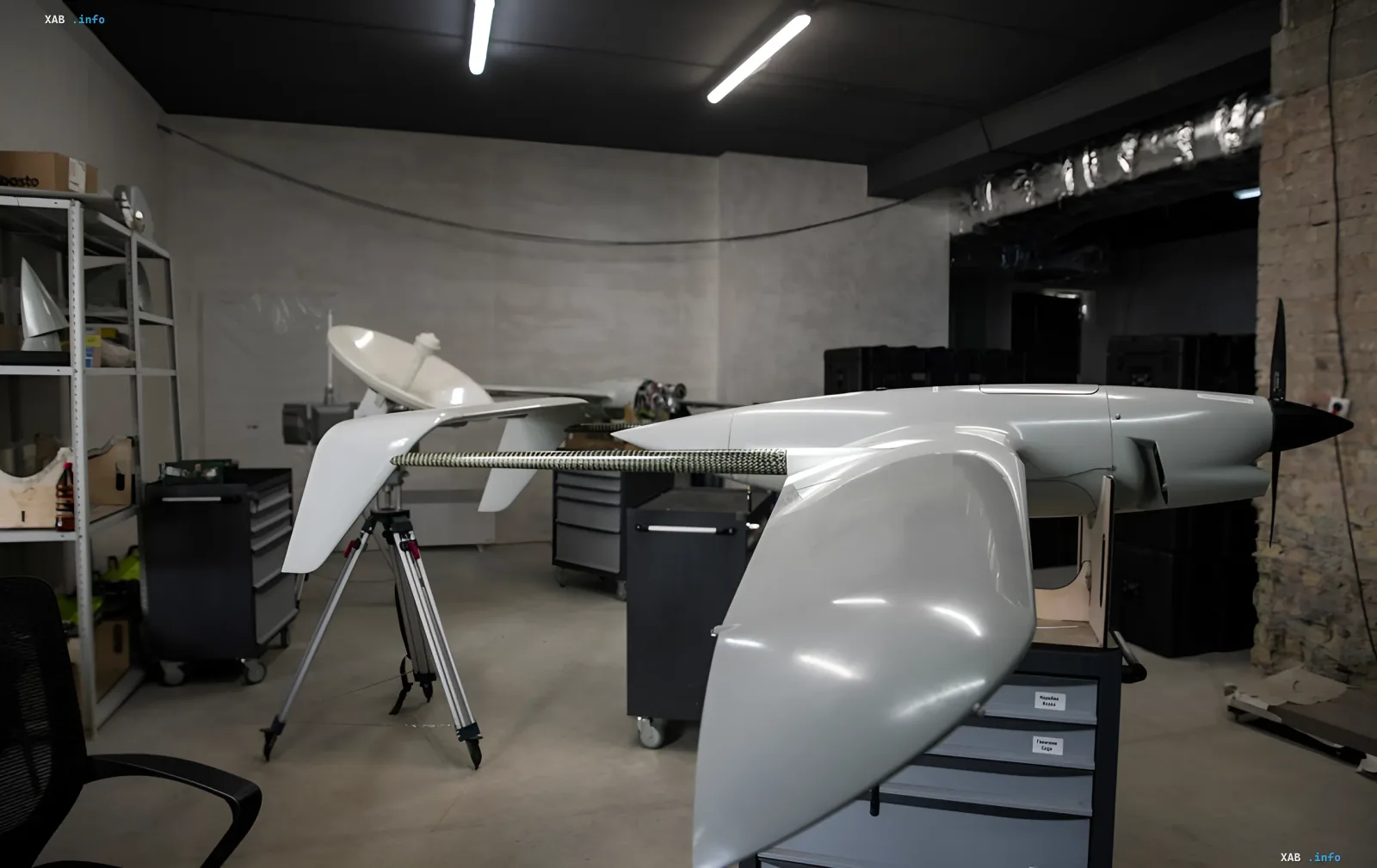
In eastern Slovakia, law enforcement agencies foiled an attempt to set fire to the production facilities of the Ukrainian company Skyeton, which specializes in manufacturing unmanned aerial vehicles for civilian and military use. This was announced on August 27, 2026, by prosecutors in the city of Prešov, who clarified that the attack was planned by three suspects and was directed specifically at the enterprise producing drones for the Ukrainian Armed Forces and other countries. According to the investigation, the incident was uncovered on August 25, when police detained three foreigners at the scene of the sabotage preparation. No property damage was caused, and there were no casualties.
Course of the Investigation and Status of the Detainees
During investigative actions, law enforcement seized a significant quantity of flammable mixture, tools, mobile phones, a camera, and a handwritten action plan. According to German prosecutors, one of the suspects — a 26-year-old Latvian citizen — was detained in Hamburg, where extradition proceedings to Slovakia are ongoing. The other two figures in the case — a Latvian and a Ukrainian — were detained directly on Slovak territory. Local media reported that on Thursday the court ordered both of them to be held in custody until the completion of investigative measures.
Skyeton's Position and the Context of Attacks on Production
In an official comment to RBC-Ukraine, Skyeton stated that Russian parties regularly attempt to attack both the company's production facilities in Ukraine and its reputation. "The recent attempt on our production in Slovakia is yet another sign that Ukrainian weapons makers are already getting on their nerves, which means we are on the right path," the company noted, thanking all services and police that helped prevent the attack and detain the participants in the crime. Skyeton emphasized that all its production facilities, including the Slovak plant, work primarily to meet the needs of the Ukrainian Armed Forces.
Contradictory Data
The sources contain a number of inconsistencies that require careful consideration. First, the editorial assessment by RBC-Ukraine indicates that the arson attempt was "most likely the work of Russian special services," however, neither the Slovak prosecution nor the police, at the time of publication, named a specific mastermind or confirmed a direct link to Russian agencies. Slovak police officially stated that no person suspected of ordering the attack has been identified to date. Second, responsibility for the incident was claimed by a group calling itself "Global Citizens Against War 1984," which in a statement to Reuters demanded the release of two of the suspects. At the same time, neither the group's affiliation with Russian structures nor its actual role in planning the attack has been confirmed in official documents. Third, among the detainees there are no Russian citizens — they are two Latvians and one Ukrainian, which complicates the direct attribution of the incident to Russian special services without additional evidence.
Broader Context: Sabotage and Espionage Around the Ukrainian Drone Sector
The incident in Slovakia fits into a broader picture of pressure on Ukraine's military-technical production. As RBC-Ukraine reported, earlier in Germany a court handed down a verdict against a Ukrainian accused of espionage and preparing sabotage in favor of Russia — the man was sentenced to one year and three months of imprisonment. The totality of these facts points to the systematic nature of attempts to destabilize the supply chains and production of drones, which have become a key element of Ukraine's defense. Skyeton's Slovak plant, located within the EU, is of particular interest to potential saboteurs, as its operations fall under the jurisdiction of European law enforcement agencies while simultaneously providing critically important products for the front.