Fueling restrictions have been introduced at Sochi airport: according to a NOTAM, aviation fuel is now supplied by only one operator — Lukoil. To continue operations, airlines are required to separately confirm that fueling will be provided through this specific operator. The official wording of the notice cites "technical reasons," however, as follows from reports by the Krasnodar Krai operational headquarters, the actual cause was a massive overnight drone attack on the region's civilian infrastructure, during which a fire broke out at a fuel depot.
Fueling restrictions at Sochi airport
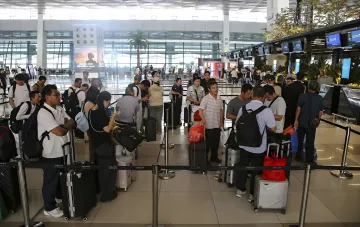
According to the published NOTAM, fueling at Sochi airport is now carried out exclusively by the fuel operator Lukoil. For airlines, this means an additional organizational burden: before departure, they must separately confirm that fueling will be provided through this operator. According to Rosaviatsia, in the interest of flight safety, temporary restrictions on the acceptance and departure of aircraft have also been introduced at the airport. Such measures are typically applied when a threat to the infrastructure supporting aircraft servicing persists in the airfield zone or in its immediate vicinity.
Cause: overnight drone attack
According to the Krasnodar Krai operational headquarters, overnight in Sochi and on the federal territory of "Sirius" a massive drone attack on civilian infrastructure was repelled. In particular, a fire broke out at a fuel depot, and drone debris was found in various parts of the city. It was precisely the damage to fuel and energy infrastructure objects near the airfield that, according to the authorities' logic, required a temporary reduction in the number of fueling operators and the introduction of restrictions on the acceptance and departure of aircraft.
Contradictory data
Official and operational reports present the reasons for the restrictions in different ways. On the one hand, the NOTAM itself explains fueling through a single operator as being due to "technical reasons," without a direct reference to a military context. On the other hand, the Krasnodar Krai operational headquarters directly links the situation to the overnight drone attack and the fire at the fuel depot. Moreover, if temporary restrictions on acceptance and departure were introduced at the airport, then, according to TASS, since the start of the day Sochi airport has dispatched 60 aircraft, indicating that a significant volume of flights is being maintained even under the introduced restrictions. Thus, the degree of the actual impact of the restrictions on the schedule and the completeness of their lifting differ across sources.
Context: a series of strikes on oil processing facilities
Oil and chemical industry facilities in Russia have not been targeted by drone attacks for the first time. On the night of September 4, a fuel depot and a chemical plant caught fire in several regions at once — fires were recorded in Sochi and in Bashkortostan, with one of the affected objects located more than 1,000 kilometers from the Ukrainian border. Earlier, on the night of August 30, several important objects on Russian territory were struck, including the Kirishi Oil Refinery in Leningrad Oblast, where a fire was recorded after the hit. This series of similar incidents explains why restrictions on fueling and the operating regime of airports near fuel infrastructure are introduced promptly and on a preventive basis.
Impact on air traffic
For passengers and airlines, the key consequence is the need to restructure fueling logistics: flights planned to work with multiple fuel operators must now take into account that in Sochi there is effectively a single supply channel. Combined with temporary restrictions on acceptance and departure, this may lead to delays and schedule revisions, even if, as the data on 60 aircraft dispatched in a day shows, the airport continues to operate in normal mode. The ultimate impact on flight turnover will depend on the timing of the restrictions being lifted and the restoration of the full fuel servicing scheme.