The market for Russian-assembled cars launched under the Solaris brand in March 2024 is showing a sharp slowdown. According to registration data, 1,106 Solaris cars were registered in October 2026 — an 81% drop compared to the same month a year earlier, when 5,809 vehicles were registered. This decline is the most pronounced throughout the brand's presence on the market and indicates the depletion of initial demand generated in the first months after sales started.
Annual dynamics: minus 40% over ten months
Looking at a longer period, the picture is also negative, albeit less dramatic. In the first ten months of 2026, the brand's sales reached about 16.6 thousand cars, down 40% from the same period last year. Since the brand's launch in Russia, nearly 66,000 Solaris vehicles have been sold, but the pace of shipments to dealers and end customers has consistently declined every quarter.
Production in St. Petersburg completed
A key factor limiting supply has been the cessation of production: car manufacturing at the former Hyundai plant in St. Petersburg ended back in December of last year. A little over 70,000 units in total were produced under the Solaris brand during the facility's operation. Thus, the brand has effectively shifted into a mode of selling off accumulated stock without replenishing it with new batches from the assembly line.
Inventory and depletion forecast
Comparing production volumes (around 70,000) and sold cars (nearly 66,000) suggests that roughly 4,000 vehicles remain in warehouses and at dealerships. At current sales rates, this stock may last approximately until the beginning of next year. At the same time, the manufacturer does not disclose the exact number of cars held by dealers and in warehouses, so the calculation is an estimate.
Solaris model lineup
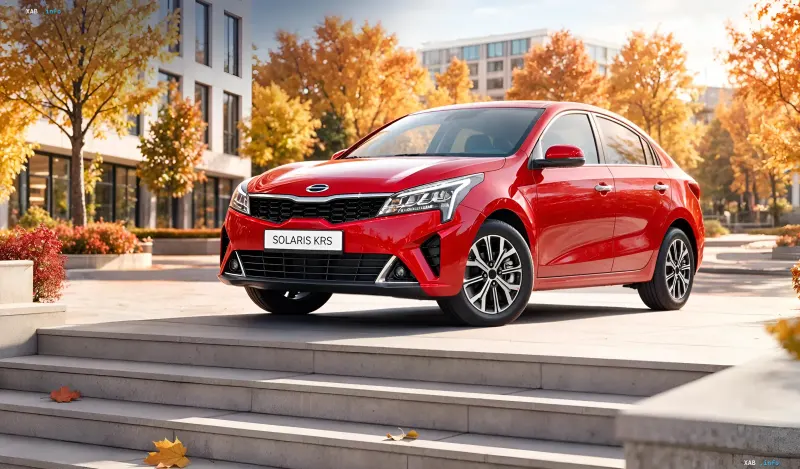
Four models were produced in Russia under the Solaris brand, essentially badge-engineered versions of Hyundai and Kia cars: Solaris HC (a Hyundai Creta clone), Solaris HS (Hyundai Solaris), Solaris KRX (Kia Rio X-Line), and Solaris KRS (Kia Rio Sedan). These specific models form the entirety of the brand's sales volume, and their future fate on the market will depend on whether the dealership network can sell off the remaining inventory by the end of the year.