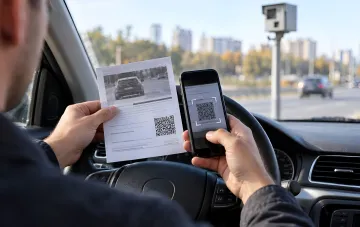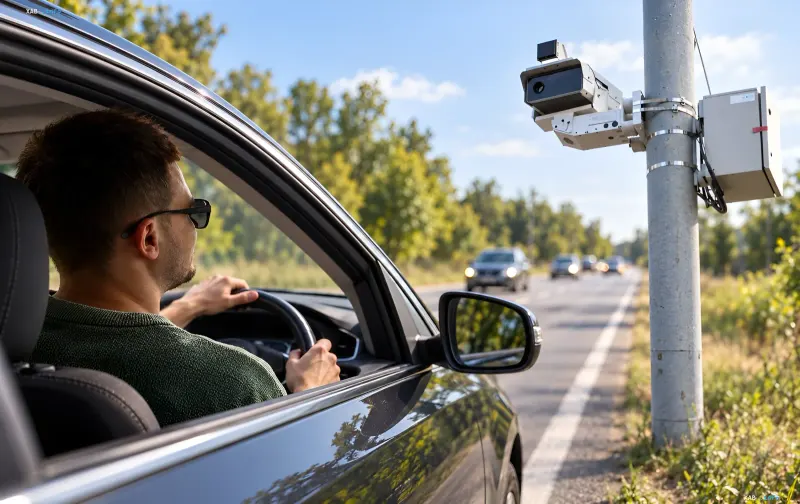
Selling a car does not mean an automatic end to the legal bond between the former owner and the vehicle. If the buyer fails to complete the re-registration procedure with the Ministry of Internal Affairs authorities, administrative fines for traffic violations captured by automatic traffic cameras continue to be issued in the name of the previous owner. This mechanism generates thousands of conflicts every year: the car was sold, gifted, or transferred under a power of attorney, while «happy letters» for speeding and running a red light keep arriving to a person who hasn't been behind the wheel for a long time.
Why cameras «see» the owner, not the driver
Automatic violation detection technology does not identify the person behind the wheel using biometric features. The camera recognizes the license plate, and then a violation notice is generated based on state registry data. As a general rule, liability for a recorded violation is assigned to the individual in whose name the vehicle is registered. If a proper user is listed in the registry, liability may be shifted to them; however, the burden of proof that another person was driving lies precisely with the person who received the notice. Until the car is re-registered, the previous owner remains responsible for someone else's violations in the eyes of the system.
Typical scenarios where the problem arises
There are several common situations in which the former owner becomes a «hostage» to someone else's violations. First, the car was transferred under a power of attorney. Such a document does not transfer ownership, so the car remains registered to the previous owner. Second, the parties signed a sales contract but did not complete the re-registration at the Ministry of Internal Affairs service center. The mere fact of handing over keys and signing papers does not guarantee a change of data in the state registry. Third, the car is officially re-registered, but the violation was recorded before the ownership change date, and the notice arrived by mistake or with a delay. In each of these scenarios, the actions of the former owner differ.
How to check the vehicle's registration status
Before paying or appealing a fine, it is necessary to establish whether the vehicle's registration data has changed. To do this, you can contact the Ministry of Internal Affairs service center with documents confirming the sale of the car and ask to clarify its current registration status. You can also check the information in the Driver's Electronic Cabinet or via the Diia app. However, the absence of the car in the electronic list does not in itself replace official confirmation of re-registration. Special attention should be paid to the date of re-registration: it is this date that allows establishing who was listed in the registry at the time the violation was recorded. If it turns out that the car is still registered to you, the problem must be solved separately from the fines already received.
What to do if the buyer hasn't re-registered the car
The first step is to contact the buyer. Inform them that the vehicle has not been re-registered and because of this, notices continue to arrive in your name. Ask them to complete the re-registration and agree on how to process the documents. It is advisable to keep correspondence in writing—it may come in handy during further resolution. According to the Main Service Center of the Ministry of Internal Affairs, during a standard ownership change, the car generally does not need to be physically brought to the service center, but the documents and the participation of the parties or their authorized representatives must meet the requirements of the specific procedure. If the buyer does not get in touch or refuses to re-register the car, it is worth getting individual legal advice. The seller cannot independently remove the buyer from the registry or re-register the vehicle to them without proper legal grounds. You should strictly avoid filing a false car theft report if the vehicle was voluntarily handed over to another person.
How to appeal someone else's fine
If a notice for an automatically recorded violation has arrived in your name, first check its number, date, time, location, and the vehicle's license plate. You can view the information through the official Ministry of Internal Affairs service or the Driver's Electronic Cabinet. According to the Code of Ukraine on Administrative Offenses, a notice of an automatically recorded violation can be appealed in the established manner. The patrol police explain that a complaint against such a notice can be filed within 10 days from the date it enters into legal force. Depending on the circumstances, you can apply to a higher authority or official or to the relevant court. It is important to understand: a sales contract does not guarantee the automatic cancellation of a fine. The decision depends on the registration status of the car, the circumstances of the case, and the evidence provided. If the appeal period was missed for valid reasons, the question of its restoration can be raised in the manner prescribed by law.