Drivers in Ukraine have the right to pay only half of the amount for a number of traffic violation fines. However, the discount amount, the terms of its application, and the consequences of delay fundamentally differ depending on who recorded the violation: an automatic camera, a parking inspector, or a patrol police officer. Understanding these differences is extremely important, as confusion over deadlines can lead to enforcement proceedings and a twofold increase in the debt amount.
Who Is Eligible for the 50% Discount and on What Grounds
The opportunity to pay half of the fine is provided for two categories of violations. The first category includes traffic violations recorded automatically by a camera. The second category includes violations of stopping, standing, and parking rules recorded by inspectors using photo or video equipment. In both cases, the law directly establishes the right to a 50% discount, but the mechanisms and deadlines for its implementation differ.
Different Deadlines — Different Articles: Five, Ten, or Fifteen Days
If the violation was recorded by an automatic enforcement camera, in accordance with Article 300-1 of the Code of Ukraine on Administrative Offenses (CUAO), the driver can pay 50% of the fine within five banking days from the date of delivery of the resolution. After such payment, the resolution is considered fully executed. For parking violations recorded by an inspector using photo or video, a different procedure applies: Article 279-1 of the CUAO and the official explanation of the Verkhovna Rada set a deadline of 10 banking days from the date the violation was committed. The notice of administrative offense in this case must contain the details for paying half of the fine.
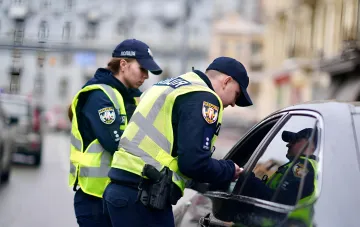
A completely different procedure applies when a police officer stops a vehicle and issues a resolution directly on the spot. In such cases, the automatic 50% discount does not apply. The general payment procedure under Article 307 of the CUAO applies: the fine must be paid no later than 15 days from the date the resolution is handed over. If the driver appeals the decision, the deadline is calculated from the day of notification that the complaint was rejected. That is why it is critically important not to confuse a resolution issued by a patrol officer during a stop with a resolution for a violation recorded by a camera.
What Cameras Record and How to Check the Resolution
According to the Patrol Police, the automatic enforcement system currently detects speeding, as well as violations of traffic and stopping rules on lanes designated for public transport. At the same time, Article 122 of the CUAO provides liability for other violations that can be recorded automatically — in particular, running a red light and driving into the oncoming traffic lane. However, this does not mean that all camera systems installed in Ukraine are already recording such violations; the Ministry of Internal Affairs publishes the current list of system capabilities separately.
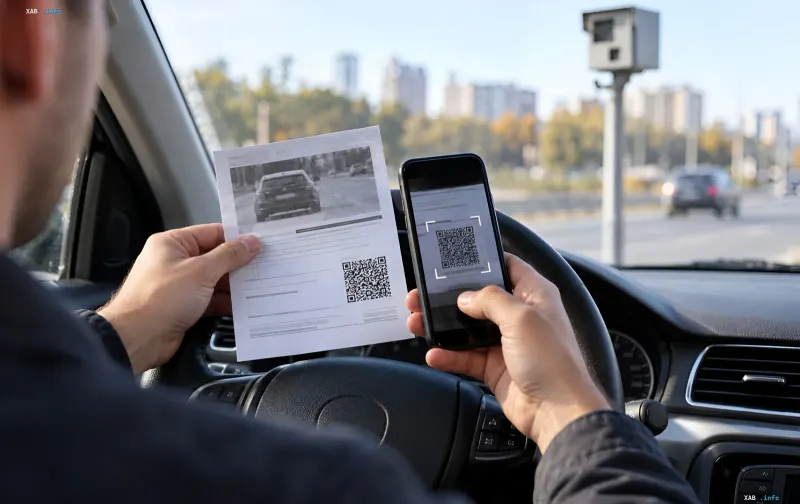
You can verify the authenticity of a resolution for a traffic violation recorded by a camera through official state electronic services. It is convenient to pay the fine using the QR code printed on the resolution through the same digital services or via commercial bank payment systems. Before making a payment, it is recommended to check the payment details, resolution number, and amount. To use the 50% discount, the fine must be paid within 10 days from the date the resolution enters into legal force.
Consequences of Non-Payment: From Enforcement to Double Fines
If a driver fails to pay the fine for an automatically recorded violation within 30 days from the date the resolution enters into legal force, it is sent for enforcement. This procedure is stipulated by Article 300-1 of the CUAO. Notably, this procedure does not provide for the accrual of fines or the automatic doubling of the fine amount. For other administrative offenses falling under the general procedure, the consequences are much more serious: in accordance with Article 308 of the CUAO, if payment is not made within the established 15-day period, the resolution is sent to the state enforcement service, and the offender is charged double the fine amount specified in the resolution, as well as the costs of tracking offenses.
Right to Appeal
A driver has the legal right to appeal an administrative offense resolution. According to Article 289 of the CUAO, the general deadline for submitting an appeal is ten days from the date the resolution is issued. For resolutions in cases of traffic violations recorded automatically, specific procedural features apply, which are also enshrined in the Code. Thus, you should not delay payment: in case of delay, the fine may be forcibly collected, and for offenses covered by the general procedure, the collection amount is doubled.