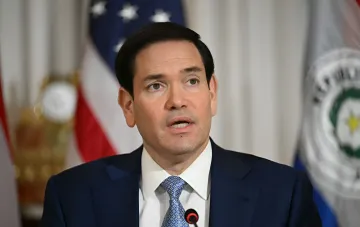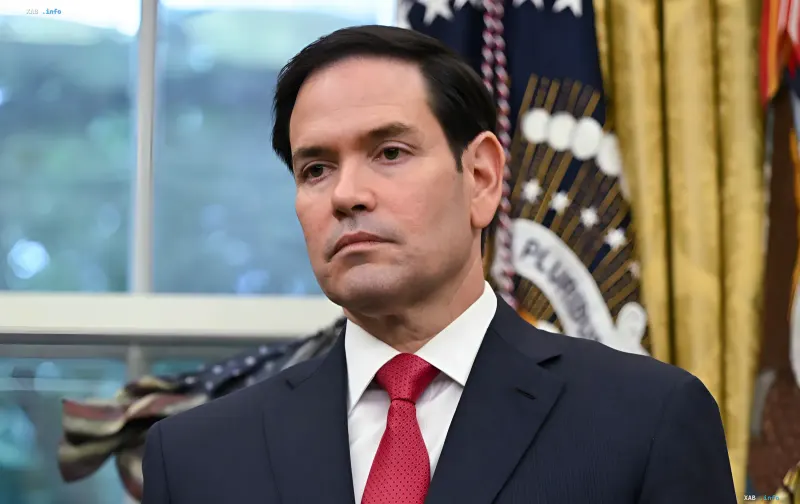
Washington has signaled a series of messages in recent days that Western diplomats interpret as a recalibration of expectations regarding the settlement in Ukraine. According to RBC-Ukraine, citing reports from Radio Free Europe/Radio Liberty journalist Alex Raufoglu, US Secretary of State Marco Rubio privately discussed two sensitive issues with Western mission representatives: the prospects of Vladimir Putin's participation in the December G20 summit in Miami and the possibility of Ukraine joining NATO. Both topics reportedly received a restrained and pessimistic assessment from the American diplomat.
Private Signals to Diplomats
According to three high-ranking Western diplomats, over the past two days Rubio expressed doubts in informal conversations that the Russian leader will participate at all in the G20 summit scheduled for December in Miami. Sources say that following these talks, diplomats formed a firm impression that the US Secretary of State does not believe Putin is ready to conclude any agreement on Ukraine in the foreseeable future—a timeline they estimate is pushed back at least until the spring of 2027.
NATO: "Unrealistic in the Short Term"
Separately, the topic of the alliance was brought up behind closed doors. According to the same sources, Rubio called Ukraine's NATO membership as a security instrument "unrealistic in the short term" and added that Putin "would never agree" to such a scenario. Thus, according to this assessment, the key limiting factor is not the stance of Brussels or Washington, but Moscow's red line.
Public Stance: Ending the War, Not Expanding the Alliance
Publicly, Rubio adopted more restrained language, but in the same direction. When asked about Ukraine joining NATO, he declined to give a definitive yes or no, emphasizing that the procedure requires consensus and unanimity among all member states, and therefore the issue is "not on the agenda at this time." The Secretary of State called ending hostilities the main focus of American policy on Ukraine: according to him, Washington is focused on finding opportunities to stop the conflict and reduce human casualties, while also doubting that the parties are on the verge of a settlement or that the war can be ended quickly through negotiations.
Zelenskyy and the G20 Summit
In the same public comment, Rubio stated that Ukrainian President Volodymyr Zelenskyy could attend the G20 summit if he receives a formal invitation from US leader Donald Trump. Thus, Kyiv's participation in the December summit is essentially tied to a political decision by Washington rather than automatic protocol.
What This Means
The combination of private and public statements paints a consistent picture: in the short term, Washington does not view NATO expansion to Ukraine as a workable scenario and does not expect a breakthrough in negotiations until the spring of 2027. Moscow's position remains the central variable—specifically, Putin's readiness (or lack thereof) for compromise, which, according to the US Secretary of State, determines the pace and very possibility of a settlement. The distinction between "unrealistic in the short term" behind closed doors and "not on the agenda" in public does not change the core substance: both formulations rule out rapid NATO membership for Ukraine and shift the focus from alliance expansion to attempts to stop the fighting.